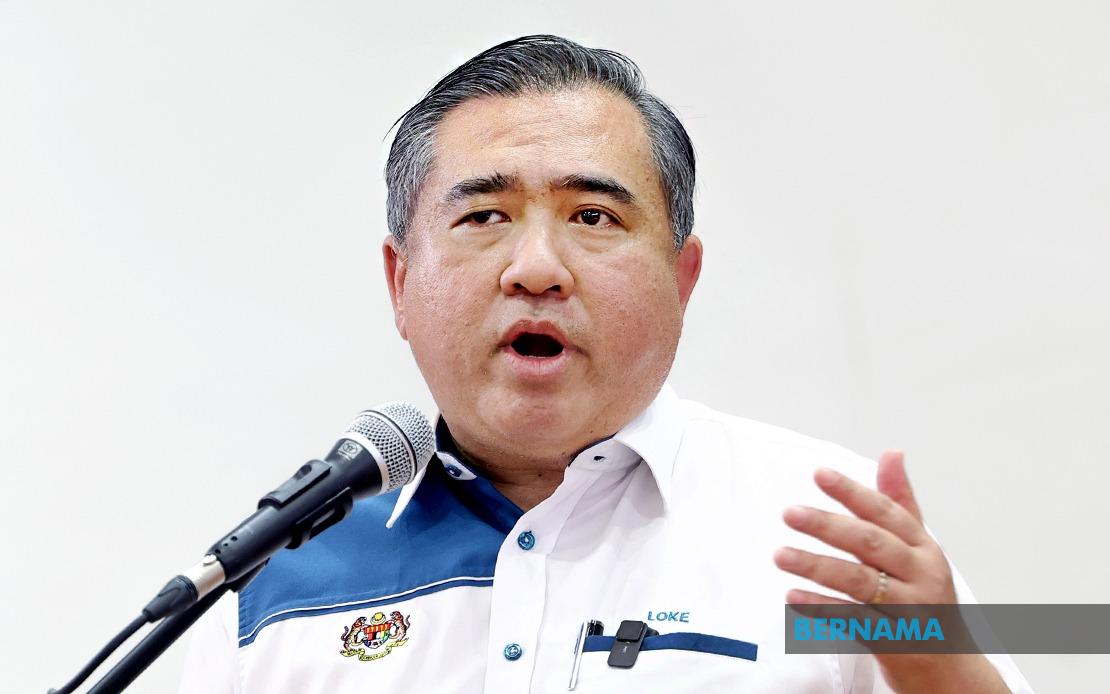
Transport Minister Anthony Loke has directed the Road Transport Department (JPJ) to issue summonses against motorcyclists found riding without helmets during the ongoing Johor state election campaign, following the emergence of viral videos documenting such violations. The enforcement action, based on documented evidence circulating on social media, marks a significant moment in Malaysia's approach to road safety compliance during politically charged periods when campaign activities intensify across the state.
Loke's instruction underscores a deliberate commitment to uniform application of traffic regulations regardless of which political organisation the offenders represent. The minister emphasised that the enforcement will extend to campaign workers affiliated with Pakatan Harapan, the coalition to which his own Democratic Action Party (DAP) belongs, demonstrating a willingness to prioritise road safety legislation over political considerations. This stance carries particular weight given that DAP members were among those identified in the viral footage that prompted the enforcement directive.
The Transport Minister articulated a longstanding principle governing his approach to road safety compliance during election periods. Loke recalled his intervention nearly six years earlier during the Slim by-election campaign, when he had raised similar concerns about Barisan Nasional leaders engaging in campaign activities from motorcycles without proper safety equipment. His consistent positioning reflects a belief that while political campaigning from motorcycles is permissible under Malaysian law, all riders must adhere to mandatory helmet requirements and demonstrate responsible behaviour to the general public.
Crucially, Loke's statement reveals the tension between political solidarity and regulatory integrity that confronts government ministers. By explicitly stating his refusal to exempt his own campaign colleagues from enforcement action, the Transport Minister has placed himself in a position where principle supersedes party loyalty. This declaration carries implications for how other government officials might respond when their own political allies face regulatory scrutiny, potentially setting precedent for impartial governance during election cycles.
The viral videos that triggered this enforcement action captured multiple instances of Pakatan Harapan campaign workers, including DAP representatives, riding motorcycles throughout Johor without wearing helmets. These images circulated widely on social media platforms, drawing public attention to what many observers viewed as a blatant disregard for road safety regulations. The prominence of the content and potential reputational damage to the coalition likely accelerated the government's formal response and Loke's public commitment to enforcement.
Malaysia's road safety framework does not differentiate between citizens based on political affiliation, and Loke's reiteration of this principle serves as a reminder that traffic laws function as universal regulations applying to all Malaysians equally. This approach contrasts with instances in other democracies where enforcement of such regulations has sometimes been perceived as selective or influenced by political considerations. By proactively committing to impartial enforcement, Loke attempts to insulate the Road Transport Department from accusations of partisan bias.
The timing of this enforcement initiative during an active state election campaign raises questions about the practical implications for campaign operations across Johor. Political parties and campaign coordinators must now weigh the benefits of motorcycle-based campaigning against the risk of participants incurring traffic summonses and associated fines. This could alter campaign strategies, potentially shifting resources toward alternative modes of public engagement that do not involve transportation compliance risks.
For Malaysian road safety advocates, Loke's public commitment represents validation of their long-standing argument that helmet compliance must be universal and non-negotiable. During election periods, when political visibility and messaging intensity increase dramatically, the behaviour of campaign participants carries disproportionate influence over public attitudes toward safety regulations. When prominent politicians and their supporters visibly flout helmet requirements, such actions implicitly signal to the broader population that these rules are discretionary or negotiable.
The enforcement mechanism through JPJ summonses introduces financial consequences that extend beyond symbolic compliance. Motorcyclists found riding without helmets face monetary penalties and potential demerit points under Malaysia's demerit system, creating tangible incentives for compliance. The prospect of campaign workers facing these consequences may encourage campaign organisations to implement internal safety protocols and monitor participant behaviour more strictly.
From a regional perspective, Malaysia's approach to this issue reflects broader Southeast Asian patterns where election campaigns sometimes generate traffic safety concerns. Thailand, Indonesia, and the Philippines have similarly grappled with campaigns that prioritise voter outreach over regulatory compliance. Malaysia's explicit commitment to enforcement despite political considerations positions the country within a progressive approach to governance integrity.
The broader implications of this enforcement action extend to questions of institutional credibility and public trust in government regulatory bodies. When ministers publicly commit to impartial enforcement and follow through with action against their own political allies, such consistency strengthens public confidence that regulations serve genuine public interests rather than partisan objectives. Conversely, any perception of selective enforcement would undermine trust in the Road Transport Department's neutrality.
Looking forward, the success of this enforcement initiative will depend on consistent implementation throughout the remainder of the Johor campaign period and beyond. Campaign organisers across all political parties must understand that participation in election activities does not exempt participants from traffic safety requirements. This message requires both clear communication from the Transport Ministry and visible enforcement actions when violations occur.
The road safety dimension of this issue ultimately transcends partisan politics, addressing the genuine public health concern that motorcycle riders without helmets face substantially elevated risks of serious injury and death in traffic incidents. By enforcing these requirements uniformly during an election campaign when public attention focuses intensely on political activities, Malaysia demonstrates that road safety protection operates as a fundamental public good that supersedes temporary political considerations.

