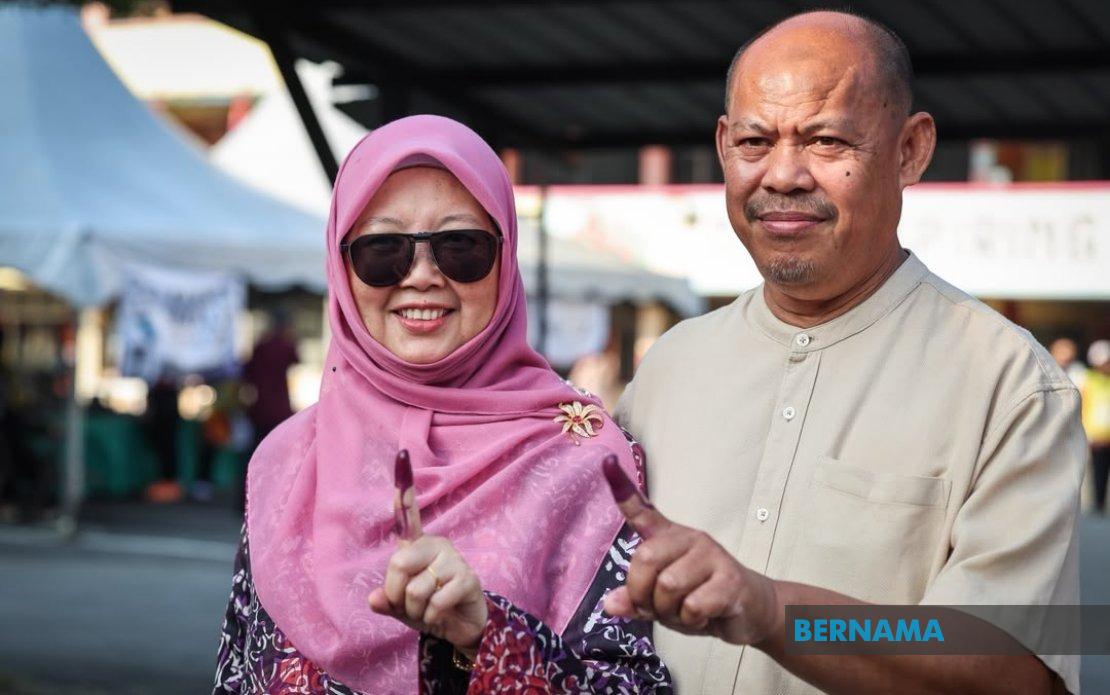
The 16th Johor state election saw prominent party officials among the earliest to exercise their franchise, setting the tone for what observers expect to be a significant political contest in one of Malaysia's most important states. The early participation by senior figures underscores the competitive nature of these polls and the symbolic importance placed on demonstrating commitment to the democratic process.
Johor PKR chairman Datuk Seri Dr Zaliha Mustafa arrived at Sekolah Menengah Kebangsaan Bandar Baru Uda in Johor Bahru at 9 am to cast her vote in the Larkin constituency. Accompanied by her husband, Dr Ahmad Adzlan Musa, the former Minister in the Prime Minister's Department reflected the involvement of established political figures in the electoral exercise. Her appearance at the polling station represented not merely a personal civic duty but a calculated statement of confidence and engagement with the democratic machinery.
Dr Zaliha Mustafa used her presence at the polling centre to address gathered media representatives, emphasizing the importance of early voter turnout. She specifically urged Johor residents to arrive at polling stations during morning hours to complete their voting before inclement weather arrived. Meteorological forecasts indicated that rainfall would intensify from midday onwards, potentially creating conditions that might discourage voter participation during afternoon hours. This appeal represented practical advice grounded in awareness of the state's weather patterns and their potential impact on electoral turnout.
Across the state, similar scenes unfolded as political leaders fulfilled their voting obligations. Johor DAP chairman Teo Nie Ching cast her ballot at Sekolah Jenis Kebangsaan Cina Kulai Besar in the Kulai area at approximately 9.30 am, demonstrating the multi-ethnic character of Johor's political participation. The timing of her vote, occurring within the first ninety minutes of polling, reflected the broader pattern of senior political figures prioritizing early participation.
The appearance of party leadership at polling stations carries significance beyond the act of voting itself. In Malaysian electoral tradition, the public participation of senior figures serves multiple functions: it validates the legitimacy of the electoral process, demonstrates personal commitment to democratic principles, and often provides photographic opportunities for media coverage that reinforces party messaging. For voters observing these images, the presence of established leaders at polling stations can influence perceptions of enthusiasm and confidence within party hierarchies.
Johor's 16th state election represented a crucial political moment for the peninsula's southern region. The state has historically served as a significant political barometer, with its electoral outcomes carrying implications for broader national political calculations. The participation of figures such as Dr Zaliha Mustafa, who held ministerial rank at federal level, highlighted the resources and organizational capacity that established coalitions could mobilize during state-level contests. Her specific background in federal administration potentially positioned her as a bridge between state and national political structures.
The weather warnings issued by meteorological authorities added a practical dimension to the electoral exercise. Tropical afternoon thunderstorms are predictable phenomena in Johor's climate, and their timing during peak afternoon hours could create circumstances where voter convenience becomes a significant factor affecting turnout. Early voting advocates recognized that morning participation, while requiring greater personal inconvenience for some citizens, might ultimately maximize overall participation by avoiding weather-related barriers during later hours.
The presence of DAP leadership through Teo Nie Ching's voting activity reflected the party's strong organizational presence in the Kulai area and broader Johor political landscape. DAP's participation in state-level electoral competition, particularly in constituencies with significant Chinese Malaysian populations, represented an established feature of Malaysian electoral politics. The public nature of her voting participation reinforced party visibility and demonstrated consistent engagement with electoral processes across different administrative levels.
For Malaysian voters observing these electoral developments, the early participation by party leadership conveyed messages about democratic normality and institutional continuity. Political transitions in Malaysia, whether at state or federal levels, occur within frameworks where established figures demonstrate respect for electoral procedures through personal participation. This ritualistic element, while sometimes dismissed by cynics, maintains public confidence in the fundamental integrity of voting processes, even amid competitive political environments.
The 16th Johor state election proceeded amid these patterns of leadership engagement and practical consideration of voter convenience. The appeals for early participation, grounded in reasonable concerns about weather disruption, represented straightforward communication between political figures and the electorate they sought to represent. Whether voters ultimately heeded these calls, and the extent to which weather patterns influenced actual turnout distributions, would only become apparent as polling progressed through the day and results subsequently emerged.

