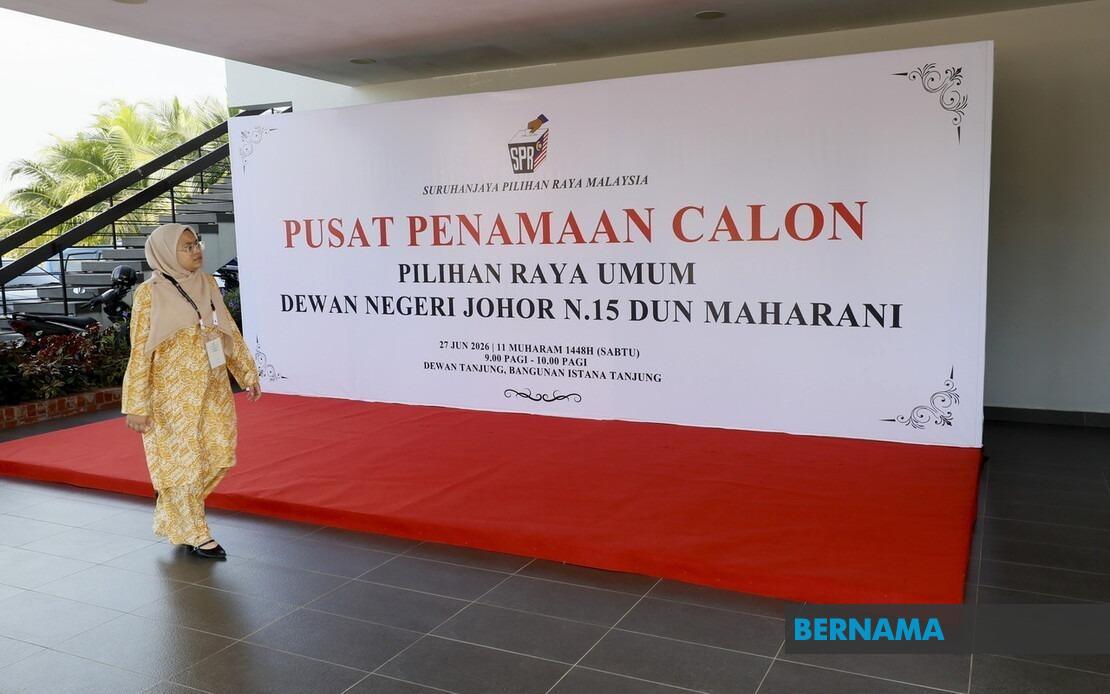
The 16th Johor State Election has officially begun, with nomination centres operating across all 56 state constituencies starting from 9 am on June 27. Prospective candidates have a tight window of just one hour to lodge their nomination papers with returning officers, after which the Election Commission will formally announce which aspirants have met the eligibility criteria. This marks the formal start of what promises to be a closely contested state-level political contest in Malaysia's second-most populous state by registered voters.
As of June 26, the nomination process had already generated significant momentum, with 593 nomination forms distributed to interested candidates and 133 confirmed participants having paid their required election deposits. These figures suggest a competitive election landscape, though final nomination numbers will only be clear once the submission deadline closes and all documentation is verified. The pace of registration indicates strong interest from various parties, reflecting Johor's political significance within Malaysia's electoral geography.
The 14-day campaign period officially commenced following the nomination deadline and will conclude on July 10 at 11.59 pm, as determined by the Election Commission. Early voting is scheduled for July 7, providing convenience for eligible voters unable to participate on the main polling day of July 11. This timeline follows the dissolution of the Johor State Legislative Assembly on June 1, which initiated the electoral process and set in motion the machinery that culminated in today's nomination exercise.
Elector participation in this contest encompasses a substantial portion of Malaysia's voting population. Johor's electoral roll comprises 2,727,926 registered voters, of which 2,703,175 are ordinary voters. Additionally, the register includes 12,041 military personnel and their spouses, and 12,710 police personnel and their spouses, reflecting the significant defence and security presence within the state. This voter base represents a critical battleground for Malaysia's major political coalitions and emerging parties alike.
Pakatan Harapan is mounting a comprehensive campaign across all 56 seats, fielding candidates from its three constituent parties: PKR with 20 nominations, Amanah with 19, and DAP with 17. This unified approach demonstrates PH's commitment to contesting every constituency, seeking to capitalise on its performance in previous cycles. The coalition's strategy reflects recognition of Johor's electoral importance, having previously controlled 12 seats before the assembly dissolution.
Barisan Nasional enters the contest as the incumbent dominant force, having held 40 seats prior to the dissolution. BN is contesting all 56 constituencies through UMNO with 36 nominations, MCA with 16, and MIC with four. The broad geographic coverage demonstrates BN's organisational reach and its determination to maintain control over Malaysia's southern heartland. The coalition's seat distribution among its component parties reflects both their historical strengths in various constituencies and broader inter-coalition arithmetic.
Perikatan Nasional presents a more fragmented candidacy strategy, contesting through multiple parties rather than one unified platform. PAS is fielding 11 candidates, Bersatu 16, the Malaysian Indian People's Party five, and Pejuang one candidate. This multi-party approach within PN highlights different strategic calculations within the coalition and potential disagreements about seat allocations. The distribution suggests negotiations between PN components regarding which constituencies each party would contest, a common feature of pre-election coalition mathematics.
Meanwhile, several other parties are contesting, reflecting the increasingly competitive nature of Malaysian state elections. MUDA is contesting four seats, while Parti Sosialis Malaysia fielded one candidate. Most notably, Parti Bersama Malaysia is making its electoral debut, expected to contest 15 seats. This entry of a new political player adds an unpredictable element to the election dynamics, potentially fragmenting votes in certain constituencies and complicating traditional two or three-way contests.
The Election Commission has issued reminders about compliance with electoral regulations, particularly regarding the Election Offences Act 1954 and local authority by-laws. Restrictions have been placed on campaign activities using musical instruments and loudspeaker-equipped vehicles. The emphasis on proper conduct reflects lessons from previous elections and aims to maintain electoral integrity throughout the campaign fortnight. These regulations help prevent candidate excess while ensuring fairness across the contest.
Security arrangements for the election process are extensive, with 4,832 police personnel deployed throughout Johor to maintain order and manage traffic logistics. The deployment includes provisions for road closures and diversions affecting 19 major roads near nomination centres statewide. Such security measures are standard for Malaysian elections, ensuring safe passage for voters, candidates, and election officials while preventing disruptions that could undermine the electoral process. Weather monitoring from the Malaysian Meteorological Department indicated rain throughout Johor on nomination day morning, with thunderstorms expected in the afternoon, potentially complicating logistics for supporters and election workers.
Johor's election occurs within the broader context of Malaysia's post-pandemic political landscape. The composition of candidates represents a mixture of new aspirants, sitting incumbents seeking re-election, and former representatives attempting political comebacks. This diversity across candidates from five major coalitions plus independent entries suggests voters will have meaningful choices across most constituencies. The contest will test whether the Barisan Nasional's substantial pre-election advantage can be maintained against revitalised opposition efforts and the entry of new political contestants.

