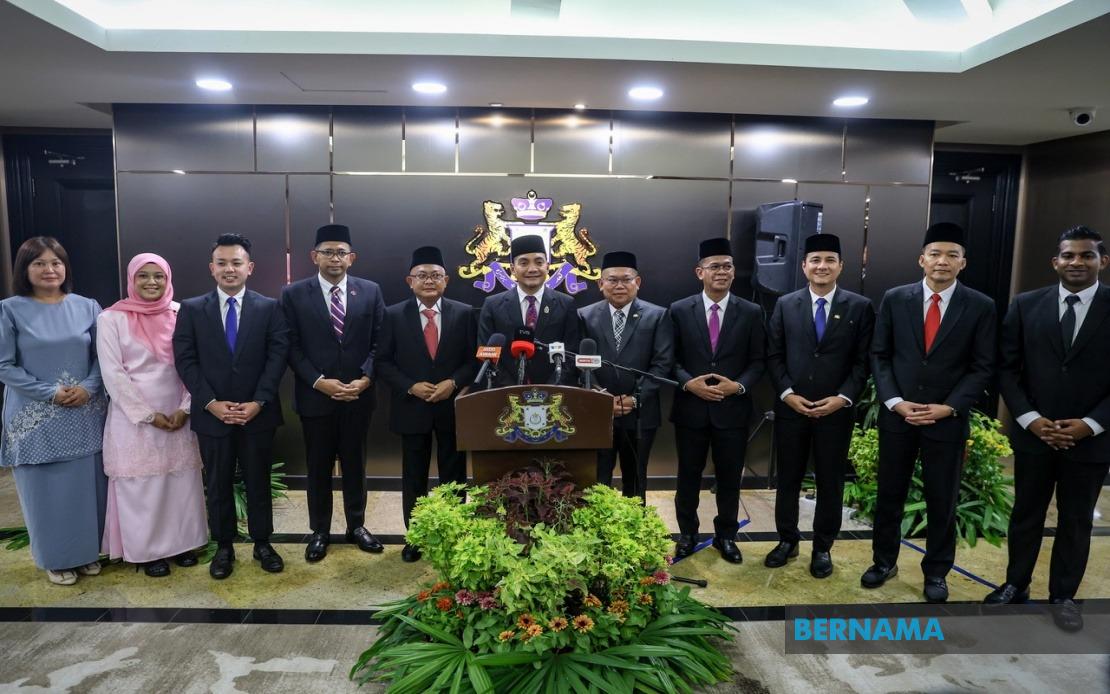
Johor's administrative machinery is being reconfigured to handle mounting demands on state governance. Menteri Besar Datuk Onn Hafiz Ghazi unveiled the appointment of ten deputy chairmen across State Executive Council committees on July 22, signalling a deliberate expansion of the state's leadership capacity. The move carries the endorsement of the Regent of Johor, Tunku Mahkota Ismail, reflecting broad institutional support for the structural reorganisation.
The rationale behind the appointments centres on Johor's trajectory towards developed-state status by 2030. As the Menteri Besar emphasised, accelerating state development requires proportional investment in administrative infrastructure. The appointments align directly with two overarching policy frameworks: the Maju Johor 2030 strategic initiative and the Johor Economic Transformation Plan. Both agendas demand coordinated implementation across multiple portfolios simultaneously, necessitating deeper layers of committee leadership to oversee policy roll-out and operational execution.
The scope of the initiative extends beyond mere organisational tinkering. By introducing deputy committee chairs, the state government intends to multiply its governance bandwidth without requiring full restructuring. Each deputy operates within existing committee hierarchies, working alongside established committee chairs rather than replacing them. This approach distributes workload horizontally across administration, theoretically accelerating decision-making cycles and enabling faster responses to emerging public concerns. For a state managing competing priorities across multiple districts and development zones, such redundancy in leadership can prove operationally valuable.
From a regional perspective, Johor's move reflects broader governance trends across Southeast Asia. Larger states and provinces increasingly adopt this tiered leadership model when facing complex development agendas. The model allows governments to demonstrate responsiveness without wholesale institutional reform, which carries political risk and budgetary implications. It also creates upward mobility pathways within the civil service, potentially improving morale and retention among mid-level administrators aspiring to higher positions.
The geographic dimension warrants attention. Johor encompasses diverse economic zones—from the established Iskandar Malaysia development corridor near Singapore to rapidly developing inland districts requiring infrastructure investment. Appointing ten deputy chairs suggests intentional dispersion of executive attention across these varied territories. Each deputy can presumably champion issues affecting specific regions, ensuring that grassroots concerns receive adequate consideration within committee deliberations at Kota Iskandar.
Implementation success hinges on clarity regarding deputy chairs' actual authority and decision-making scope. Onn Hafiz outlined their expected functions: coordinating field operations, monitoring project implementation, and facilitating inter-departmental cooperation. These responsibilities demand genuine delegation of power rather than nominal titles. If deputies operate with constrained authority, the appointments risk becoming exercises in bureaucratic optics rather than substantive governance enhancement. Malaysian administrative culture sometimes defaults toward concentrating decision-making at the apex, potentially limiting the effectiveness of intermediate leadership positions.
The emphasis on grassroots implementation deserves particular scrutiny. Onn Hafiz stressed that government initiatives must reach ordinary Johoreans through improved field coordination. This reflects acknowledgment that development policies often fail not through poor design but through execution gaps—insufficient communication between state-level planners and district-level administrators. Deputy committee chairs positioned as coordinators between central committees and operational departments could meaningfully bridge this divide, contingent upon receiving adequate resources and autonomy to facilitate such connections.
For Malaysian observers beyond Johor, this appointment structure offers a template worthy of evaluation. As other state governments grapple with similar development pressures and administrative strain, Johor's experience implementing this framework will generate valuable lessons. States contemplating similar measures can monitor whether the ten new positions genuinely accelerate service delivery or merely create an additional bureaucratic layer. The coming months will reveal whether the appointments translate strategic intent into tangible improvements in how Johor's government functions.
The appointments also signal confidence in Onn Hafiz's leadership and administrative vision. Securing royal consent demonstrates that the initiative enjoys institutional legitimacy beyond mere executive preference. This foundation matters significantly in Malaysian governance, where traditional rulers exercise meaningful influence over state-level decisions and legitimacy. The Regent's formal approval signals that the state's development agenda, pursued through administrative restructuring, aligns with broader institutional interests.
Looking forward, the effectiveness of these appointments will be measured against Johor's progress toward its 2030 development targets. Whether the state achieves scheduled milestones in infrastructure, economic diversification, and service delivery will ultimately validate or undermine this governance experiment. The deputy chairs' performance will directly influence whether Johor's ambitions materialise or whether the additions merely expand administrative headcount without proportional output gains—a distinction critical for Malaysian taxpayers and residents depending on state service quality.
The appointment framework also hints at potential challenges within existing governance structures. If current committee chairs felt adequately supported by existing resources, deputy positions would be unnecessary. Their creation implicitly acknowledges that the previous structure struggles under present burdens. Whether ten deputies prove sufficient, or whether Johor will require further administrative expansion, depends on several variables: the actual scope delegated to each deputy, the willingness of incumbent committee chairs to genuinely share responsibility, and the adequacy of departmental cooperation across silos. These organisational dynamics typically prove more decisive than formal appointment announcements.

