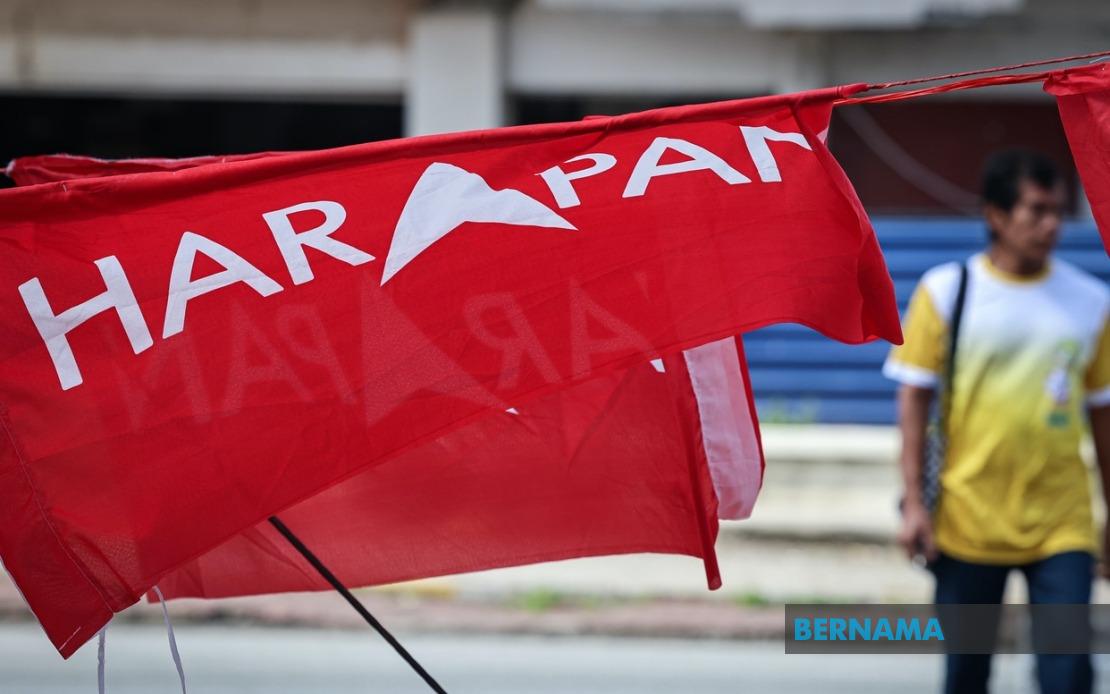
Pakatan Harapan's candidates are entering the final stretch of the Johor state election campaign with a deliberately crafted approach that bridges conventional politics and modern digital communication. As voters prepare to cast ballots on July 11 for the 16th state assembly, the opposition coalition's contenders have embraced what party strategists describe as a 'hybrid strategy'—combining on-ground community engagement with aggressive social media deployment to ensure their message penetrates every demographic and geographical pocket across the state.
This dual-pronged methodology reflects a broader recognition within Malaysian politics that voter engagement can no longer rely solely on either traditional or digital channels alone. The candidates recognise that while grassroots work builds trust and community bonds essential for political legitimacy, digital platforms offer unprecedented speed, scale, and directness in reaching younger and urban audiences. By wedding these approaches, PH's campaign machinery aims to overcome the fragmentation that often characterises modern electoral campaigns where different voter segments consume information through distinctly different mediums.
The presence of high-ranking party leaders actively campaigning in the field has amplified this hybrid strategy's effectiveness. Penang Chief Minister Chow Kon Yeow's participation alongside candidates such as incumbent Simpang Jeram assemblyman Nazri Abdul Rahman demonstrates the party's willingness to deploy senior political capital in a state where PH's position, while significant, remains contested. Such leadership visibility serves a dual purpose: it validates candidates' standing within the broader party structure and generates local media coverage while simultaneously providing motivational reinforcement to ground-level party machinery tasked with voter contact work.
Social media platforms have evolved from ancillary tools into what campaign operatives now describe as 'virtual campaign rooms'—spaces where manifestos, policy positions, and candidate profiles reach voters instantaneously without editorial filtration. This democratisation of campaign messaging allows candidates to present their vision directly to constituents, facilitating rapid feedback and dialogue that traditional media channels cannot match. The speed and interactivity of these digital spaces have fundamentally altered how political narratives are constructed and tested, allowing campaigns to pivot messaging in real-time based on audience response.
TikTok has emerged as the most unexpected yet impactful platform within this campaign ecosystem. Tiram candidate Nor Zulaila Abd Ghani discovered that the platform's informal aesthetic and dialogue-oriented format resonated powerfully with viewers when she employed a relaxed, conversational delivery style. Social media users responded enthusiastically, with comments praising her authenticity and positioning her as a representative genuinely concerned with amplifying constituent voices in the state assembly. This breakthrough suggests that Malaysian voters, particularly younger demographics, increasingly prefer political communication that eschews artificial formality in favour of accessible, person-to-person connection.
Meanwhile, other candidates have strategically selected platforms aligned with their professional identities and target audiences. Dr Maszlee Malik, the Puteri Wangsa contender, leverages WhatsApp's Channel feature to establish 'Gerak Sama Dr Maszlee Malik,' creating a direct-to-voter communication pipeline that facilitates aspiration-gathering and movement updates. This approach recognises that different voter segments possess varying digital preferences: while younger voters congregate on TikTok, middle-aged and older demographics remain active on WhatsApp and Facebook, necessitating platform diversification to achieve comprehensive demographic penetration.
Facebook retains particular utility for candidates seeking to establish professional credentials within digital frameworks. Machap candidate Nor Hafiz Roslan has utilised the platform to underscore his background as both a lawyer and community activist, leveraging Facebook's traditional-yet-contemporary character to present a hybrid professional identity himself. The platform's user base remains disproportionately composed of Malaysia's established economic classes, making it strategically valuable for candidates seeking to reinforce their credibility among voters concerned with stability and professional competence.
Geographical and mobility constraints present particular challenges in Johor's expansive state assembly constituencies, particularly in rural and semi-rural areas. Tanjung Surat candidate Faizul Abdul Ghani has addressed this through 'Jelajah Trak Harapan,' a mobile campaign operation that physically traverses multiple localities, enabling direct voter contact across dispersed populations that traditional static rallies might overlook. This innovation demonstrates how candidates are adapting campaign mechanisms to accommodate spatial and logistical realities specific to their constituencies, personalising broader party strategy to local conditions.
The integration of these strategies reflects sophisticated understanding of contemporary Malaysian electoral dynamics. Johor remains politically competitive, with neither BN nor PH possessing the overwhelming dominance that might permit neglectful campaigns. The state's economic significance, diverse population composition, and historical swing status demand rigorous, multi-layered campaign approaches that leave no voter segment untouched. PH's hybrid strategy acknowledges this reality, distributing resources and candidate attention across digital and physical spaces simultaneously.
For Malaysian voters and Southeast Asian observers, the Johor campaign demonstrates how opposition parties are operationalising technology to compete more effectively against establishment machinery historically blessed with greater resources and state apparatus access. By leveraging platforms where regulatory barriers remain minimal and direct communication costs approach zero, PH candidates are circumventing traditional media bottlenecks and state-associated resource advantages. This approach has implications extending well beyond Johor's boundaries, potentially establishing templates for opposition campaigns across Malaysia's remaining competitive states.
The campaign's final week will test whether this hybrid strategy genuinely mobilises voters or whether it generates primarily digital noise that fails to translate into electoral advantage. Early signs suggest that candidates executing the strategy authentically—prioritising substantive community engagement over performative social media posting—generate stronger engagement and voter interest. The distinction between genuine hybrid campaigning and superficial digital veneer may ultimately determine whether PH's final-week push translates into electoral gains on July 11.
As the Election Commission confirmed polling day for July 11, with early voting for security forces scheduled for July 7, campaigns entered their most intensive phase. The coming days will reveal whether Johor's electorate responds primarily to traditional ground engagement, digital innovation, or some fusion thereof—a question with implications for how political competition evolves across Malaysia's federal system. The hybrid strategy represents not merely a tactical adjustment but a fundamental reconfiguration of how opposition politics adapts to contemporary information environments.

