%22%2F%3E%3C%2Fpattern%3E%3C%2Fdefs%3E%3Crect%20width%3D%22100%25%22%20height%3D%22100%25%22%20fill%3D%22url(%23ph2a5mg)%22%2F%3E%3Crect%20width%3D%22100%25%22%20height%3D%22100%25%22%20fill%3D%22url(%23ph2a5mp)%22%2F%3E%3Ctext%20x%3D%2250%25%22%20y%3D%2250%25%22%20text-anchor%3D%22middle%22%20dominant-baseline%3D%22central%22%20fill%3D%22rgba(255%2C255%2C255%2C0.95)%22%20font-family%3D%22Georgia%2C%20'Times%20New%20Roman'%2C%20serif%22%20font-weight%3D%22700%22%20font-size%3D%22272%22%20letter-spacing%3D%22-0.02em%22%3EJohor%3C%2Ftext%3E%3C%2Fsvg%3E)
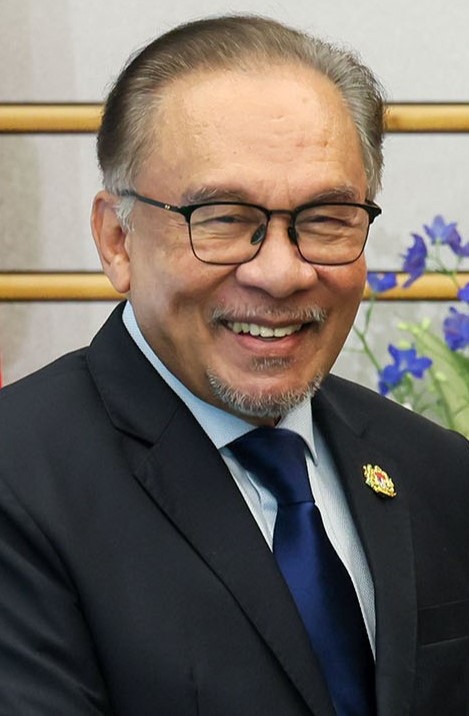
The Regent of Johor, Tunku Mahkota Ismail, received Prime Minister Datuk Seri Anwar Ibrahim in a formal audience on June 22, a diplomatic occasion that highlights the partnership between Malaysia's second-largest state and the central government based in Putrajaya. The meeting, held in the state capital, served as an affirmation of working relations between federal and state authorities as the nation navigates economic and governance challenges.
Formal audiences between state rulers and prime ministers carry significant ceremonial and political weight within Malaysia's constitutional framework. Such engagements demonstrate respect for the institution of the monarchy and the traditional role of rulers in state affairs, while simultaneously providing opportunities for substantive discussions on matters of mutual concern. The audience granted by the Regent signifies openness to dialogue and collaboration, setting a constructive tone for ongoing federal-state engagement.
Johor occupies a pivotal position in Malaysia's political and economic landscape. As the country's southernmost peninsular state, it serves as a crucial trading hub with Singapore and Indonesia, generating substantial revenue through petroleum, manufacturing, and tourism sectors. The state's prosperity directly influences broader regional economic performance, making stable governance and federal-state cooperation essential for continued development. Strong relations between Johor's leadership and Putrajaya facilitate more effective policy implementation and resource allocation.
Prime Minister Anwar Ibrahim has consistently emphasized national unity and inclusive governance since assuming office. Meetings with state rulers and their representatives form part of his broader strategy to engage all levels of government and regional stakeholders in addressing shared challenges. Such audiences demonstrate his commitment to maintaining institutional relationships that transcend partisan political boundaries and reflect Malaysia's constitutional monarchy system.
Tunku Mahkota Ismail, as Regent, holds significant influence over state affairs during the current administration. His role extends beyond ceremonial functions to encompassing advisory capacities on matters affecting Johor's development and welfare. Regular engagement with federal leadership ensures that state-level concerns are communicated directly to the Prime Minister and his cabinet, facilitating more responsive policymaking that accounts for regional specificities.
The timing of this audience occurs within a broader context of Malaysian politics characterised by coalition management and the balancing of diverse political interests. Johor, which has experienced considerable political dynamism in recent election cycles, represents an important electoral consideration for any national government. By maintaining cordial relations with the state's highest-ranking official, the federal administration signals its commitment to fair treatment and responsive governance regardless of state-level political alignments.
Federal-state relations in Malaysia function through multiple institutional channels, including formal meetings, inter-governmental committees, and constitutional mechanisms. Such audiences complement these established frameworks by providing opportunities for high-level, direct communication. The personal rapport established during such meetings often translates into smoother administrative cooperation, faster resolution of jurisdictional disputes, and more coordinated approaches to regional development projects.
ForEconomic considerations underpin the strategic importance of maintaining strong Johor-Putrajaya ties. Infrastructure projects, port facilities, and industrial development initiatives often require coordination across federal and state boundaries. The Port Klang Authority, telecommunications networks, and transportation corridors frequently demand integrated planning that only proceeds smoothly when political relationships remain stable. Economic zones and investment incentives also benefit from regulatory clarity that strong governance relations help establish.
The reaffirmation of close ties carries implications extending beyond bilateral state-federal relations. Malaysia's neighbours, particularly Singapore and Indonesia, closely monitor the internal stability and administrative effectiveness of Malaysian states bordering their territories. Demonstrable unity and cooperation between Johor and Putrajaya reassure regional partners about Malaysia's internal stability and capacity to honour cross-border agreements and undertakings. This regional dimension adds weight to what might otherwise appear as primarily domestic political theatre.
Looking forward, such audiences establish foundations for addressing emerging challenges requiring coordinated responses. Climate change impacts, cross-border trade disruptions, demographic shifts, and infrastructure aging all demand federal-state cooperation. The goodwill generated through formal recognition and regular engagement creates institutional momentum supporting collaborative problem-solving when crises inevitably arise. Johor's experience managing previous economic downturns and infrastructure challenges demonstrates the value of maintaining functional relationships.
The audience also reflects evolving expectations around governance transparency and stakeholder engagement. Malaysian citizens increasingly expect their leaders to demonstrate institutional respect and inter-governmental coordination. Public knowledge of direct engagement between state rulers and prime ministers reinforces perceptions of legitimate governance structures and constitutional propriety. This symbolic dimension, while often understated, contributes meaningfully to public confidence in institutional frameworks.
For Malaysia's broader development trajectory, the strength of centre-state relations fundamentally influences implementation capacity for national policies. Whether addressing pandemic response, economic stimulus measures, or long-term development strategies, federal initiatives require capable state-level execution. Johor's administrative capacity and political leadership make its cooperation particularly valuable. The audience thus represents investment in relationships that will determine Malaysia's ability to deliver tangible improvements in citizens' lives across multiple policy domains.