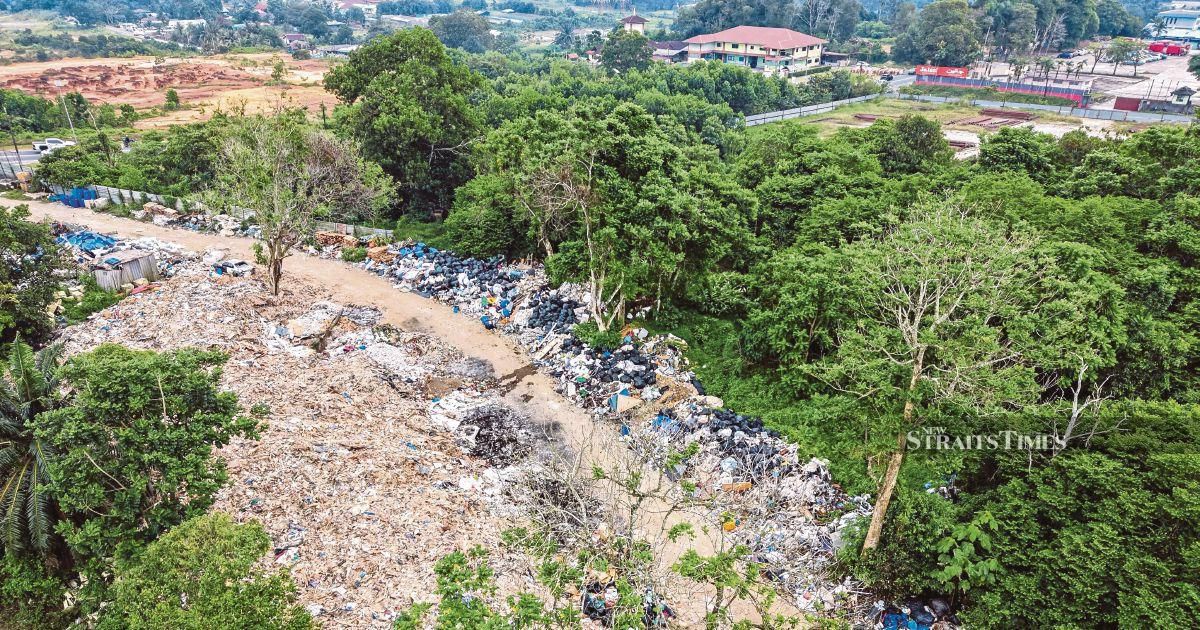
Authorities in Johor have responded to mounting concerns over environmental violations by establishing a co-ordinated investigation into allegations that construction debris from Singapore has been deposited at various locations throughout the Pontian district. The formation of a multi-agency task force signals the state government's commitment to addressing what appears to be a systematic disposal problem with potential cross-border implications.
The investigation represents a significant escalation in Johor's enforcement efforts against illegal waste dumping, particularly when such activities involve neighboring Singapore. Construction waste, if disposed of improperly, can contaminate soil and groundwater while creating severe environmental degradation in surrounding communities. The decision to mobilize multiple agencies underscores recognition that tackling this issue requires coordinated expertise spanning environmental protection, law enforcement, and interstate cooperation.
Pontian's proximity to Singapore makes it a particularly vulnerable location for such cross-border dumping schemes. The district sits at the southern tip of Johor, making it a natural point of entry for those seeking to bypass strict Singaporean waste management regulations by depositing materials across the border. The alleged incidents raise questions about the adequacy of current monitoring mechanisms at border areas and whether existing enforcement protocols can effectively deter such activities.
The multi-agency approach being adopted will likely involve the Selangor Waste Management Corporation (SWCorp), which leads much of Malaysia's industrial waste oversight, alongside state environmental departments and local municipal authorities. This collaborative structure enables cross-referencing of records, coordination of site inspections, and unified enforcement action against violators. By pooling resources and expertise, investigating agencies can more effectively trace waste sources and identify responsible parties.
Environmental experts have long cautioned that Malaysia's role as a disposal destination for neighboring countries' waste requires increasingly vigilant border controls and swift legal action. Construction waste contains materials ranging from inert substances like concrete and asphalt to potentially hazardous components including adhesives, insulation materials, and chemical coatings. When dumped without environmental safeguards, such waste can leach contaminants into the water table and soil, posing risks to agricultural productivity and public health in affected communities.
The allegations also highlight tensions inherent in cross-border waste management, where economically rational decisions in one jurisdiction create externalities for another. Singapore's stringent environmental regulations and limited land availability make legitimate waste disposal costly, creating financial incentives for some operators to seek cheaper alternatives abroad. This dynamic has prompted Malaysian authorities to strengthen detection capabilities and increase penalties for illegal dumping operations, though enforcement challenges persist given the scale of borderlands and the sophistication of some smuggling networks.
For Pontian residents, the investigation addresses a legitimate concern that has likely festered without adequate attention. Communities near dumping sites face potential contamination of private wells, degradation of land values, and health concerns ranging from respiratory issues to waterborne illnesses. The task force's establishment acknowledges these impacts and signals that local grievances are being taken seriously at state level, though actual environmental remediation and compensation remain separate matters requiring additional resources and political will.
The investigation's scope and thoroughness will depend heavily on cooperation between Malaysian authorities and their Singaporean counterparts. If Singapore-based companies or contractors are identified as sources, cross-border legal frameworks may need to be invoked to pursue accountability. Such cooperation has historically been uneven, reflecting different enforcement priorities and institutional constraints on both sides of the causeway.
Beyond the immediate investigation, this incident underscores the need for comprehensive regional frameworks governing industrial waste movement across borders. Southeast Asia's rapid development has generated enormous quantities of construction and demolition waste, yet interstate waste management remains fragmented and often inadequate. The establishment of standardized documentation, tracking systems, and mutually enforceable penalties could reduce illegal dumping while ensuring legitimate waste receives appropriate treatment.
The task force's findings will likely influence broader policy discussions within Johor regarding waste management infrastructure and border security. If the allegations prove substantiated at significant scale, the state may need to invest in additional monitoring technology, expand enforcement staffing, or negotiate memoranda of understanding with Singapore regarding waste documentation and tracking. Such measures, while costly, represent investments in environmental protection and public health that ultimately benefit both jurisdictions.
For Malaysian environmentalists and civil society organizations, this investigation represents an opportunity to build momentum for stricter waste management standards and enforcement. Public pressure, combined with the task force's investigative findings, may catalyze broader regulatory reforms that extend beyond Pontian to address similar vulnerabilities in other border regions throughout Malaysia.
The coming weeks will be critical as investigators compile evidence, inspect suspected dumping sites, and trace waste origins. The transparency and rigor with which authorities conduct this investigation will demonstrate whether cross-border environmental violations receive the same enforcement priority as domestic offenses, and whether Malaysia can effectively protect its communities and ecosystems from becoming repositories for neighboring countries' waste streams.

