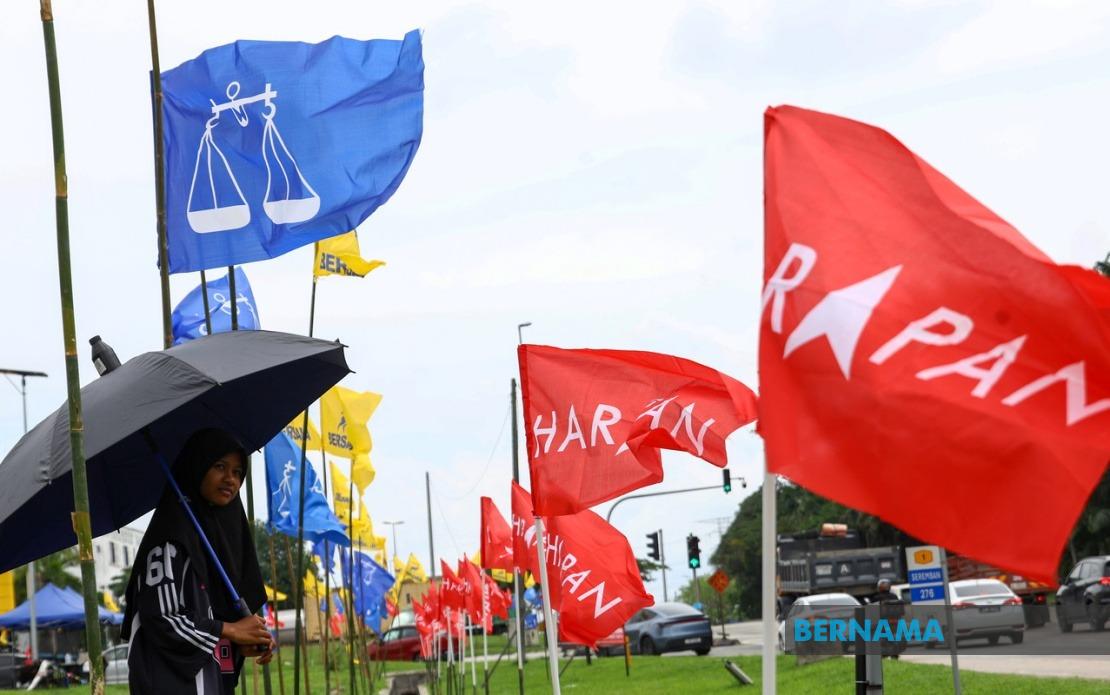
The campaign for Johor's 16th state election has crystallised around two fundamentally different political philosophies as the two main coalitions push hard into their second week of ground operations. Pakatan Harapan and Barisan Nasional, each contesting all 56 seats with a combined 172 candidates, have chosen divergent paths to convince voters before polling day on Saturday, July 11, reflecting their respective organisational strengths and strategic judgments about what resonates with the electorate.
Pakatan Harapan has anchored its campaign around a comprehensive policy platform called "Johor For All", which directly addresses the bread-and-butter concerns that surveys suggest preoccupy many voters. The coalition's messaging strategy centres on translating Johor's economic growth into tangible improvements in living standards—higher wages, more affordable housing, quality employment prospects, and stronger social safety nets. This approach represents a deliberate departure from campaign narratives that emphasise headline growth figures or foreign investment volumes, instead arguing that development's true measure should be whether ordinary Johorians feel materially better off in their daily lives.
According to Dr Mohammad Tawfik Yaakub, a political analyst at Universiti Malaya, PH's strategy reflects a sophisticated understanding that the state's considerable economic activity has not always translated into broad-based prosperity for its residents. The coalition's messaging attempts to reframe the development conversation, insisting that integrated strategies to boost domestic wages and ensure investment gains reach workers and families should be the priorities of state government. This focus on material outcomes rather than aggregate metrics suggests PH believes voters are increasingly sceptical of claims of prosperity when it remains unevenly distributed.
Barisan Nasional, by contrast, has pivoted significantly towards leveraging personality and party machinery rather than detailed policy articulation. The coalition has orchestrated the high-profile return of two formerly prominent UMNO figures—Datuk Seri Hishammuddin Tun Hussein, a former vice-president, and Khairy Jamaluddin, once the party's youth chief—both of whom have rejoined the party through the recent "Rumah Bangsa" initiative. These reappearances have generated considerable momentum in BN's campaign operations, with both figures now actively engaged in the traditional ceramah circuit to mobilise party supporters and rebuild organisational enthusiasm.
However, Dr Tawfik cautions that the contemporary voter is far more discerning than in previous election cycles, and the mere appearance of recognisable names at campaign events no longer guarantees electoral advantage. Modern voters, he suggests, evaluate political offers through a more sophisticated lens—scrutinising whether candidates possess genuine credibility, whether their parties present coherent policy responses to real problems, and whether those policies specifically address the voter's own concerns. The implication is that BN's strategy of deploying prominent personalities may be necessary but insufficient on its own to achieve victory.
Assoc Prof Dr Mohd Yusry Ibrahim, chief researcher at the Ilham Centre and lecturer at Universiti Malaysia Terengganu, offers a more optimistic assessment of Hishammuddin's potential impact. He argues that the former vice-president retains substantial political capital in Johor and could meaningfully revitalise support among UMNO loyalists who have drifted away from the coalition during recent years of political turbulence. Hishammuddin's deep roots in the state and his continued standing within traditional BN constituencies could indeed provide a platform to reclaim some of the ground the coalition has lost among its traditional base.
Khairy's re-emergence carries distinct strategic value. As one of the few Malaysian politicians who consistently polls well among younger voters, his participation in this campaign addresses what BN identifies as a critical vulnerability—the coalition's historical difficulty in appealing to voters under forty. Mohd Yusry emphasises that young voters today no longer display the generational loyalty to political parties that characterised their parents, instead gravitating towards candidates they recognise and feel personally connected to. In this context, Khairy functions as a bridge to a demographic that UMNO and BN have struggled to reach, and his involvement materially alters the coalition's capacity to compete for this segment.
The generational divide in voting behaviour represents a fundamental shift in Malaysian politics. Younger voters, unmoored from the partisan attachments of the post-independence era, base their political choices on more fluid criteria—public visibility, perceived authenticity, and personal appeal. This fluidity creates both opportunity and risk for established parties; a popular figure can suddenly open doors previously closed, but the same voters will abandon that figure if their expectations are disappointed. The candidate factor, in Mohd Yusry's assessment, has become paramount for younger voters in ways it simply was not for their predecessors.
The contrast between PH's policy-centric campaign and BN's personality-driven approach ultimately reflects each coalition's strategic calculus about which voter segments they can persuade and which constituencies might remain persuadable. PH appears to be making a bet that voters across the state are receptive to detailed arguments about economic fairness and direct material benefits, suggesting confidence in its ability to reach beyond traditional support bases through policy articulation. BN, conversely, is placing considerable stock in its organisational depth and the residual appeal of familiar faces, while simultaneously attempting to forge new connections with younger voters through carefully selected personalities.
Both strategies carry inherent risks. PH risks that policy sophistication and detailed manifestos may not overcome other factors—incumbency advantage, ground operations, or emotional connections to the BN brand—that typically influence voting behaviour. BN risks that the reappearance of past leaders may be read by voters as establishment retrenchment rather than renewal, or that personality alone cannot compensate for policy deficiencies if voters are indeed becoming more critical in their evaluation of political offers. The election result will offer important clues about which assessment of the contemporary voter has proven more accurate.
The Johor election thus serves as a testing ground for competing theories about modern Malaysian electoral behaviour. With early voting scheduled for July 7 and main polling on July 11, the state will soon render its verdict on whether voters in 2024 prefer detailed policy agendas addressing economic concerns, or whether traditional party machinery and recognisable political figures remain dominant in shaping electoral outcomes.

