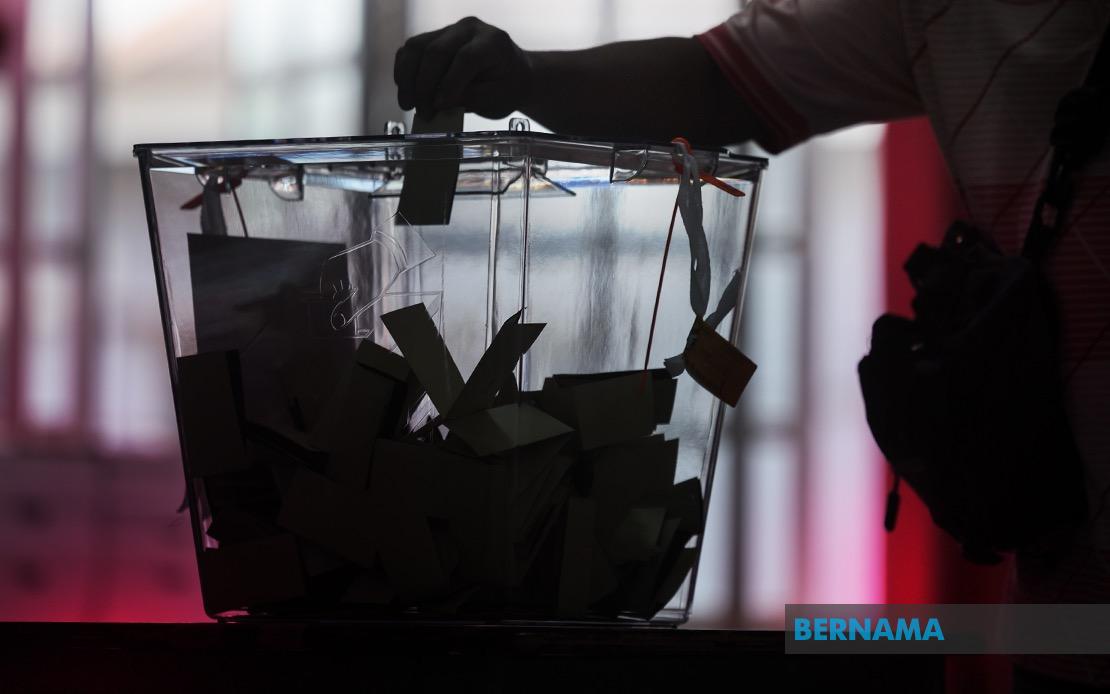
The upcoming 16th Johor state election carries particular significance for Pakatan Harapan's prospects in one of Malaysia's most politically contested states. According to political analyst Associate Professor Dr Mazlan Ali from Universiti Teknologi Malaysia, the decisive factor in this Saturday's polling may not be campaign rhetoric or traditional party machinery, but rather the willingness of voters scattered across the country to return home and participate in the democratic process. The coalition stands to gain substantially if voter participation rises, particularly in urban and semi-urban areas where voters who have relocated for work or education remain registered.
The foundation for this analysis lies in a striking contrast from recent electoral history. In the 2022 Johor state election, voter turnout languished at just over 50 per cent, a suppression largely attributable to pandemic-related movement restrictions and hesitation. Under those constrained circumstances, Barisan Nasional demonstrated its structural advantage by capturing 40 seats, leveraging its deep roots among permanent local residents who maintained steady voting participation regardless of external circumstances. The lower overall engagement paradoxically favoured an incumbent with established networks and community presence.
Yet the political landscape shifted dramatically when general election campaigning commenced later that same year. The 15th General Election witnessed voter participation surge to approximately 75 per cent, and this mobilisation fundamentally altered Johor's electoral mathematics. Pakatan Harapan's vote share expanded from roughly 350,000 ballots cast in the state election to approximately 830,000 votes in the general election—more than a doubling of support within months. This expansion translated into 14 parliamentary seats for the coalition, a significant breakthrough that demonstrated PH's latent appeal among voters who had previously stayed home.
The analytical insight here extends beyond simple arithmetic. Those additional voters who materialised for the general election represented a distinct demographic: individuals living outside Johor who maintained electoral registration, younger voters more engaged in national discourse, tertiary-educated professionals, and citizens with capacity to monitor multiple information sources. These constituencies align closely with PH's electoral base and respond to the coalition's messaging around governance, economic management, and social policy. When circumstances enable their participation—as the removal of pandemic restrictions now does—they materially shift competitive dynamics.
Dr Mazlan identifies several contemporary factors that could facilitate outstation voter mobilisation in this election cycle. Federal political stability has been restored following the turbulent post-election period, allowing voters to assess governance performance on substantive grounds rather than navigating institutional crisis. Economic indicators have improved measurably, and government assistance programmes including fuel subsidies remain visible in citizens' daily lives. These tangible benefits provide Pakatan Harapan supporters—particularly those who have migrated for economic opportunity—with concrete justification for returning to vote, framed not merely as political loyalty but as recognition of improved living standards they wish to preserve.
The demography of urban and semi-urban constituencies in Johor presents natural battlegrounds where this pattern could prove decisive. These areas concentrate the professional, educated, younger, and geographically mobile population segments that form PH's primary constituency. Unlike rural constituencies where BN maintains dominant local networks regardless of turnout, urban seats remain fluid, with outcomes heavily dependent on whether nonresident registered voters mobilise. The constituencies surrounding Johor Bahru, Skudai, and Kluang exemplify this dynamic, where rapid economic development has attracted substantial migrant populations.
However, the coalition faces a substantial operational challenge in translating latent support into actual votes. Encouraging voters scattered across Peninsular Malaysia—and indeed across Malaysia—to invest time and resources in returning to Johor to vote requires coordinated messaging and infrastructure. Pakatan Harapan's campaign must overcome the friction of distance and the competing demands on people's time during a busy weekend. The analytical framework suggests that organisational capacity will prove as important as policy appeal in determining whether potential support translates into cast ballots.
The contrast with BN's traditional strength illuminates the stakes. Barisan Nasional's voter base comprises substantial cohorts of long-term Johor residents with deep community ties, pensioners, rural populations with established voting routines, and constituencies where racial and religious sentiment drives electoral choice. These voters participate reliably regardless of turnout variations because their political identity and voting intention remain stable across election cycles. Pakatan Harapan's support base, by contrast, exhibits greater geographical dispersion and dependence on voluntary participation among busy professionals and youth.
Historical voting behaviour patterns suggest this distinction matters enormously. In the 2022 state election, the 20-point gap between the state election turnout (50 per cent) and the subsequent general election turnout (75 per cent) corresponded precisely to mobilisation among outstation voters who broke substantially toward PH. Extrapolating this logic forward, if similar or superior turnout materialises in this election—particularly in urban constituencies—PH could expect to translate voter share gains into substantially increased seat gains relative to the 2022 baseline.
Dr Mazlan's analysis highlights an often-overlooked dimension of Malaysian electoral politics: the power of turnout variation to reshape party competitiveness even when underlying voter preferences remain stable. Johor, with its economically dynamic urban zones and substantial populations of relocated professionals, exemplifies a state where differential mobilisation between resident and non-resident voters produces outsized electoral effects. The 2022-2023 experience demonstrated this dramatically, with PH gaining 14 parliamentary seats in Johor when turnout rose despite earning proportionally similar support in the preceding state election.
For Pakatan Harapan specifically, this election represents an opportunity to consolidate gains made through the 2022 general election by maintaining or expanding the proportion of outstation voters who participate. The coalition must sustain messaging that connects federal policy performance—stability, economic management, assistance programmes—to voter interests and then translate that appeal into ground-level mobilisation infrastructure. For Barisan Nasional, the strategic imperative runs opposite: maintaining competitiveness requires either improving vote share among traditionally marginal constituencies or depressing overall turnout in urban areas where it performs weakly.
The final weeks of campaigning will test whether each coalition can execute its turnout strategy effectively. For voters making participation decisions, the calculus involves weighing governance performance, policy offerings, and personal circumstances against the practical investment required to return home and vote. The collective outcome of millions of such individual decisions will determine whether this election reinforces or reverses Johor's 2022 outcome—a conclusion that carries implications extending well beyond the state itself for understanding Malaysian electoral dynamics in the post-pandemic era.

