The Johor state election campaign has become ensnared in allegations of political impropriety involving a Technical and Vocational Education and Training programme, with opposition lawmakers questioning whether government resources and facilities were appropriated for partisan purposes. Johor DAP chairman Teo Nie Ching has demanded that Menteri Besar Datuk Onn Hafiz Ghazi provide a full accounting of what occurred at the Johor MARA TVET Roadshow held at the Inland Revenue Board Hall in Kluang on July 4, after receiving multiple reports from parents and students claiming they were compelled to attend the event.
According to the allegations, participants received explicit warnings that non-attendance would be recorded as absenteeism, raising concerns about the voluntary nature of the gathering. What began as an ostensibly educational programme subsequently morphed into a canvassing operation on behalf of the Barisan Nasional's state election campaign, with the Menteri Besar allegedly directing students to support a specific BN candidate by openly referencing the candidate's ballot number. The incident highlights a persistent tension in Malaysian politics between the legitimate use of government platforms for public communication and the improper deployment of state resources for party-political advantage.
Teo, who serves as Deputy Communications Minister, articulated a carefully calibrated critique that does not object to elected officials attending government functions but emphasises the fundamental distinction between official business and campaign activities. She stressed that if the roadshow was genuinely a government programme, it should have remained neutral and apolitical, with no attempt to solicit support for any particular party or candidate. Conversely, if the gathering was organised as a partisan event, she questioned whether a government agency's premises could legally and ethically serve as a venue for political fundraising or voter mobilisation.
The opposition has marshalled documentary evidence to support its contentions, including the official programme itinerary, written directives mandating attendance, and video footage purporting to capture the disputed campaign remarks. This material arsenal suggests that the allegation is not merely anecdotal but grounded in contemporaneous records and visual documentation. Teo transcended her role as a party functionary to frame the issue in visceral, personal terms that resonate with broader parental concerns about institutional coercion and the integrity of youth engagement in public affairs.
The incident arrives at a politically sensitive juncture, as Johor conducts its state election with 172 candidates vying for 56 seats. Early voting commenced on July 7, with polling scheduled for July 11, meaning that any electoral improprieties must be addressed with considerable urgency to maintain public confidence in the integrity of the democratic process. The timing of these allegations, surfacing just days before the ballot, inevitably inflames partisan tensions and provides ammunition for opposition campaigns seeking to portray the incumbent BN administration as willing to blur ethical boundaries in pursuit of electoral advantage.
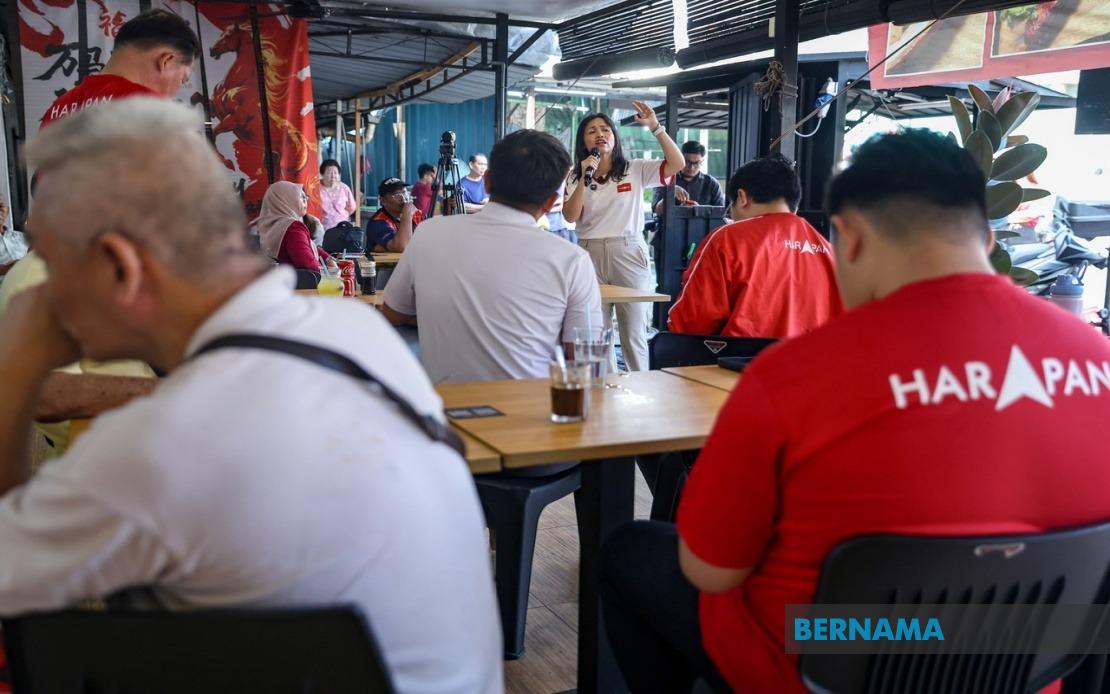
Lim Kit Siang, the veteran DAP stalwart accompanying Teo at a public forum in Kulai, broadened the frame of criticism beyond the immediate incident to articulate a larger vision of Malaysian politics transcending racial and sectarian divisions. His appeal for voters to consolidate their support around what he termed the "Malaysian Dream"—anchored in principles of equality, freedom, prosperity, and human rights protection—sought to elevate the discourse above tactical skirmishing and towards ideological clarity. The former DAP secretary-general acknowledged that constructing a genuinely united Malaysian nation is a generational undertaking rather than an instantaneous achievement, requiring sustained commitment from voters willing to resist the fragmentation of ballots across multiple parties.
Onn Hafiz has also faced separate criticism from the opposition for recent statements calling for revision of federal government policies he characterised as economically burdensome. Teo dismissed these critiques as disingenuous political theatre, noting that the Menteri Besar conveniently attributes popular policies to state-level success while attributing unpopular measures to federal leadership, prime ministerial decisions, or the coalition government's component parties. She underscored a fundamental procedural reality: major policy initiatives require Cabinet approval and cannot be implemented unilaterally by state executives, a constraint that should logically inform how political figures apportion responsibility for their effects.
The alleged misuse of the TVET programme exemplifies a recurring challenge confronting Malaysian electoral administration—the difficulty of policing the porous boundary between governmental communication and campaign activity, particularly when state apparatus and ruling-party machinery are substantially intertwined. Opposition parties have indicated that Pakatan Harapan candidates may lodge formal complaints with the Election Commission if they conclude the evidence warrants escalation to the electoral authority. Such a referral would trigger an investigative process, though the compressed timeline preceding the July 11 polling date leaves limited opportunity for comprehensive examination.
For Malaysian voters and regional observers, the incident underscores persistent structural vulnerabilities in how the country manages electoral competition and safeguards democratic norms. The compulsory attendance requirement imposed on TVET students is particularly troubling, as it leverages institutional authority over young citizens who have limited capacity to resist official directives. The broader implications extend beyond Johor's immediate electoral contest to questions about how Malaysia can strengthen institutional independence and prevent the instrumentalisation of public resources for partisan purposes—challenges that remain unresolved across Southeast Asia's diverse democracies.
The Johor state election will ultimately be determined by voter preferences expressed through the ballot, but the integrity of that democratic verdict depends partly on public confidence that the contest was conducted fairly and that governmental authority was not weaponised to suppress opposition voices or manufacture consent. Whether the TVET allegation represents isolated misconduct or symptomatic institutional dysfunction will become clearer in coming weeks, but the episode already signals that questions about the relationship between state power and electoral process remain deeply contested in Malaysian politics.

