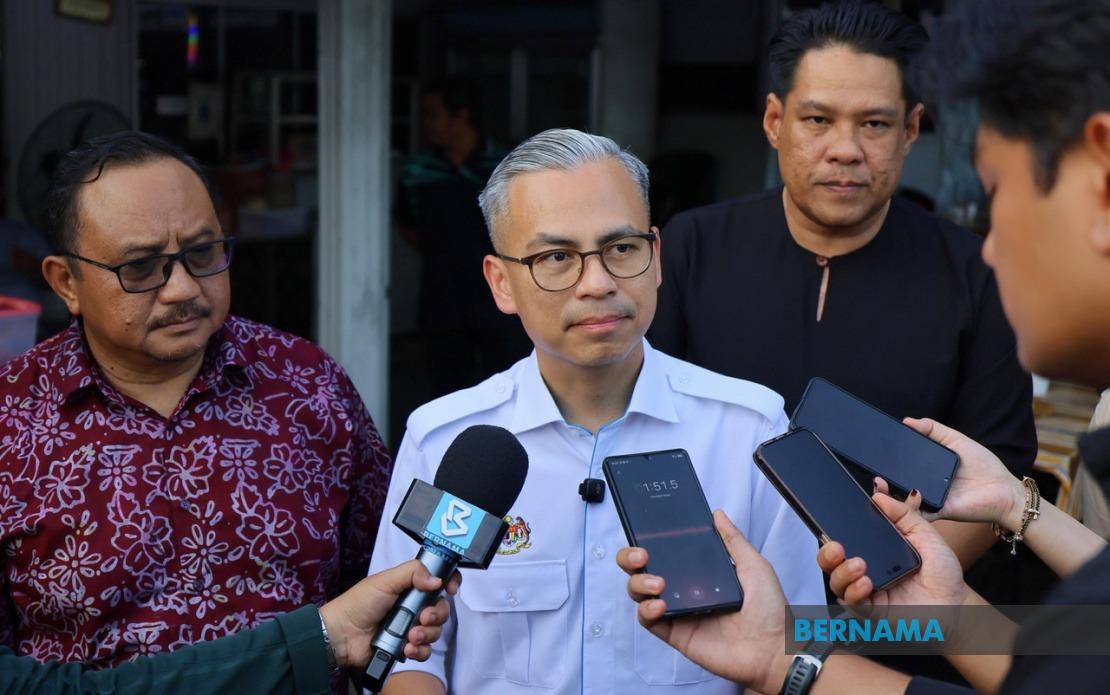
Communications Minister Datuk Fahmi Fadzil has called for a shift towards more principled and responsible campaigning practices during the Johor State Election, emphasising that political discourse must be anchored in factual reporting rather than unsubstantiated claims or character attacks. Speaking at a public engagement event in Batu Pahat ahead of tomorrow's nomination day, Fahmi stressed that maintaining decorum and lawfulness throughout the electoral process is crucial for preserving democratic values and public confidence in the system.
The timing of Fahmi's intervention underscores growing concern among election management bodies about the conduct of campaigns, particularly as digital platforms enable rapid dissemination of unverified information. His message carries implicit recognition that the upcoming election, following the dissolution of the Johor State Assembly on June 1, occurs within a highly competitive political environment where temptation to resort to personal attacks and inflammatory rhetoric may be heightened. By framing fact-based campaigning as a matter of democratic culture rather than merely regulatory compliance, the minister attempted to appeal to the civic responsibility of political actors.
The Election Commission and Royal Malaysia Police have been positioned as enforcement bodies ready to prosecute violations of electoral law, signalling that authorities will not tolerate campaigns characterised by defamation, incitement, or other criminal conduct. This dual approach—appealing to voluntary restraint while maintaining credible deterrence—represents the government's strategy for managing campaign conduct across Malaysia's federal and state elections. For political parties and their supporters, the message is unambiguous: campaigns will be monitored, and legal consequences await those who cross established lines.
A particularly important dimension of Fahmi's statement concerns the policing of false information on social media and digital channels. The Malaysian Communications and Multimedia Commission has intensified collaboration with social media platforms to identify and block the spread of disinformation, with special attention to sensitive matters involving religion, race, and monarchy—topics classified as the "3R" in Malaysian political discourse. This proactive approach acknowledges that digital falsehoods, once circulated widely, are difficult to contain or correct through traditional fact-checking mechanisms, making upstream prevention critical during elections when information flows rapidly and public attention is heightened.
The provision of dedicated media facilities reflects parallel efforts to support legitimate journalism during the election period. A primary media center has been established in Johor Bahru, while the National Information Dissemination Centre network, with at least one facility per state legislative assembly constituency, provides journalists with infrastructure for their reporting work. These measures aim to ensure that news professionals can gather, verify, and disseminate information reliably without operational constraints, theoretically reducing reliance on unofficial or poorly sourced reporting that may contribute to misinformation.
Fahmi's engagement with local Member of Parliament Onn Abu Bakar also revealed how election periods can function as mechanisms for addressing longstanding infrastructure grievances. Onn had raised complaints from Batu Pahat residents regarding internet disruptions and connectivity blind spots, issues that directly impact access to information and the ability of citizens to participate in digital political discourse. By requesting the MCMC to investigate these complaints, Fahmi demonstrated recognition that reliable communications infrastructure is foundational to conducting fair elections and informed citizen participation.
The broader context of Johor's state election carries significance for the Malaysian political landscape. As one of the country's largest and most consequential states, Johor's electoral outcome influences national political trajectories and coalition dynamics at the federal level. The state's economic importance and role as a gateway to Singapore also mean that stability and orderly governance transitions matter beyond domestic politics. Maintaining campaign discipline therefore serves not merely as a matter of electoral management but as a demonstration of institutional maturity and respect for democratic norms.
Fahmi's intervention also reflects awareness among federal authorities that campaign conduct at the state level sets precedents and cultural standards that can either strengthen or erode confidence in democratic processes. When state elections proceed with factual rigor and personal restraint, they reinforce public expectations for responsible political behaviour generally. Conversely, elections marred by slander and misinformation risk normalising such conduct and deepening public cynicism about political institutions. The minister's emphasis on "healthy" campaigning thus appeals to collective responsibility for maintaining democratic legitimacy.
For Malaysian voters and observers, particularly those engaged with state-level politics, Fahmi's remarks provide clarity about regulatory expectations and enforcement intent. The clear articulation of what constitutes prohibited conduct—slander, false information, inflammatory rhetoric—allows political contestants to calibrate their campaigns accordingly. At the same time, the backing of enforcement resources from both the Election Commission and police creates mechanisms to address violations discovered during the campaign period or reported by citizens and watchdog organisations.
The election schedule itself concentrates attention on specific dates, with nomination day falling on June 27 and polling scheduled for July 11. This condensed timeline intensifies campaigning activity and increases likelihood of heated rhetoric or rule violations. Fahmi's pre-nomination address therefore serves as a timely reminder positioned when political parties are finalising campaign strategies and preparing candidate announcements. By setting expectations clearly before the campaign formally begins, authorities aim to establish a tone that encourages self-regulation among political actors.
The intersection of digital communication, electoral competition, and social stability remains a complex challenge for Malaysian election administrators. Fahmi's multi-faceted approach—voluntary appeals to restraint, regulatory monitoring, infrastructure support for legitimate journalism, and enforcement capacity—acknowledges that no single mechanism suffices to ensure clean elections. Rather, healthy electoral culture emerges from combinations of institutional design, technological tools, professional norms among journalists and political actors, and genuine commitment to democratic values among the public.
Looking ahead to the July 11 polling day, the extent to which political parties and candidates heed Fahmi's call for fact-based campaigning will reveal whether such appeals retain persuasive power or whether regulatory oversight must more actively constrain campaign conduct. The Johor election thus serves as a test case for whether Malaysia's existing institutional frameworks can maintain electoral integrity and democratic decorum as digital communication continues reshaping political competition and information flows.

