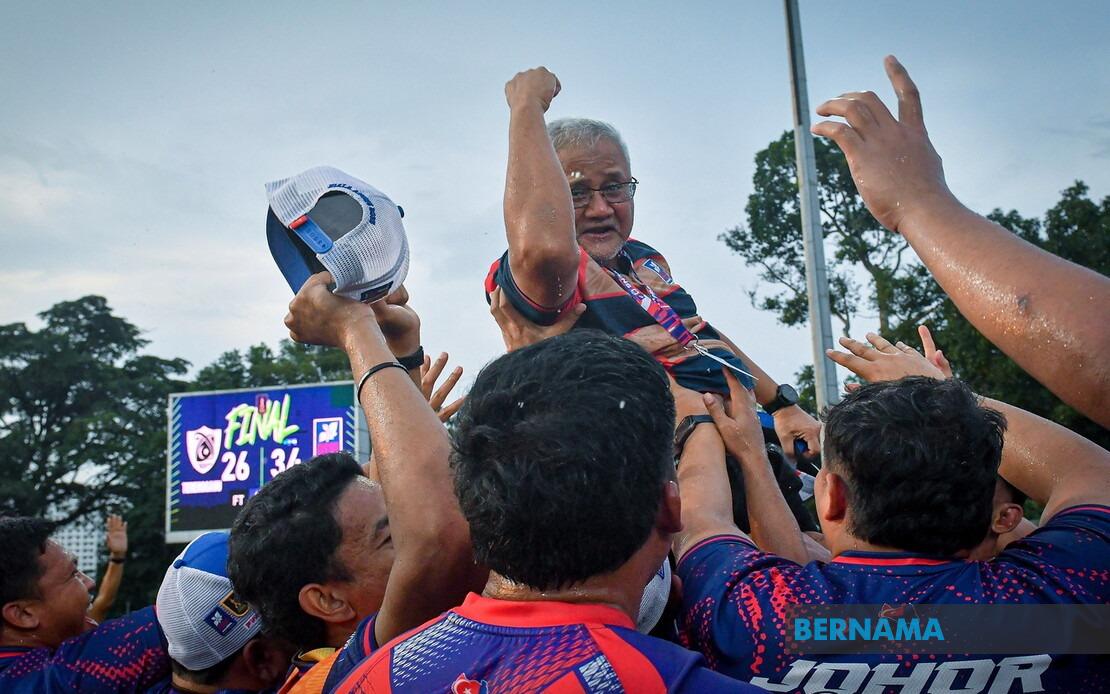
Johor rugby team has reclaimed the Agong's Cup after a prolonged nine-year absence from the winner's podium, staging a remarkable second-half turnaround to edge Terengganu 34-26 in the final of the 42nd edition of Malaysia's most storied rugby tournament. The match, contested at the Universiti Teknologi MARA Stadium in Shah Alam on June 28, showcased the competitive intensity that continues to define this premier domestic rugby competition and underscored Johor's enduring strength in the sport at the state level.
Terengganu began the contest with considerable momentum, establishing a commanding position during the opening forty minutes and holding a slender advantage of 19-17 at the interval. However, the second half proved to be a turning point, with Johor orchestrating a disciplined and determined offensive campaign that overwhelmed their opponents and ultimately secured the silverware. This comeback victory represents a significant achievement for Johor, which had not claimed the trophy since 2017, making the nine-year gap a particularly lengthy drought for a squad with genuine championship credentials.
The triumph constitutes Johor's third title in the competition's history, having previously claimed the Agong's Cup in 2013 and 2017. The state's rugby programme has demonstrated considerable resilience and consistency over the years, and this latest victory will reinvigorate the programme and provide a substantial boost to the development of rugby talent within the state. For Malaysian rugby enthusiasts, Johor's success at this level provides encouraging signs about the vitality of domestic club and state-level competition, which serves as the traditional pathway for identifying and developing players capable of representing the national team.
Parallel to the main final, Kelantan delivered their own compelling performance in the third-place playoff, narrowly defeating the Royal Malaysia Police rugby side 43-41 in a match marked by several momentum swings and attacking rugby from both teams. The proximity of the final scoreline reflected the competitive standards evident throughout the tournament and highlighted the breadth of talent available within Malaysia's rugby system at the state representative level. Such closely contested matches demonstrate that the sport maintains considerable depth and engagement across multiple states.
The financial incentives attached to championship success reflected the significance accorded to the tournament by sporting authorities and sponsors. Johor's victorious squad received RM20,000 in prize money for their triumph, while runners-up Terengganu collected RM15,000, third-place finishers Kelantan took home RM10,000, and PDRM received RM5,000 for their fourth-place finish. These monetary rewards, whilst modest in absolute terms, carry symbolic importance in recognising excellence and providing material recognition to state rugby associations and their programmes.
Johor's Aqasha Daniel Irwan earned individual honours as the tournament's standout performer, receiving the player of the match award alongside RM1,000 in prize money and a commemorative plaque. Such individual recognition serves an important function in developing the sport's profile, allowing talented players to gain exposure and potentially progress toward higher levels of representation. Irwan's performance during the tournament evidently impressed adjudicators and rugby observers, and such accolades can serve as stepping stones for ambitious players seeking to earn positions in national squad selections.
The Agong's Cup tournament occupies a particular place within Malaysian rugby's competitive landscape, occupying the space between club rugby and national representation. For many state-based players, participation in tournaments of this calibre provides the most regular competitive exposure available outside of occasional national matches. The championship thus functions as both a direct test of state-level rugby quality and as an indirect indicator of the health of domestic club rugby programmes that supply players to state teams. Johor's ability to mount a successful campaign suggests a well-organised internal rugby ecosystem.
The venue selected for the championship, the UiTM Stadium in Shah Alam, provided an appropriately professional setting for the tournament's matches. Access to quality facilities such as this reflects the ongoing efforts to elevate standards in domestic rugby and provide teams with training and competition environments that match international norms. Such infrastructure investments support the development of the sport and create conditions under which meaningful competitive matches can take place.
Looking forward, Johor's championship success will likely inspire renewed competitive efforts from rival states seeking to claim future editions of the trophy. The nine-year gap between victories had perhaps created a perception that Johor's rugby dominance had waned, but this latest triumph will serve to reset such narratives and position the state as a serious contender for future competitions. For Malaysian rugby more broadly, the successful staging of a 42-edition tournament demonstrates the institutional continuity and support that exists for domestic rugby at the state level, even as the sport navigates the broader challenges faced by rugby globally and in Southeast Asia.

