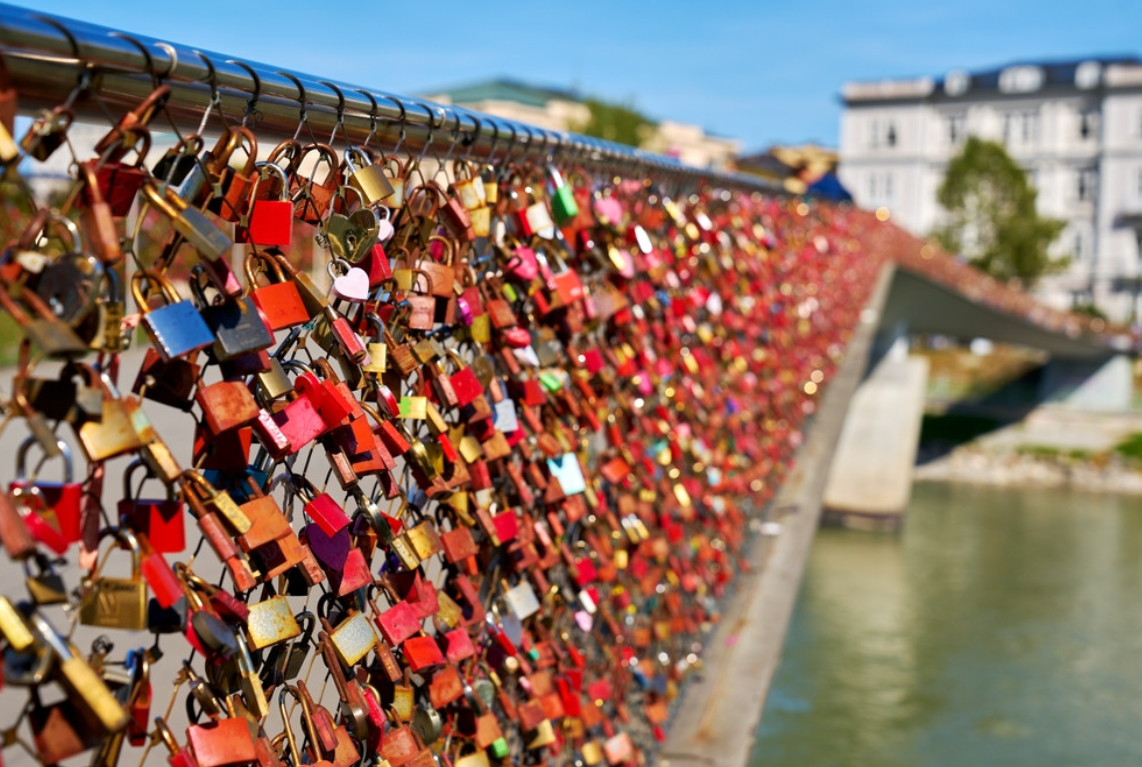
Jakarta's municipal administration has unveiled plans to construct several 'love lock' bridges along one of the city's busiest arterial roads, a romantic gesture that has quickly become a flashpoint for broader questions about how the Southeast Asian megacity allocates its limited resources. The proposed installations, inspired by similar attractions in Paris and Seoul, would span the Cideng River in South Jakarta, connecting Jalan Rasuna Said with Jalan Kuningan Persada near the Corruption Eradication Commission headquarters. The initiative comes as Governor Pramono Anung seeks to rebrand central Jakarta's public spaces, yet the announcement has exposed fundamental tensions between aesthetic city-branding and the nuts-and-bolts infrastructure that millions of residents depend upon daily.
The project represents a substantial financial commitment, with the city administration carving out Rp 91 billion (approximately US$5 million) for the broader revitalisation of the 3.8-kilometre thoroughfare. According to gubernatorial staffer Cyril Raoul "Chico" Hakim, the initiative encompasses far more than romantic symbolism: sidewalk renovations, removal of derelict concrete pillars from an abandoned early-2000s monorail scheme, and the addition of three to four pedestrian bridges designed with contemporary aesthetics while maintaining functional accessibility. Governor Pramono's vision specifically targets young people, positioning the love lock installation as a cultural space where couples can express affection by securing padlocks to the structure. However, the precise budget allocation for the bridges themselves remains undetermined, pending detailed engineering specifications currently in development.
The proposal has encountered immediate scepticism from Jakartans navigating daily reality in the sprawling capital. Karlina, a 27-year-old office worker in the nearby Mega Kuningan district, articulated a perspective shared by many commuters: while conceptually charming, the bridges seem disconnected from how the area actually functions. She noted that the neighbourhood's character—dominated by corporate offices and business activity rather than leisure destinations—makes it an unlikely magnet for youth cultural gatherings. Instead, Karlina suggested that young Jakartans, particularly Gen Z cohorts, would gravitate toward genuinely accessible public gathering spaces requiring minimal cost and convenient public transport connections. Her commentary underscores a fundamental disconnect between the administration's vision and the lived experiences of residents who navigate these spaces during their daily routines.
Urban planning specialists have mounted more pointed critiques, questioning whether romantic infrastructure addresses Jakarta's acute structural deficits. Trubus Rahadiansyah, an urban planning expert, characterised the love lock bridge project as a "gimmick" that privileges symbolic value over tangible mobility improvements. The area surrounding Jalan Rasuna Said remains fundamentally oriented toward vehicle traffic rather than pedestrian movement, rendering it an inapt location for pedestrian-centric amenities. More fundamentally, Trubus argued, Jakarta's administration should redirect resources toward projects addressing demonstrable public safety failures. He pointed specifically to the catastrophic April incident involving a Commuter Line train collision with the Argo Bromo Anggrek intercity service in Bekasi, West Java, which resulted in 16 deaths and injuries to at least 91 individuals—a tragedy traceable to inadequate safety infrastructure at railway level crossings.
The railway safety concern resonates throughout Jakarta's transport network, where numerous crossings still lack basic protective infrastructure such as automatic gates. Trubus emphasised that investments in secure pedestrian bridges and properly functioning railway crossing barriers represent essential infrastructure rather than optional amenities. When juxtaposed against the city's persistent vulnerabilities—inadequate crossing safety, pedestrian infrastructure gaps, and the ongoing legacy of failed monorail projects—the allocation of resources toward romantic installations appears at odds with fundamental urban safety requirements. This critique reflects broader frustrations within Jakarta's planning community regarding how municipal leadership prioritises projects that generate positive media coverage against investments addressing unglamorous yet essential infrastructure shortfalls.
Localised political opposition has crystallised around these concerns. Kevin Wu, a Jakarta city councillor representing the Indonesian Solidarity Party, has called for transparent scrutiny of the love lock bridge initiative, arguing that public expenditure should foreground basic resident requirements rather than iconic projects. His intervention highlights territorial tensions within Jakarta's development, as he emphasised that residents across West, East and North Jakarta deserved equitable infrastructure investment rather than concentration of beautification spending in particular districts. Wu cautioned against patterns where signature civic projects obscure the reality that fundamental amenities—accessible sidewalks, safe pedestrian crossings, accessible public green areas—remain unevenly distributed across the sprawling metropolis. His comments, amplified through local media, positioned the love lock bridges as emblematic of misaligned priorities rather than genuine community advancement.
The debate reflects Jakarta's perpetual infrastructure paradox: a city of ten million people confronting complex mobility challenges, persistent underinvestment in unglamorous systems maintenance, and bureaucratic tendencies toward high-visibility projects that generate favourable publicity. The 3.8-kilometre revitalisation project itself encompasses reasonable objectives, from removing long-abandoned monorail remnants to upgrading pedestrian pathways. Yet embedding Rp 91 billion into a thoroughfare primarily serving vehicular traffic and corporate districts seems disconnected from where Jakarta's infrastructure crises most acutely manifest—in peripheral neighbourhoods, at dangerous railway intersections, and throughout the city's inadequate pedestrian networks. The love lock bridge component specifically crystallises this tension, representing investment in aesthetic placemaking when structural vulnerabilities persist.
Geographically, Jalan Rasuna Said's positioning within Jakarta's wealthier central business district raises equity questions amplified by Wu's council intervention. This central corridor connects affluent neighbourhoods and corporate complexes, whereas peripheral communities throughout Jakarta's eastern, western and northern districts struggle with deficient basic infrastructure. Concentrating beautification spending in prosperous areas while these peripheral zones lack elementary pedestrian safety features perpetuates spatial inequality within the metropolitan region. For residents in outer Jakarta experiencing inadequate sidewalks, dangerous traffic conditions, and limited public space access, romantic bridge installations in corporate districts underscore bureaucratic priorities seemingly disconnected from their immediate circumstances.
The love lock bridge episode also contextualises Indonesia's broader infrastructure allocation debates, particularly relevant to Southeast Asian regional development patterns. Throughout the region, municipal administrations frequently wrestle with choices between flagship projects offering symbolic value and systemic investments addressing fundamental public needs. Jakarta, as Indonesia's capital and the region's primary economic engine, receives disproportionate resource flows; yet these investments often emphasise visibility and international competitiveness rather than equitable spatial development. The Pramono administration's initiative, while well-intentioned regarding youth engagement and romantic public space creation, reflects tendencies prioritising signature amenities over the grinding, unglamorous work of building comprehensive pedestrian infrastructure, improving transit connectivity, and ensuring basic safety across entire metropolitan regions.
Moving forward, the proposed bridges present Jakarta's administration with an opportunity to recalibrate development priorities without entirely abandoning the revitalisation initiative. The broader Jalan Rasuna Said project could proceed with sidewalk improvements and monorail remnant removal while deferring the love lock bridges pending clearer community engagement and demonstrated demand. Alternatively, investing in pedestrian infrastructure within peripheral districts while proceeding with the current plan would address equity concerns. More substantially, the episode should prompt municipal leadership to establish transparent frameworks for evaluating infrastructure proposals against criteria emphasising public safety, equitable spatial development, and systemic connectivity rather than aesthetic symbolism alone. Jakarta's infrastructure challenges are too urgent, and public resources too constrained, for beautification projects to displace investments addressing genuine mobility and safety vulnerabilities affecting millions of residents daily.

