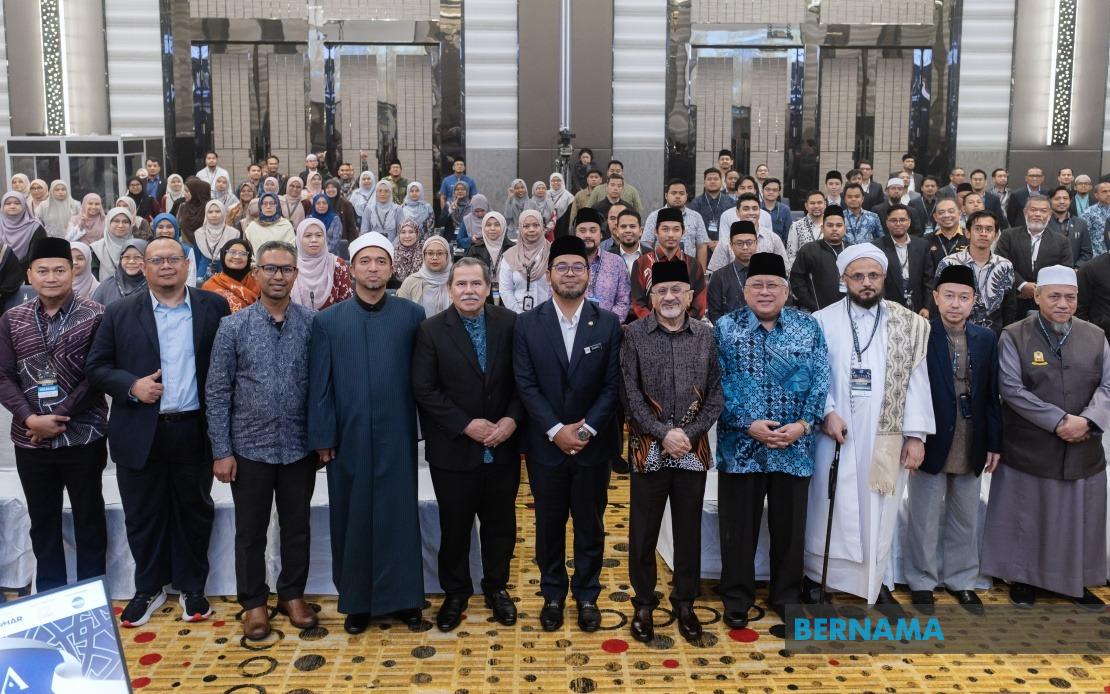
Islamic social finance has emerged as a potentially transformative force in Malaysia's broader strategy to eliminate poverty and catalyse sustained economic growth, according to Religious Affairs Minister Dr Zulkifli Hasan. Speaking at the MULTAQA SIDR Islamic Social Finance Conference here on August 12, the Minister in the Prime Minister's Department outlined an ambitious vision for mainstreaming Islamic financing instruments across the country's development agenda, positioning them alongside conventional financial mechanisms as essential tools for inclusive growth.
The government is preparing to deepen collaboration across multiple sectors to realise this potential. Zulkifli indicated that public agencies, academic institutions and commercial enterprises would be encouraged to work together in developing Islamic social finance frameworks. This multi-stakeholder approach reflects recognition that poverty alleviation and community empowerment cannot rely on traditional finance alone, particularly given the cultural and religious dimensions that Islamic instruments can address within Malaysia's diverse society.
The Department of Waqf, Zakat and Haj (JAWHAR) has been designated as the pivotal agency responsible for elevating governance standards and operational professionalism across the Islamic organisational landscape, with particular focus on non-governmental organisations. This appointment signals a structural shift toward centralised oversight and accountability mechanisms that have historically been fragmented across various Islamic bodies. By consolidating leadership under a single departmental authority, the government aims to create coherence in how Islamic social finance initiatives are managed and evaluated.
Zulkifli stressed that partnerships between universities, research institutions and the voluntary sector are indispensable for overhauling how Islamic NGOs are structured and administered. These collaborations would enable knowledge transfer and implementation of international best practices in organisational management, financial transparency and impact measurement. Such engagement with the academic sector is particularly significant for Southeast Asia, where higher education institutions increasingly recognise Islamic finance as a legitimate and growing field of scholarly inquiry and practical application.
The launch of Malaysia's Islamic Social Finance Report 2026 during the conference provides stakeholders with a comprehensive analysis of ecosystem development, existing challenges and future opportunities. The report is intended to serve as a benchmark document for policymakers, financial institutions and researchers across the region, offering insights into how Islamic instruments can be optimised for measurable socioeconomic impact. For Malaysia specifically, this publication underscores the country's positioning as a regional thought leader in Islamic finance innovation.
A conceptual reorientation is central to Zulkifli's vision for the sector. Islamic social finance must function as "The Third Force", operating beyond the traditional dichotomy of government welfare and commercial banking. Rather than perpetuating a culture of dependency through temporary relief programmes, this model would empower communities to build sustainable livelihoods and productive capacity. This shift from consumptive to generative assistance carries profound implications for how development resources are deployed and evaluated across Muslim-majority communities.
Governance integrity has emerged as a critical concern within this broader framework. Zulkifli's comments regarding the Royal Commission of Inquiry report on Tabung Haji reveal underlying anxieties about institutional credibility. Any lapses in transparency, accountability or ethical conduct within Islamic financial bodies risk contaminating public confidence not merely in those organisations but in Islam itself as a moral and institutional framework. This observation underscores how governance failures transcend technical or administrative domains; they carry symbolic weight that can undermine broader efforts to position Islamic finance as a serious development instrument.
The minister's cautionary remarks about the relationship between institutional weakness and religious legitimacy reflect a sophisticated understanding of reputational dynamics in faith-based financial systems. When Islamic organisations mismanage funds or breach fiduciary obligations, the damage extends beyond balance sheets to erode community trust in the very principles of Islamic stewardship and social responsibility. For Malaysia, where Islamic institutions play roles in both spiritual and socioeconomic spheres, maintaining institutional integrity becomes essential not only for financial sector stability but for social cohesion itself.
The conference brought together senior officials including INCEIF University's leadership, the Federal Territories Islamic Religious Council and representatives from zakat collection infrastructure. This assembly of stakeholders reflects the institutionalisation of Islamic social finance across government, academia and religious administration. INCEIF's participation particularly underscores how financial education and research are becoming integrated into Malaysia's approach to Islamic economics, potentially creating pipelines of trained professionals capable of implementing sophisticated instruments in alignment with Shariah principles.
For regional observers, Malaysia's strategic emphasis on Islamic social finance offers lessons in how developing economies can leverage faith-based financial systems for developmental objectives. The model being advanced integrates waqf (charitable endowments), zakat (almsgiving) and other Islamic instruments within a coherent governance architecture, suggesting a pathway for other Southeast Asian and Muslim-majority nations to replicate. The emphasis on professionalisation, academic engagement and private sector collaboration indicates that Islamic finance need not remain insular or exclusively religiously-oriented; rather, it can be structured as a sophisticated development mechanism incorporating international standards.
Zulkifli's reluctance to comment on calls for additional inquiries into Tabung Haji investment losses indicates political sensitivity around institutional accountability. While the government appears committed to strengthening Islamic finance sector-wide, addressing specific institutional failures requires careful navigation between transparency imperatives and maintaining public confidence in Islamic financial institutions. The balance struck between acknowledging governance challenges and protecting institutional legitimacy will likely shape how effectively Malaysia's Islamic social finance ambitions are realised in practice.

