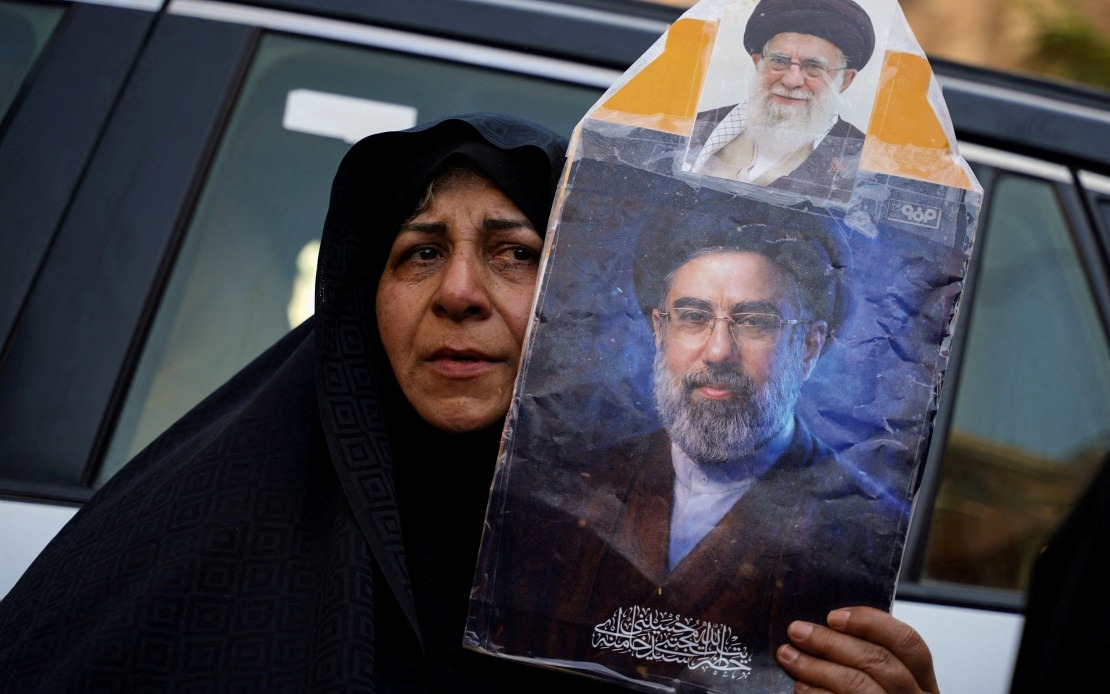
Iran's Supreme Leader Mojtaba Khamenei has launched a scathing rebuke of American reliability, claiming that repeated violations of a freshly signed peace memorandum prove that President Donald Trump's commitments carry no weight. Speaking through Iranian state media on Saturday, Khamenei suggested the breaches demonstrated what he characterized as Washington's inherent dishonesty and predatory character, underscoring deepening fault lines between the two nations even as diplomatic channels were meant to remain open.
The agreement in question was signed on June 18 between Trump and Iranian President Masoud Pezeshkian, establishing a framework under which both countries would pursue substantive negotiations within a 60-day window aimed at reaching a comprehensive accord. The memorandum was intended to create breathing room for diplomacy after years of escalating hostility and brinkmanship between Washington and Tehran. Yet barely a month into this arrangement, the initiative appears to have fractured under the weight of military operations neither side was willing to abandon.
Khamenei's statement arrived amid a rapidly deteriorating security situation across the Middle East, with the United States having conducted multiple air campaigns against Iranian positions and allied forces in recent days. The Iranian leadership responded with its own strikes targeting American military infrastructure and bases scattered throughout the region. This tit-for-tat pattern suggests that the June memorandum lacked sufficient enforcement mechanisms or mutual confidence to restrain either party from pursuing military objectives.
Beyond the Supreme Leader's heated rhetoric lay a more consequential development: Iran's Deputy Foreign Minister for Legal and International Affairs Kazem Gharibabadi formally announced that his country would suspend compliance with the terms of the peace agreement. Gharibabadi blamed the United States for initiating the breach, asserting that Washington had already violated its side of the bargain. This represented a critical escalation, as Iran was signalling it no longer felt bound by restrictions that the June accord had presumably imposed on its conduct.
The collapse of the memorandum holds particular significance for Southeast Asian observers and policymakers. Malaysia and other regional nations maintain complex relationships with both the United States and Iran, balancing strategic partnerships, energy security concerns, and broader considerations of regional stability. When major international agreements crumble so swiftly, it creates uncertainty that ripples outward, potentially affecting trade flows, shipping routes, and the investment climate across Asia.
Khamenei's characterization of Trump's signature as worthless reflects a deeper frustration about what Iran views as a pattern of American inconsistency. The Trump administration had previously withdrawn from the Joint Comprehensive Plan of Action in 2018, abandoning an agreement that Tehran had painstakingly negotiated over years and had largely adhered to by most international assessments. For Iranian leaders, the June memorandum represented another opportunity to test whether Washington could be trusted to honor its undertakings. The rapid unraveling confirmed their longstanding suspicions.
The Supreme Leader went further than mere criticism, explicitly warning the United States that continued military operations and what he termed warmongering would prompt Iran to deliver what he called unforgettable lessons. This language carries implicit threats of escalation, suggesting that if American military pressure intensifies, Tehran stands ready to raise the stakes dramatically. Such rhetoric, while partly performative for a domestic audience, also signals resolve and establishes deterrent messaging ahead of potential further confrontations.
The role of Trump's personal credibility in these dynamics warrants closer examination. Khamenei's focus on the American president's trustworthiness touches on a fundamental challenge in international relations: whether individual leaders can bind their nations to commitments that survive political transitions and domestic pressure. Trump's previous repudiation of the JCPOA had already demonstrated the fragility of agreements dependent on presidential preference rather than deep institutional consensus. The June memorandum's swift collapse suggests the problem persists unchanged.
For Malaysia and other Southeast Asian nations, these developments underscore the importance of diversifying diplomatic and economic partnerships rather than betting everything on any single relationship. The instability in the Middle East, combined with demonstrated American unreliability from the Iranian perspective, creates vacuums that other powers may seek to fill. China and Russia have both positioned themselves as more predictable alternatives to American engagement in various regional and global contexts.
The practical implications extend to energy markets and economic ties. Malaysia depends on stable global oil supplies and investment capital flows. Escalating Iran-US tensions threaten to disrupt both. Even if direct military conflict remains limited, the uncertainty generated by failed diplomatic initiatives can drive energy prices upward and prompt foreign investors to reassess their commitments to the region. Malaysian companies with exposure to Middle Eastern markets face heightened risk calculus.
The breakdown also reveals the difficulty of achieving meaningful diplomatic breakthroughs when underlying trust has been thoroughly eroded. Both the United States and Iran entered the June memorandum with decades of mutual suspicion and prior instances of betrayal, real or perceived. Absent mechanisms for verification, dispute resolution, and sustained political will on both sides, such agreements become vulnerable to the first serious crisis or change in calculations by either party.
Looking forward, the question becomes whether this collapse represents a temporary setback or a more permanent closure of diplomatic channels. Khamenei's intemperate language and Iran's formal suspension of compliance suggest the latter. If so, the region faces a prolonged period of military posturing, proxy conflicts, and periodic escalations punctuating stretches of tense standoff. This environment presents both risks and opportunities for Southeast Asian states seeking to maintain balanced engagement with all major powers while protecting their own strategic interests.

