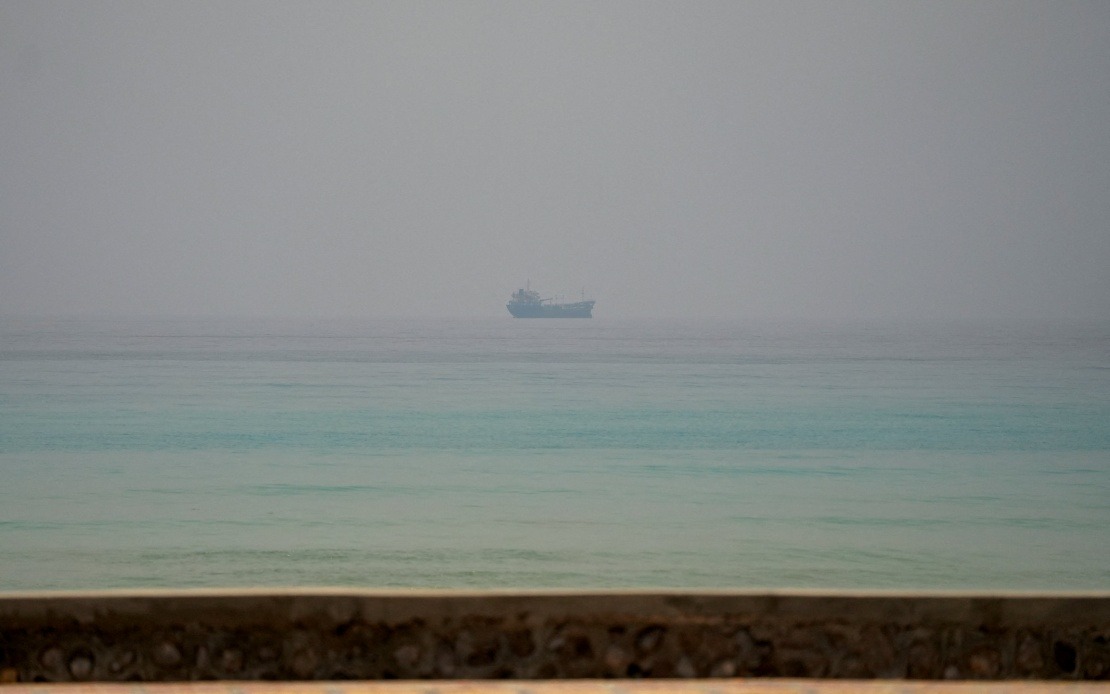
The escalating military tensions between the United States and Iran have intensified dramatically with Iranian Parliament Speaker Mohammad Bagher Qalibaf's forceful assertion that control of the strategically vital Strait of Hormuz rests entirely with Tehran. Speaking through social media on Thursday, Qalibaf rejected what he characterised as American bullying tactics, emphasising that Iran would not yield to threats and that any aggression would be met with retaliation. His inflammatory rhetoric underscores the deepening confrontation in the Middle East and carries significant implications for global energy security and maritime trade flowing through one of the world's most critical chokepoints.
Qalibaf's comments represent an official Iranian position statement issued in response to a new round of American military operations conducted late Wednesday against multiple sites across southern and southeastern Iran. The US Central Command later confirmed that American forces had launched fresh strikes specifically designed to degrade Iranian capabilities that could threaten freedom of navigation through the Strait of Hormuz, a waterway through which approximately one-third of global seaborne petroleum traffic passes daily. This assertion of intent by Washington stands in direct contrast to Iran's insistence that it alone determines the terms under which the passage functions.
The Iranian Parliament Speaker's warning carries particular weight given his prominent position within Iran's political establishment and his responsibility for legislative affairs in the Islamic Republic. His statement—delivered with unmistakable clarity that any US strike would provoke Iranian retaliation—represents more than rhetorical posturing; it signals Tehran's determination to escalate the conflict should American military operations continue. The phrase "if you strike, you will be struck" contains an implicit threat that Iran possesses the capacity and will to respond, whether through direct military action, proxy forces, or disruption of critical maritime infrastructure.
For Malaysia and other Southeast Asian nations, these developments carry substantial economic ramifications. The region's energy security depends heavily on stable passage through the Strait of Hormuz, where crude oil destined for Asian markets regularly transits. Malaysia, as a major energy importer and a nation heavily dependent on maritime trade, faces potential disruption to supply chains and elevated oil prices should the confrontation escalate into actual blockade attempts or sustained military engagement. Shipping companies operating in the region already navigate heightened risk premiums, and any Iranian action to restrict passage would immediately impact fuel costs and industrial input expenses throughout Southeast Asia.
The US Central Command's stated objective of degrading Iranian capabilities reflects Washington's interpretation of Tehran's recent actions as threatening to international maritime commerce. CENTCOM's emphasis on preserving freedom of navigation suggests that American strategy aims to maintain the status quo through demonstrated military superiority and willingness to use force. However, Iran's resistance to this approach and its assertion of sovereign rights over the Strait—through which its own oil exports must pass—creates a fundamental strategic disagreement about who controls this critical waterway and under what circumstances transit can proceed unimpeded.
Qalibaf's assertion that bullying and promise-breaking "no longer come without cost" reflects Iranian frustration with the international agreement situation, including historical grievances regarding the nuclear deal and subsequent US withdrawal. Iran perceives American pressure as unilateral and illegitimate, particularly given what Tehran characterises as unfulfilled commitments by other signatories. This historical context informs current Iranian posturing and explains why officials frame any accommodation to US demands as capitulation rather than negotiation. Understanding this perspective is essential for comprehending why Iran continues to escalate rhetoric and potentially military preparations despite being outmatched in conventional military capabilities.
The recurring cycle of US strikes followed by Iranian threats creates an escalatory spiral that shows little sign of de-escalation. Each military action prompts stronger rhetoric from Iranian officials, potentially pushing the situation toward unintended consequences. The risk of miscalculation increases with each incident, particularly given the presence of multiple armed forces in congested maritime areas and the potential for accidental engagement to trigger broader conflict. Regional countries including Malaysia, Singapore, and other ASEAN members have substantial interests in preventing such escalation, as even localised military engagements could disrupt the free flow of commerce through waters vital to their prosperity.
Iran's explicit claim that it alone will determine the terms of Strait access challenges the international principle of freedom of navigation that underpins global maritime law. However, from Tehran's perspective, foreign military operations near its coastline constitute a threat to national sovereignty that justifies asserting control over adjacent waters. This fundamental disagreement about rights and responsibilities in the region remains unresolved and continues to generate tension. The international community, including Southeast Asian nations, faces pressure to navigate between respecting Iranian sovereignty and supporting the principle of open maritime passage essential to global trade.
The broader geopolitical context involves Iran's regional rivalry with Gulf Arab states aligned with the United States, proxy conflicts across Iraq and Syria, and competing visions for regional influence. Iran's nuclear programme and ballistic missile capabilities remain central to strategic calculations, with Western powers viewing Iranian military development as destabilising and Iran viewing its arsenal as necessary defensive deterrence. This fundamental incompatibility of threat perceptions makes negotiation and compromise extraordinarily difficult, leaving military posturing and counter-posturing as the dominant mode of interaction.
Moving forward, the trajectory of US-Iran confrontation will significantly influence Southeast Asian economic interests and security considerations. Rising oil prices resulting from regional instability would burden Malaysia's industrial base and consumer economy, while potential disruptions to maritime trade would affect every trading nation in the region. ASEAN nations collectively benefit from maintaining stability in the Middle East and open sea lanes, making de-escalation and diplomatic resolution preferable to military confrontation. Regional leaders should quietly but firmly encourage both Washington and Tehran toward negotiation while preparing contingency plans for potential supply disruptions.

