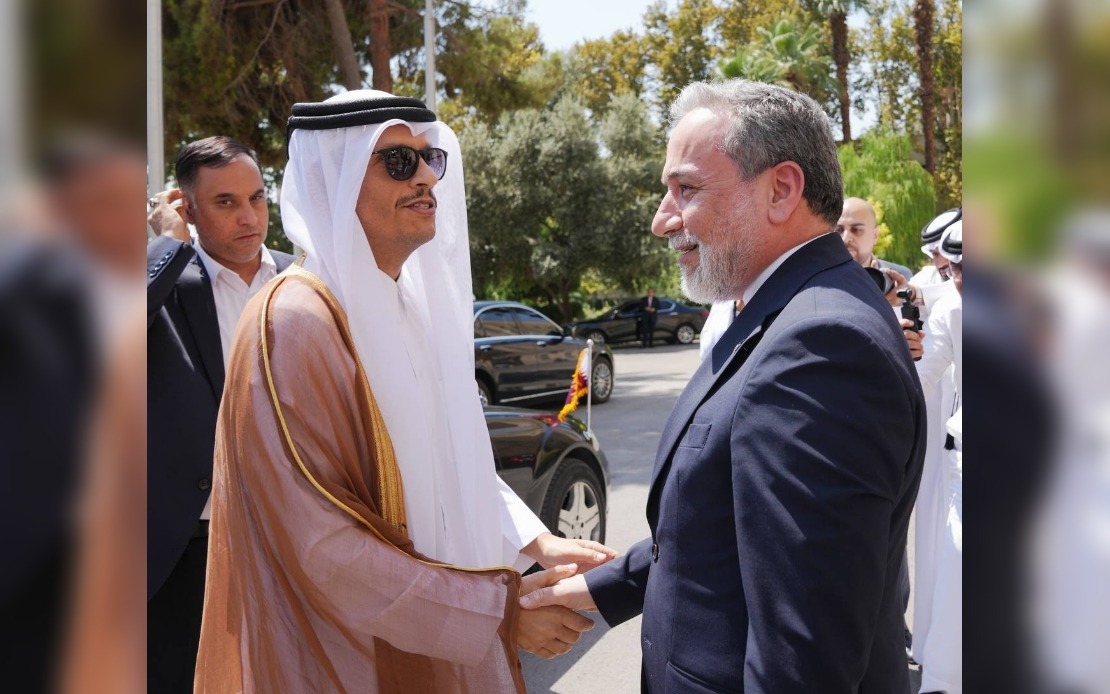
Iran's top diplomat has signalled that mending fractured relations with the United States remains within reach, provided Washington fundamentally alters its approach to negotiations. Foreign Minister Abbas Araghchi made the remarks following conversations with Qatar's foreign minister in Tehran, as Doha intensifies efforts to reduce tensions between Tehran and Washington that have escalated sharply in recent months.
Araghchi's cautiously optimistic assessment came during talks with Qatari Foreign Minister Sheikh Mohammed bin Abdulrahman bin Jassim Al Thani, whom he described as bringing "creative" proposals to the table. The Iranian official emphasised that the pathway to renewed diplomacy exists, but only if the United States abandons its reliance on coercive tactics. His comments underscore a key Iranian position: that pressure-based strategies have consistently failed to produce meaningful dialogue, and that Washington must instead adopt a posture based on respect, acknowledgment of Iranian rights, and commitment to honouring previous agreements.
Qatar's diplomatic intervention reflects Doha's continuing role as a regional mediator, a position it has leveraged in numerous Middle Eastern crises over the past two decades. Sheikh Mohammed's visit to Tehran on Thursday represented his first trip to Iran since military tensions intensified in late February, when coordinated strikes by the United States and Israel triggered a cycle of escalation. The timing of the mission signals that Qatari leadership believes momentum for dialogue may be building, even as broader regional dynamics remain volatile.
During his visit to the Iranian capital, the Qatari foreign minister engaged with an unusually broad spectrum of Iranian leadership, meeting not only with Foreign Minister Araghchi but also with President Masoud Pezeshkian, Parliament Speaker Mohammad Bagher Qalibaf, and Mohsen Rezaei, who heads Iran's Supreme National Security Council. This multi-level engagement reflects the complexity of any potential diplomatic initiative, requiring alignment across Iran's competing institutional power centres.
Among the substantive proposals discussed were concrete confidence-building measures aimed at reducing the risk of unintended escalation. These included exploration of a temporary joint navigational corridor through the strategically vital Strait of Hormuz, one of the world's most critical maritime chokepoints through which roughly one-third of global seaborne oil passes annually. Additionally, talks addressed coordinated mine-clearing operations in regional waters, a practical mechanism for demonstrating mutual commitment to de-escalation and freedom of navigation.
For Southeast Asian readers and policymakers, the significance of these developments extends beyond Iran-US dynamics. Any resumption of formal hostilities or military confrontation in the Middle East would reverberate through global energy markets, affecting fuel prices and shipping costs that directly impact the region's economies. Malaysia, as a major trading nation with substantial maritime interests and energy imports, has vested interests in preventing further destabilisation of the Gulf region.
Qatar's mediatory role also illustrates a broader pattern in regional diplomacy whereby smaller Gulf states leverage their geographic position, diplomatic networks, and financial resources to shape outcomes that might otherwise be determined by larger powers. This model has relevance for understanding how middle-power states across Southeast Asia, including Malaysia itself, can exercise disproportionate influence through strategic positioning and relationship-building.
Araghchi's emphasis on the conditions necessary for dialogue—trust-building, respectful communication, recognition of Iran's legitimate interests, and implementation of prior commitments—likely references not only the 2015 nuclear agreement, the Joint Comprehensive Plan of Action (JCPOA), which the US withdrew from in 2018, but also broader patterns of mistrust accumulated over decades of sanctions, proxy conflicts, and hostile rhetoric. From Iran's perspective, previous American administrations have demonstrated a pattern of disregarding agreements, making Washington's restoration of credibility a prerequisite for any substantial negotiations.
The Iranian foreign minister's framing of the diplomatic challenge as conditional rather than absolutely impossible suggests internal consensus within Tehran's leadership that maintaining the current trajectory is unsustainable. This reflects practical recognition that prolonged military tension, while manageable in the short term, imposes cumulative costs on Iran's already strained economy, further constrains its international engagement, and risks triggering scenarios neither side can fully control.
Qatar's success in maintaining channels with both Iran and the United States, despite their mutual hostility, positions Doha as a potential venue or facilitator for any eventual negotiations. The precedent of Qatar hosting US-Taliban talks and serving as custodian of various diplomatic initiatives demonstrates Doha's institutional capacity to manage sensitive discussions between adversaries.
Yet significant obstacles remain before any serious diplomatic breakthrough materialises. The gap between rhetorical openness and genuine willingness to negotiate substantive issues remains substantial. Questions about Iran's nuclear programme, its regional military activities, and the security concerns of US allies in the Gulf—particularly Saudi Arabia and the United Arab Emirates—represent enduring sources of friction that cannot be resolved through confidence-building measures alone.
The current window of diplomatic opportunity, if it exists at all, appears narrow and contingent on circumstances beyond the control of individual negotiators. Changes in political leadership, regional security incidents, or shifts in broader geopolitical alignment could quickly foreclose possibilities that now seem merely improbable rather than impossible.

