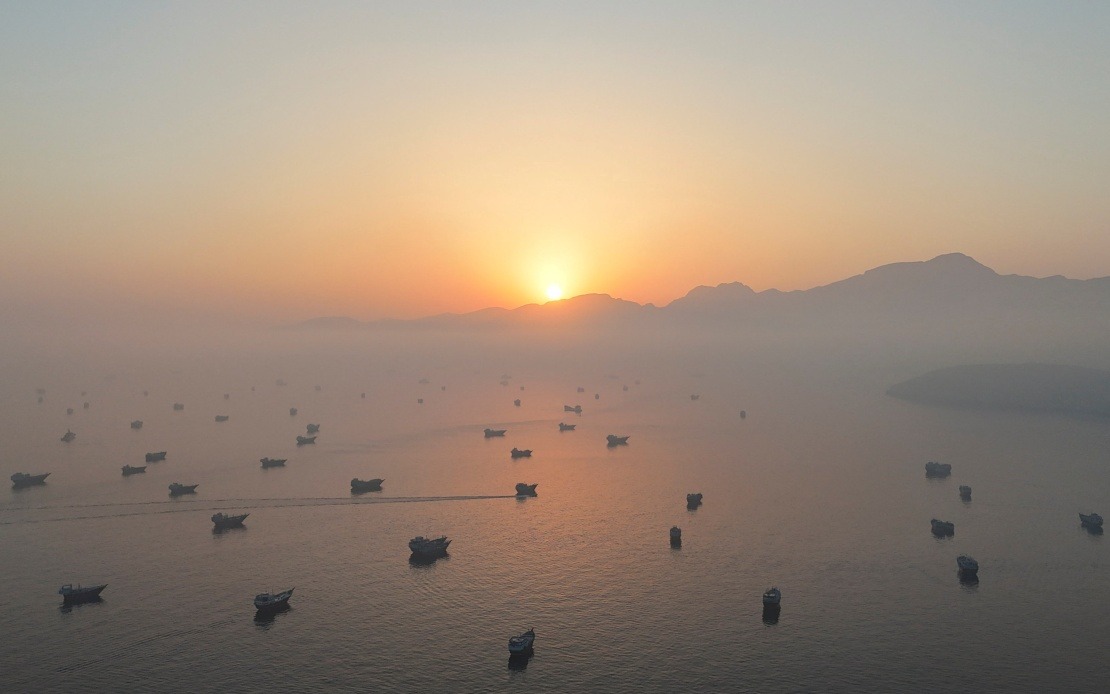
Iran reasserted its demand for exclusive authority over the Strait of Hormuz on Wednesday, with Foreign Minister Abbas Araghchi announcing that the strategic waterway will be placed entirely under Iranian jurisdiction within 30 days. The declaration came during a press conference in Baghdad and followed the apparent unravelling of a fragile ceasefire arrangement between Tehran and Washington, as mutual recriminations and fresh attacks intensified across the region.
The Strait of Hormuz represents one of the world's most critical maritime chokepoints, with roughly one-fifth of global oil trade passing through its waters annually. Control of the waterway carries enormous geopolitical and economic weight, affecting energy security far beyond the Middle East and directly impacting regional economies including Malaysia's substantial petrochemical and refining sectors. Any disruption to shipping through the strait can trigger immediate ripple effects across Asian markets heavily dependent on Gulf petroleum exports.
Araghchi's statement emphasised Iranian sovereignty over the passageway, warning that external interference or attempts to establish parallel administrative structures would exacerbate regional tensions and further delay the restoration of normal maritime traffic. His remarks underscored Tehran's position that only Iranian authorities should exercise regulatory authority over transit through the narrow channel, rejecting any international oversight mechanisms or joint arrangements that Washington might favour.
The current tensions trace back to February, when Israeli and American military actions against Iranian targets prompted Tehran to weaponise its geographic advantage by restricting shipping movements through the Strait of Hormuz. Iranian forces conducted multiple attacks and issued threats against commercial vessels transiting the waterway, effectively choking off traffic as a negotiating tactic designed to force the United States toward diplomatic concessions regarding the broader conflict.
A provisional agreement negotiated between the two nations during this period included provisions allowing the Strait of Hormuz to remain open to international shipping traffic during a designated 60-day negotiation window. Critically, the framework explicitly prohibited Iran from levying transit fees or charges on vessels passing through the waterway during this period, reflecting American and international concern about Tehran using the strait as a revenue source or further leverage mechanism.
The complete collapse of this carefully constructed arrangement—evident from Araghchi's hardline rhetoric and the resumption of hostile actions—suggests that deeper disagreements regarding the conflict's resolution have become intractable. Rather than moving toward a lasting settlement, both sides appear to have reverted to confrontational postures, with Iran now signalling its intention to reassert unilateral control over an economically vital maritime corridor.
Upcoming negotiations between Iran and neighbouring Oman are scheduled to address the framework governing future Strait of Hormuz operations, with discussions to occur within the bounds of international maritime law and coordination with adjacent states. These talks will likely prove contentious, particularly regarding the contentious issue of transit fees. International legal obligations under conventions governing straits used for international navigation typically restrict coastal states' authority to impose arbitrary charges, yet Iran may attempt to classify fees as legitimate administrative costs or security contributions.
For Southeast Asian nations including Malaysia, the implications are substantial. Regional economies depend heavily on uninterrupted energy supplies from the Gulf, and any prolonged disruption would immediately elevate shipping insurance premiums, extend transit times, and increase fuel costs across the region. Malaysian refineries and petrochemical complexes rely on stable supply chains anchored in predictable Hormuz passage conditions, making this Iranian assertion of exclusive control a matter of direct economic consequence.
The breakdown of the ceasefire represents a significant setback for international efforts to stabilise the Middle East through diplomatic channels. The initial agreement, despite its limitations, had at least established a framework for communication and mutual restraint. Its collapse suggests that underlying grievances between Tehran and Washington remain too profound for interim measures to bridge, and that both capitals view escalation as preferable to compromise.
Analysts point to the unresolved question of transit fees as potentially the most divisive element of future negotiations. While Iran claims the right to charge for passage as compensation for security provision and administrative costs, international maritime law generally restricts such fees to recovering legitimate expenses. The gulf between these positions could determine whether the Strait of Hormuz remains a freely transited international waterway or becomes a contested economic chokepoint, with profound implications extending to energy markets across Asia and beyond.

