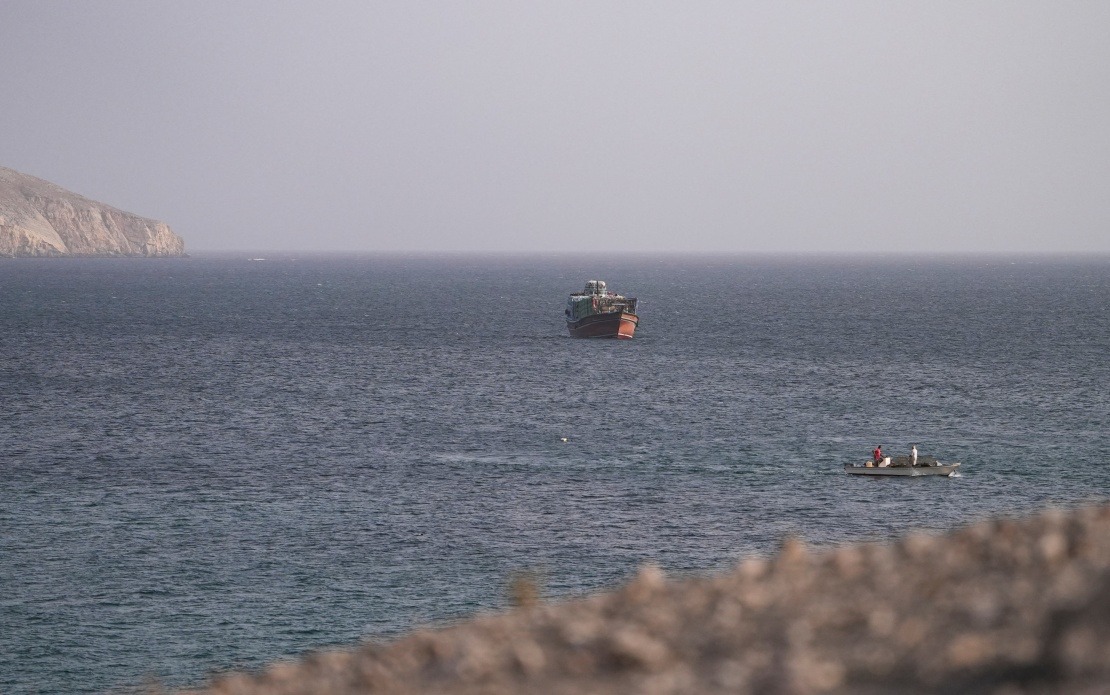
Iran and Oman are advancing plans to establish operational mechanisms for managing maritime traffic through the Strait of Hormuz, according to Iranian Foreign Minister Abbas Araghchi. The development emerged during discussions with UK Foreign Secretary Ed Miliband on Friday, marking a significant diplomatic initiative in one of the world's most strategically vital waterways. For regional observers and Malaysian stakeholders dependent on secure maritime trade corridors, this bilateral effort between Tehran and Muscat carries substantial implications for freedom of navigation and regional stability.
The Strait of Hormuz remains one of the globe's most critical chokepoints for energy and commerce, with roughly one-fifth of all petroleum passing through its narrow channels annually. Any disruption to shipping through this passage directly affects energy prices and supply chains across Southeast Asia, including Malaysia. Araghchi's emphasis on developing mechanisms with Oman suggests Iran is seeking to consolidate control over navigation protocols rather than operating under international frameworks, a positioning that reflects Tehran's broader strategy to exert greater influence over regional maritime affairs.
A cornerstone of Iran's stance involves rejecting external oversight of Strait operations. Araghchi explicitly cautioned that interference by third parties would only intensify current complications, a clear reference to American and Western involvement in regional security arrangements. This posture aligns with Iran's longstanding assertion that maritime governance through its coastal waters should remain within its sphere of authority rather than subject to international naval patrols or multilateral regulatory structures.
The conversation between Araghchi and Miliband revealed a significant diplomatic gap between Tehran and London. While the British foreign secretary stressed that the new UK government does not view itself as engaged in conflict with Iran and advocated for diplomatic resolution, Araghchi took the opportunity to condemn what he characterised as British complicity in wars imposed on Iran by the United States and Israel. This rhetorical positioning underscores how regional disputes extend beyond bilateral US-Iran tensions to encompass broader Western engagement in Middle Eastern affairs.
Britain's diplomatic approach, emphasizing ongoing dialogue as the means to address outstanding grievances and reduce regional tensions, contrasts sharply with Iran's more confrontational messaging. Miliband's commitment to maintaining communication channels reflects London's assessment that sustained engagement offers the most viable pathway to de-escalation. For nations like Malaysia concerned about maritime security and freedom of navigation, this Anglo-Iranian diplomatic engagement carries weight, as British naval forces have historically played roles in Strait operations alongside American counterparts.
The broader context involves recent military escalations that have intensified dangers to commercial shipping. The United States has conducted strikes against Iranian targets, while Tehran has responded by attacking American military installations and equipment across the region. These tit-for-tat exchanges have created an unstable environment that threatens merchant vessels transiting the Strait, particularly those flagged to nations perceived as aligned with either Washington or Tehran.
Underlying this diplomatic initiative is a fundamental disagreement over navigation governance. Washington demands that Iran cease attacks on commercial shipping and guarantee freedom of passage through the Strait, reflecting Western insistence on open, internationally regulated maritime access. Conversely, Tehran has consistently demanded that vessel transits be subject to mechanisms administered by Iran itself, effectively granting Tehran unilateral authority over traffic through waters adjacent to its coastline. The Iran-Oman framework appears designed to institutionalise this Iranian position while creating the appearance of bilateral cooperation rather than unilateral control.
Previous diplomatic progress, though modest, provides some foundation for optimism. In June, Washington and Tehran concluded a memorandum of understanding mediated by Qatar and Pakistan that included a ceasefire agreement, establishing the theoretical basis for negotiations toward a comprehensive settlement. However, the subsequent escalation in military activities suggests that this understanding remains fragile and subject to rapid deterioration when political tensions spike.
For Malaysian policymakers and maritime interests, the implications extend across multiple dimensions. Malaysia's substantial reliance on petroleum imports and its position as a major regional maritime trader make Strait stability a national priority. Any arrangement that grants Iran greater unilateral control over passage could potentially expose Malaysian vessels to Iranian demands for compliance with internally determined protocols. Conversely, continued military escalation and uncertainty create risks through different mechanisms—the possibility of accidental confrontation between vessels and military forces, or broader regional conflict that disrupts trade flows entirely.
The Oman angle in this diplomatic architecture merits particular attention. As a sultanate that has historically maintained cautious neutrality and developed pragmatic relations with both Iran and the West, Oman's participation in a bilateral framework with Tehran lends apparent legitimacy and regional character to what might otherwise appear as purely Iranian initiatives. This positioning leverages Oman's reputation as a diplomatic interlocutor while advancing Iranian interests in regional maritime governance.
Looking ahead, the effectiveness of any Iran-Oman mechanism will depend on whether it gains broader acceptance among maritime powers and regional states. An arrangement rejected by major shipping nations and Western navies would likely prove largely symbolic, whereas genuine international recognition could reshape Strait governance. The diplomatic communications between London and Tehran suggest Britain may be exploring whether accommodation with Iranian preferences on navigation might facilitate broader de-escalation, though fundamental disagreements remain entrenched.
For Southeast Asian nations including Malaysia, monitoring this diplomatic trajectory matters considerably. The outcome will influence not only physical security for commercial shipping but also the broader architecture of regional power dynamics and whether Iran successfully consolidates greater autonomy over strategically critical waterways. Simultaneously, escalation could impose severe costs through disrupted trade and elevated insurance premiums, making diplomatic resolution a preferable outcome even if it requires accepting some Iranian preferences on Strait governance.

