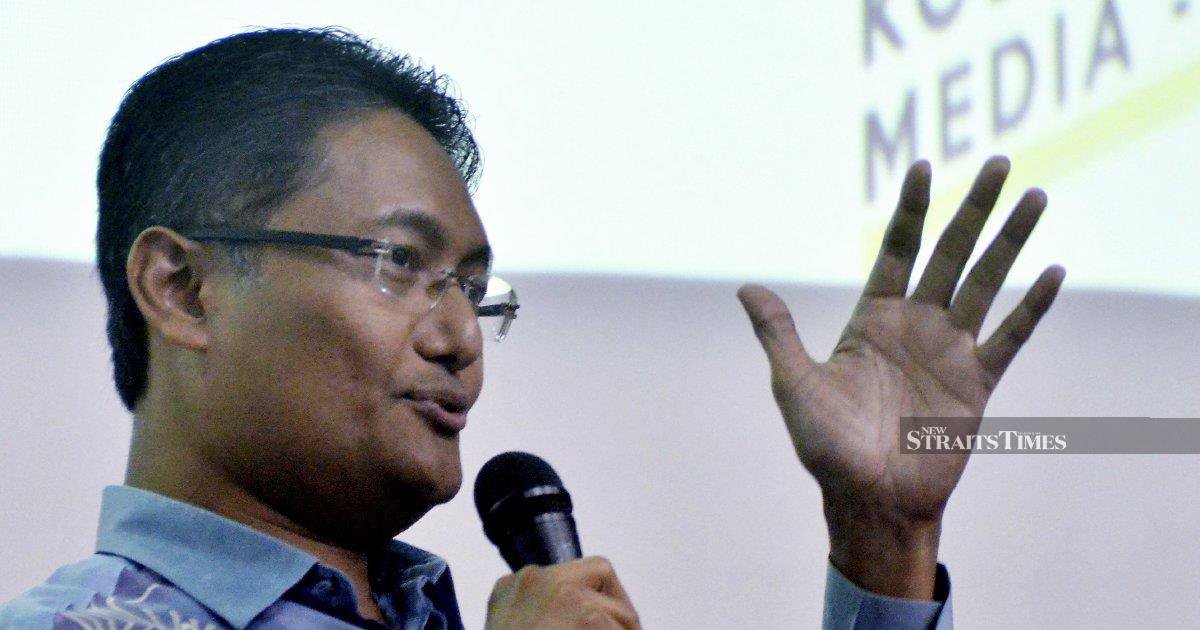
Datuk Dr Marzuki Mohamad, who served as former Prime Minister Tan Sri Muhyiddin Yassin's principal private secretary, has issued a stark warning about the use of divisive religious messaging in Malaysian politics. The seasoned policy strategist argues that framing the Democratic Action Party and its supporters as adversaries to Islam represents a counterproductive and inflammatory approach to political competition that threatens the delicate balance of religious harmony the nation has worked to maintain.
The cautionary statement comes at a time when Malaysia's political landscape continues to grapple with questions about how to reconcile governance across its diverse religious communities. With Islam holding a constitutionally protected position in the Malaysian federation, discussions about the relationship between Islamic interests and political representation have become particularly charged. The suggestion that entire political movements oppose Islam—rather than simply disagreeing on governance priorities or policy approaches—carries significant weight in a nation where religious identity intertwines closely with social cohesion and political legitimacy.
Marzuki's intervention suggests growing concern among establishment figures about the trajectory of political discourse. His proximity to Muhyiddin, who led the Perikatan Nasional coalition, indicates that such reservations cross traditional political boundaries and reflect institutional unease about the weaponisation of religious sentiment for narrow partisan advantage. The timing of his remarks suggests that even within conservative and Malay-centric political circles, there is recognition that certain rhetorical lines, once crossed, become difficult to uncross and risk inflicting lasting damage on the social fabric.
The demonisation strategy referenced by Marzuki has become increasingly visible in Malaysian political messaging over recent years. By equating political opposition with religious hostility, certain factions attempt to delegitimise opponents not through policy critique but through identity-based disqualification. This approach sidesteps substantive debate about governance, economics, or social welfare—areas where political differences naturally emerge—and instead frames contests as existential struggles between Islamic values and hostile secular forces. Such framing proves particularly potent in Malaysia's context, where religion holds constitutional significance and where many citizens view Islamic governance as non-negotiable.
However, the DAP's actual relationship with Islam remains more complicated than such blanket characterisations suggest. The party has consistently affirmed Malaysia's constitutional framework protecting Islam's position, supported numerous Islamic development initiatives, and governed states where Islamic institutions function normally. Yet these inconvenient facts often disappear in rhetoric designed to maximise emotional resonance rather than factual accuracy. The gap between caricature and reality creates a feedback loop where political audiences become increasingly polarised, each side viewing the other through increasingly distorted lenses.
Marzuki's warning resonates with Malaysia's historical experience of communal tension. The nation's founding compact involved careful calibration of religious and ethnic protections, with Islam's constitutional status balanced against guarantees of minority religious freedom and equal citizenship rights. When political actors deliberately amplify religious anxieties to secure electoral advantage, they risk unravelling arrangements that have, despite periodic stresses, maintained relative stability across diverse communities. The costs of such unravelling would fall most heavily on ordinary Malaysians seeking to coexist peacefully in mixed neighbourhoods and workplaces.
The distinction between legitimate political criticism and demonisation matters profoundly for democratic health. Voters benefit from vigorous debate about whether particular parties would govern Islamic affairs effectively, whether their policies serve Muslim communities' interests, or whether they respect constitutional protections. Such substantive contestation sharpens policy choices and allows democratic accountability. By contrast, statements suggesting that opponents fundamentally oppose Islam itself provide no usable information for voters and instead function purely as tribal markers designed to generate fear and reinforce in-group solidarity.
Marzuki's positioning as a insider voice offering this critique carries particular significance. Unlike academic analysts or civil society commentators whose institutional positions might seem distant from power, he speaks from within the ecosystems where such political calculations are made. His willingness to criticise this tactic suggests either changing calculations within establishment circles about the costs of continued polarisation, or recognition that certain approaches have become counterproductive even for those who employ them. Such shifts in elite consensus often precede broader changes in political behaviour.
The broader implications for Southeast Asia warrant consideration as well. Malaysia's model of religious-constitutional accommodation, while imperfect, has prevented the kind of communal violence that has scarred other religiously diverse nations. Neighbouring countries have observed how Malaysian society manages its pluralism, and political choices made in Kuala Lumpur inevitably influence calculations elsewhere in the region. Allowing political elites to routinely weaponise religious identity against opponents signals that such tactics are acceptable, potentially encouraging their adoption across Southeast Asia's plural societies.
Moving forward, Marzuki's intervention invites reflection on whether Malaysia's political class possesses mechanisms to police its own rhetorical excesses. Democratic systems rely partly on legal constraints and institutional checks, but equally on the internal disciplines that political actors impose upon themselves. When prominent figures from within political establishments recognise that certain practices have crossed acceptable thresholds, their willingness to say so publicly can help establish new norms. Whether such intervention proves sufficient to alter current trajectories remains uncertain, but the fact that such concerns are being voiced by credible insiders suggests that even those with electoral incentives to polarise are recognising risks that have accumulated over years of increasingly inflammatory messaging.

