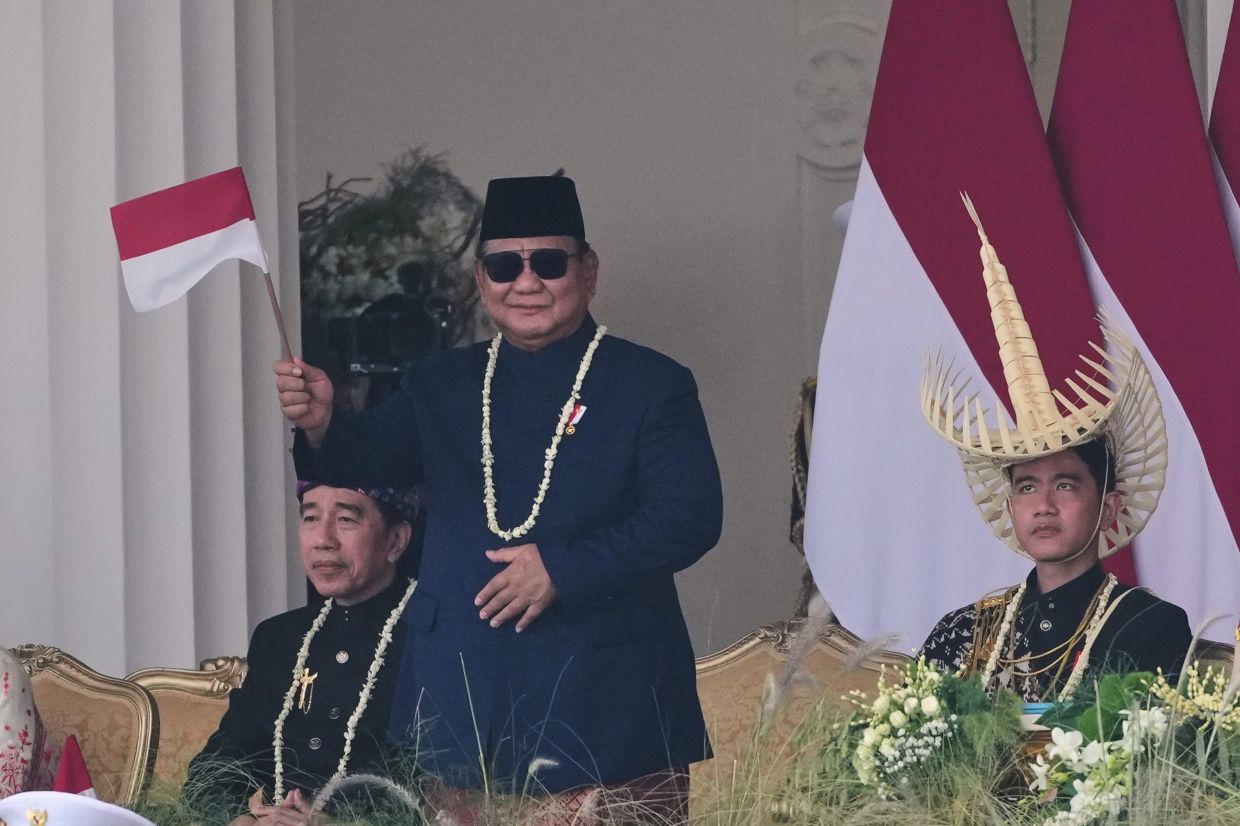
President Prabowo Subianto presided over Indonesia's 81st Independence Day commemoration in Jakarta on Monday, conducting the traditional flag-hoisting ceremony at Merdeka Palace while the nation confronted the tragic aftermath of a major earthquake that struck the eastern island of Flores over the weekend. The solemn observance underscored the bittersweet nature of national celebrations in a disaster-prone archipelago, where moments of patriotic pride are frequently shadowed by natural calamities that demand immediate governmental attention and resources.
Dressed in formal traditional attire—a navy beskap jacket complemented by a black peci cap and jasmine garland—Prabowo performed his duties as inspector of the independence commemoration, a ceremonial role that carries symbolic weight in Indonesian public life. The pageantry included the elaborate procession of a gilded carriage bearing replicas of the national colours and the original Proclamation of Independence, transported from the iconic National Monument to the palace and accompanied by an impressive security detail comprising 114 cavalry troops and 45 military police officers on motorcycles. This ceremonial grandeur, standard for Indonesia's most important national observance, contrasted sharply with the devastation unfolding hundreds of kilometres away in Flores.
The early Saturday earthquake that struck East Nusa Tenggara registered 7.7 on the magnitude scale, making it a significant seismic event by international standards. According to the National Disaster Mitigation Agency, the initial tremor triggered nearly 1,000 aftershocks of varying intensities as the region's geological instability continued to pose danger to survivors and emergency personnel. The quake claimed 53 lives and left more than 130 injured, many suffering serious fractures and trauma requiring specialised medical care. Additionally, approximately 5,400 residents abandoned their homes, seeking safety in temporary shelters and raising urgent questions about housing reconstruction and long-term displacement.
The physical damage catalogued across Flores proved extensive, with hundreds of houses and buildings destroyed or rendered uninhabitable. The island's infrastructure bore the brunt of the seismic violence, affecting water supplies, power networks, and access roads critical for delivering humanitarian assistance. By Monday morning, when Jakarta's ceremonies were underway, another significant 5.8-magnitude earthquake struck offshore, approximately 39 kilometres north of NTT at a depth of 10 kilometres according to the Meteorology, Climatology and Geophysics Agency. This continued seismic activity illustrated the unpredictable nature of disaster response in the region and the challenges facing those coordinating relief efforts.
The national government's response strategy reflected the severity of the situation. State Secretary Prasetyo Hadi announced that several key cabinet members deliberately absented themselves from the Jakarta ceremony to oversee disaster operations in Flores. The absent ministers included Coordinating Human Development Minister Pratikno, Home Minister Tito Karnavian, Public Works Minister Dody Hanggodo, and Deputy Health Minister Benjamin Paulus Octavianus—a notable departure from the usual full cabinet attendance at Independence Day observances. Their presence in the affected region signalled Jakarta's prioritisation of immediate disaster management over ceremonial formalities, a practical allocation of political bandwidth that nonetheless required explanation to citizens watching the national broadcast.
Prasetyo articulated the government's philosophical approach to balancing commemoration with crisis management, stating that Independence Day celebrations must occur alongside assurances that disaster victims receive proper care and assistance. This statement acknowledged the reality that Indonesian governance frequently operates in a state of dual attention—maintaining national institutions and symbolic continuity while simultaneously responding to acute humanitarian emergencies. The tension between these competing demands remains a perennial feature of governance across the Indonesian archipelago, where natural disasters strike with regularity and demanding frequency.
During the Jakarta ceremony itself, Prabowo led attendees in a moment of solemn silence dedicated to honouring the nation's heroes while inviting prayers for those affected by recent disasters. This ritualistic acknowledgement of suffering, though ceremonial in nature, reflected an institutional recognition that Independence Day celebrations cannot authentically proceed without acknowledgement of contemporary tragedy. The moment of silence thus served dual purposes—honouring historical sacrifice while demonstrating presidential awareness of current national suffering.
The question of whether Prabowo himself would travel to Flores to inspect conditions and meet with survivors remained unanswered on Monday, with Prasetyo declining to commit to any presidential visit. The state secretary indicated that decisions regarding the president's travel would depend upon evolving ground conditions and the effectiveness of ministerial deployments already underway. This cautious approach suggested concerns about security logistics in an active disaster zone, the operational demands of presidential movements, and the risk that a high-level visit could divert resources from ongoing rescue and medical operations.
For Malaysian observers and Southeast Asian analysts, the Flores earthquake and Indonesia's institutional response illustrate both the shared vulnerability of the region to tectonic activity and the different governmental capacity levels across the bloc. While Indonesia possesses sophisticated disaster management agencies and protocols, the sheer scale of the archipelago—spanning three time zones across thousands of islands—creates persistent challenges in coordinating rapid response. The simultaneous operation of routine state ceremonies and emergency management reflects the region's adaptation to endemic disaster risk as a permanent feature of governance.
The earthquake also highlighted existing infrastructure deficits in eastern Indonesia, where remoteness compounds disaster vulnerability. Emergency responders faced significant logistical obstacles in reaching affected communities, transporting medical supplies, and establishing temporary shelter systems. These operational constraints, common to island nations throughout Southeast Asia, underscore why regional cooperation frameworks for disaster response have become increasingly important across ASEAN member states.
Looking forward, the Flores earthquake will likely influence Indonesia's disaster preparedness budgeting and may prompt renewed discussions about building codes, early warning systems, and evacuation protocols across the eastern regions. The incident occurs against a background of increasing climate-related risks that compound traditional seismic hazards, creating compound vulnerabilities that test governmental resources. For neighbouring countries like Malaysia, Indonesia's experiences provide practical lessons about disaster governance at scale and the institutional innovations required to manage catastrophe in densely populated archipelagic settings.

