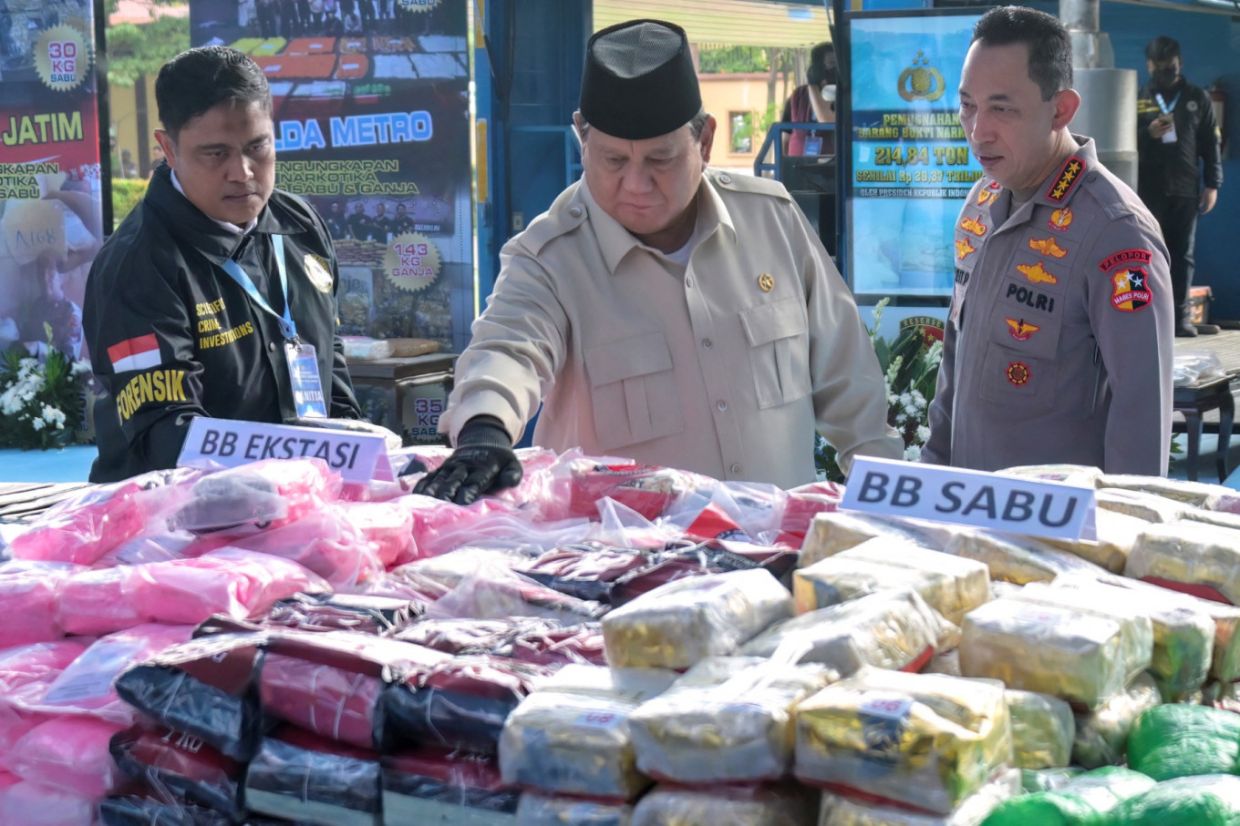
Indonesia's war on drugs has yielded another significant victory with the interdiction of a vessel carrying 2.6 tonnes of liquid methamphetamine, according to an announcement from the National Narcotics Agency late Tuesday, August 18. The operation, conducted in cooperation with customs authorities, resulted in the arrest of 10 crew members and represents one of the most substantial drug seizures in recent years for the Southeast Asian nation. The haul underscores the persistent challenge of transnational narcotics trafficking through regional shipping lanes, particularly those connecting Malaysia and Thailand to Indonesian waters.
The vessel in question, the MV Rain Maker operating under a Tanzanian flag, was intercepted near Bengkalis in Riau province on Monday evening following intelligence suggesting it was transporting illegal substances through the Andaman Sea from Sarawak. Narcotics agency official Roy Hardi Siahaan revealed that inspectors discovered the contraband hidden across eight water barrels and a water tank aboard the ship, a concealment method that demonstrates the sophistication of trafficking networks operating in the region. The discovery of such a substantial quantity in liquid form suggests an operation aimed at producing crystal methamphetamine, which commands premium prices on Southeast Asian markets.
Beyond the methamphetamine seizure, investigators also discovered more than 1.5 million contraband cigarettes stashed on the vessel, indicating that trafficking syndicates often exploit single maritime operations to move multiple illicit commodities simultaneously. This practice maximizes profit margins while distributing risk across different product categories. All 10 individuals detained at the scene were identified as Myanmar nationals, reflecting broader patterns of regional involvement in drug trafficking networks that frequently employ personnel from multiple Southeast Asian nations.
This latest interception represents a continuation of intensified enforcement efforts along vital shipping corridors in Indonesian waters. The previous month had already witnessed notable successes, including an August 8 seizure of 1.3 tonnes of ketamine from another Tanzanian-flagged vessel operating near the Riau Islands close to Singapore. That operation resulted in eight arrests comprising seven Myanmar nationals and one individual from Taiwan, suggesting transnational criminal organizations deliberately employ crew members of varied nationalities to complicate investigation and prosecution efforts.
The cumulative impact of these sequential operations underscores both the scale of drug trafficking through regional waters and the capabilities of Indonesian enforcement agencies. Just twelve months prior, authorities had announced what was then considered the country's largest-ever methamphetamine seizure, apprehending two tonnes of crystal meth discovered aboard a fishing vessel bound for Batam Island from the Andaman Sea. The current bust eclipses that achievement in terms of raw weight, though the liquid form presents different processing and market considerations than crystalline methamphetamine.
The Riau region has emerged as a critical focal point for interdiction efforts, given its strategic location astride major shipping lanes and relative proximity to Malaysian and Singaporean waters where production and transshipment activities are believed concentrated. Criminal organizations exploit the complexity of maritime commerce, the large number of vessels traversing the region daily, and the challenges of comprehensive inspection protocols to move contraband toward distribution points throughout the archipelago and beyond. Indonesian authorities' success in identifying and intercepting these operations relies on a combination of intelligence gathering, risk analysis, and targeted enforcement.
Indonesia maintains among the world's most stringent anti-narcotics legislation, including capital punishment provisions for major traffickers involved in large-quantity operations. However, the country has observed a de facto moratorium on executions in recent years, a practice that reflects broader international pressure and domestic considerations regarding judicial processes. This legal framework theoretically serves as a deterrent, though the persistence of large-scale trafficking suggests that profit incentives and organizational compartmentalization continue to motivate criminal activity despite severe potential consequences.
The arrested crew members now face serious charges under Indonesian drug laws, with potential sentences reflecting the quantities involved. Their prosecution will likely proceed through Indonesian courts, where sentences for trafficking operations of this magnitude typically extend to decades of imprisonment. The involvement of foreign nationals complicates diplomatic dimensions, as Myanmar and other home countries may seek consular access and monitor proceedings through their respective embassies.
For Malaysia and Singapore, these seizures carry direct relevance given evidence suggesting that precursor chemicals, finished products, and trafficking proceeds flow across shared maritime borders. The route through the Andaman Sea originating from Sarawak indicates that Malaysian territory serves as a waypoint in larger trafficking networks extending to production facilities in Myanmar and consumer markets throughout the region. Regional cooperation mechanisms, including information sharing between the National Narcotics Agency and counterpart agencies in neighboring nations, remain essential to disrupting these supply chains.
The recurrence of major seizures within compressed timeframes suggests either intensified trafficking attempts or enhanced detection capabilities, or some combination thereof. Either scenario reflects an evolving criminal-enforcement dynamic in Southeast Asian narcotics markets, where transnational organizations adapt tactics and routes in response to enforcement pressure. The Riau Islands, with their maritime positioning and relative isolation from major population centers, present attractive operational environments for trafficking nodes, requiring sustained surveillance and interdiction efforts to maintain disruption of supply flows.
Looking forward, the effectiveness of these operations will ultimately depend on sustained intelligence capabilities, inter-agency coordination, and regional cooperation frameworks that enable authorities to anticipate and intercept shipments before they reach domestic distribution networks. The National Narcotics Agency's demonstrated capacity to identify vessels of interest and execute complex maritime interdictions indicates operational maturity, though the scale and persistence of trafficking movements suggests that enforcement remains reactive to criminal activity rather than fundamentally constraining supply at source.

