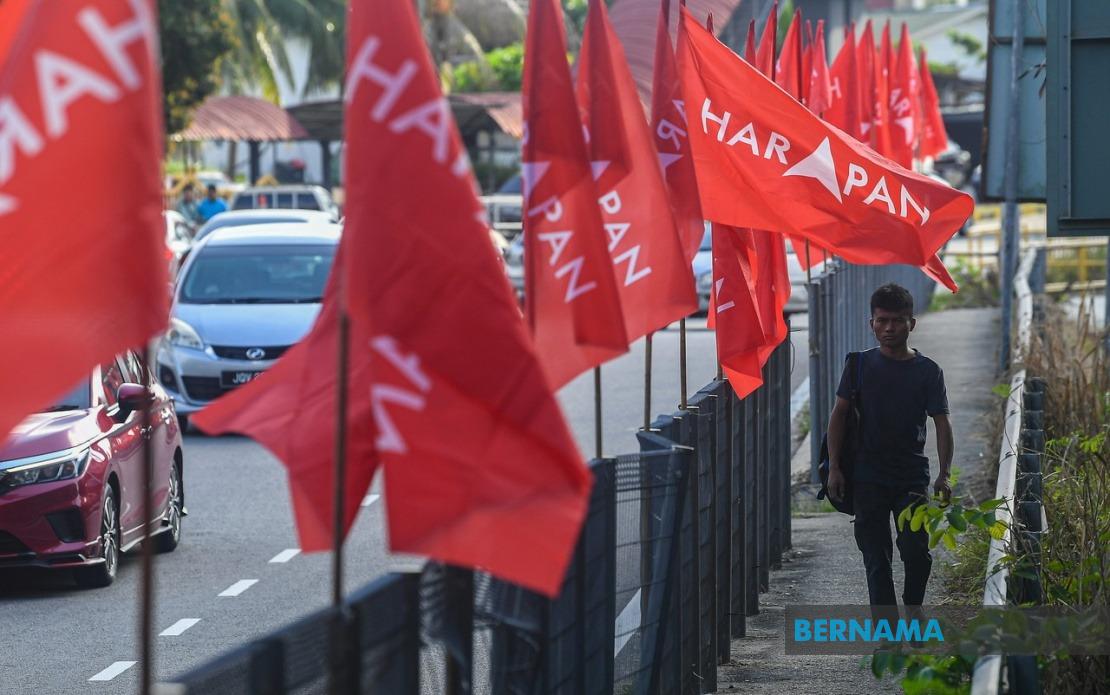
Indian voters in Johor hold disproportionate electoral leverage ahead of the state election scheduled for July 11, according to Parti Keadilan Rakyat (PKR) Central Leadership Council member Dr Gunaraj George, who has urged the community to back Pakatan Harapan (PH) to safeguard political stability and sustain the MADANI reform programme. Although the Indian community represents a minority population in the state, Dr Gunaraj contends that their voting patterns could prove decisive in nearly 25 mixed and marginal State Legislative Assembly constituencies—a claim that underscores the mathematical sensitivity of Malaysia's multi-ethnic electoral landscape and the potential for minority communities to swing closely contested races.
Dr Gunaraj, who serves as Sentosa Assemblyman, frames the Johor election as more than a routine contest between competing parties. Instead, he characterises it as a fundamental choice between continuity under a government demonstrating measurable reform credentials versus a return to political uncertainty that could undermine economic confidence and investment flows. This messaging strategy attempts to elevate the election beyond personality-driven campaigns, positioning PH's continuation in office as essential infrastructure for national prosperity during a period marked by global economic headwinds and geopolitical instability.
The appeal to Indian voters carries particular resonance given Malaysia's complicated history regarding minority community integration and resource distribution. Dr Gunaraj points to concrete allocations as evidence of PH's commitment to inclusive governance. The Malaysian Indian Transformation Unit (MITRA) budget has increased from RM100 million to RM150 million—a boost that marks the first expansion in nearly a decade following years of stagnation under previous administrations. Crucially, Prime Minister Datuk Seri Anwar Ibrahim has committed to progressive increases in these allocations, signalling a policy trajectory rather than a one-off gesture.
Governance improvements accompanying budgetary increases reflect Dr Gunaraj's assertion that the current administration has enhanced transparency and accountability in programme management. MITRA's operations are now subject to systematic monitoring and parliamentary oversight, a structural reform that theoretically reduces opportunities for fund misallocation or nepotistic distribution. This institutional component distinguishes PH's approach from simply increasing nominal allocations without corresponding procedural safeguards—a distinction that may resonate with voters concerned about governance quality alongside resource levels.
The MADANI Government's track record extends beyond MITRA. Tamil National-Type Schools have received enhanced funding allocations, addressing long-standing concerns about language education infrastructure within the Indian community. Maintenance assistance for religious facilities, including temples, acknowledges the non-material dimensions of community wellbeing that extend beyond economic metrics. These targeted investments suggest a deliberate strategy to address Indian community priorities rather than pursuing generic development initiatives.
Educational initiatives and cash transfer programmes constitute additional pillars of the government's outreach. Expanded Technical and Vocational Education and Training (TVET) programmes create skills-based pathways for young Indians seeking employment without tertiary qualifications. Financial assistance for students from low-income households removes barriers that historically impeded upward mobility within minority communities. Simultaneous implementation of Sumbangan Tunai Rahmah (STR) and Sumbangan Asas Rahmah (SARA) cash aid programmes provides immediate income support to economically vulnerable families, addressing both acute poverty and chronic income insufficiency.
Small and medium enterprise support extends the economic inclusion agenda to the entrepreneurial dimension. By assisting micro, small, and medium enterprises, the government targets job creation and wealth generation within the Indian community itself rather than relying solely on employment in larger corporate or public sector structures. This approach recognises that sustainable prosperity requires community-led economic activity, not merely trickle-down benefits from broader macroeconomic growth.
Dr Gunaraj's messaging strategy on political stability deserves careful scrutiny within the Malaysian context. The emphasis on institutional continuity and predictable governance speaks to investor psychology and business planning requirements—a consideration that gains weight during periods of global economic uncertainty and elevated geopolitical tensions. Malaysia's attractiveness as a regional investment destination depends partly on political predictability, making stability arguments more than rhetorical flourishes for election campaigns. The economic costs of political uncertainty, whether through reduced foreign direct investment, elevated risk premiums on debt, or capital outflows, impose real constraints on government capacity to deliver the promised resource increases and programme expansions.
The institutional reform agenda represents another dimension of PH's outreach to Indian voters concerned about governance quality. Anti-corruption intensification, improved institutional accountability, and enhanced transparency mechanisms appeal to communities historically suspicious of resource diversion or corrupt programme management. These governance improvements create the foundation upon which expanded allocations to community-specific programmes can deliver genuine benefits rather than benefits captured by corrupt intermediaries.
PH's decision to contest all 56 state seats in Johor reflects confidence in its capacity to mobilise sufficient electoral support across diverse constituencies and communities. This comprehensive contestation strategy contrasts with scenarios where coalitions contest fewer seats through negotiated arrangements that potentially reduce minority community representation. The inclusive approach signals willingness to compete for votes across all demographic segments rather than ceding territory to rivals.
For Malaysian and Southeast Asian observers, the Johor election illustrates broader patterns regarding minority community political agency in multi-ethnic democracies. While Indian voters constitute a statistical minority in Johor's overall population, their concentration in particular constituencies generates electoral leverage disproportionate to their total numbers. Politicians and parties seeking power must therefore address minority community concerns explicitly and substantively rather than assuming minority votes will flow automatically based on historical voting patterns. The sophisticated approach by Dr Gunaraj—combining policy achievements, structural reform evidence, and stability arguments—reflects recognition that modern minority voters demand performance-based justifications for political support.
The temporal context enriches the significance of Dr Gunaraj's statements. Global economic uncertainties, rising living costs, and investment volatility create conditions where voter concerns about government competence and institutional reliability intensify. Indian voters, like other Malaysians, face real economic pressures that make abstract appeals to community solidarity insufficient without corresponding evidence of material improvement. By anchoring his argument in specific budget increases, programme expansions, and institutional reforms, Dr Gunaraj attempts to establish that PH's continued governance promises tangible benefits within a constrained macroeconomic environment—a framing that acknowledges voter sophistication and demands for evidence-based political messaging.

