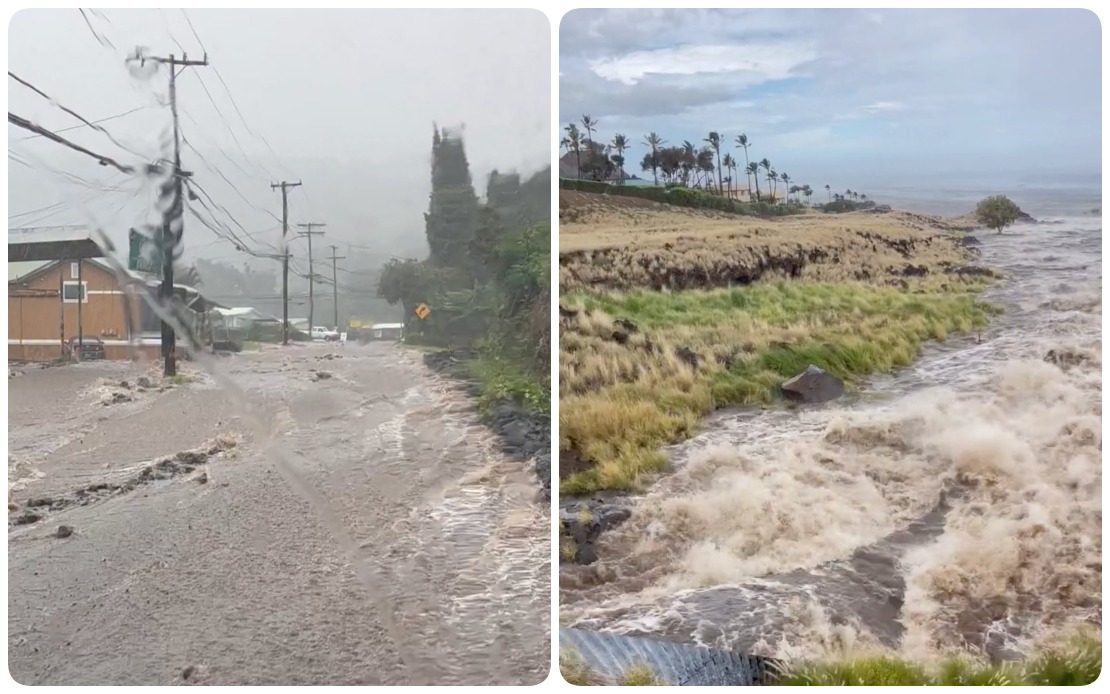
Hurricane Lala unleashed its full destructive force on Hawaii during Saturday, August 15, battering the island chain with destructive winds and torrential downpours that knocked out power for tens of thousands of residents. The storm system made its closest approach just south of Hawaii Island, but its far-reaching impacts were felt across multiple islands including Maui County, Oahu and Kauai. Governor Josh Green reported that wind speeds were at their peak on Hawaii Island, with some locations recording rainfall exceeding 13 inches as the hurricane's circulation expanded to affect the entire state.
The scale of the power disruption underscored the hurricane's severity. Hawaiian Electric reported that by 7 p.m. Hawaii Standard Time, more than 88,000 customers had lost electricity across the affected regions. Hawaii Island bore the brunt of the outages with 63,270 customers in the dark, while Maui County experienced approximately 15,260 outages and Oahu around 9,500. These figures represented one of the more significant blackout events in recent Hawaiian history, with restoration complicated by the persistent dangerous conditions that prevented crews from safely accessing damaged infrastructure.
Wind damage proved particularly destructive along Hawaii Island's Hamakua coast, where meteorologists recorded gusts approaching 90 miles per hour in some exposed areas. The intense winds snapped numerous trees and brought down multiple utility poles across a 42-mile stretch of transmission lines, creating a cascading failure that would require days of restoration work. Hawaiian Electric acknowledged that customers on Hawaii Island and Maui who had already lost power would likely remain without electricity throughout the night, with restoration crews unable to deploy safely amid hazardous conditions and ongoing rainfall.
Flooding emerged as a secondary but equally serious threat across multiple municipalities. Hawaii's Department of Transportation documented overflowing waterways and saturated roadways in multiple locations, prompting authorities to issue urgent directives for residents to shelter in place or relocate to emergency facilities. The Hawaii Emergency Management Agency catalogued widespread flooding incidents alongside the tree falls and power disruptions, painting a picture of comprehensive infrastructure stress.
Road conditions deteriorated significantly across all affected islands. In Hawaii Island communities, authorities closed Kahikopele Street in Mountain View due to inundation, while Pauahi Street sustained flood damage requiring traffic diversions. The Hamakua region, already ravaged by wind damage, saw Mamalahoa Highway warned for hazardous conditions created by fallen trees and debris obstruction. On Oahu and Maui, the Department of Transportation reported multiple closure zones, with downed power lines forcing the closure of Plumeria Street and creating additional navigation challenges for emergency responders.
The convergence of wind, rain and flooding created compounding challenges for emergency management officials. The Hawaii Emergency Management Agency's coordination efforts focused on managing immediate life-safety threats while establishing shelter operations and supply distribution networks. Police departments across the islands reported widespread service disruptions as officers diverted resources to address traffic hazards, rescue operations and welfare checks on vulnerable populations.
Utility restoration presented formidable logistical obstacles beyond the sheer volume of damaged infrastructure. Weather conditions remained unsafe for line workers, with continued rain and gusty conditions preventing access to many affected areas. Hawaiian Electric's assessment that overnight restoration was unlikely reflected the reality that major transmission line damage on the Hamakua coast required extensive repair work that could not begin until conditions stabilized. The utility's infrastructure had absorbed severe punishment, with fallen trees and poles indicating systematic damage rather than isolated incidents.
For Malaysian observers and regional readers, Hurricane Lala underscores the vulnerability of island communities to tropical cyclone systems, a weather pattern with direct relevance to Southeast Asian preparedness. Hawaii's experience demonstrates how modern developed economies, despite advanced warning systems and robust emergency management infrastructure, still face severe service disruptions and population displacement when major hurricanes make direct impacts. The 88,000-person power outage represents the kind of cascading failure that threatens critical services including hospitals, water treatment and emergency communications.
The incident also highlights the interdependencies within modern infrastructure systems. A hurricane that primarily delivered wind and rain damage extended impacts across power, transportation and emergency services simultaneously, illustrating how tropical cyclones create multi-faceted crises requiring coordinated responses across numerous agencies and sectors. Hawaii's response framework, refined through decades of hurricane seasons, provides instructive lessons for other Pacific and Southeast Asian communities developing cyclone preparedness protocols.

