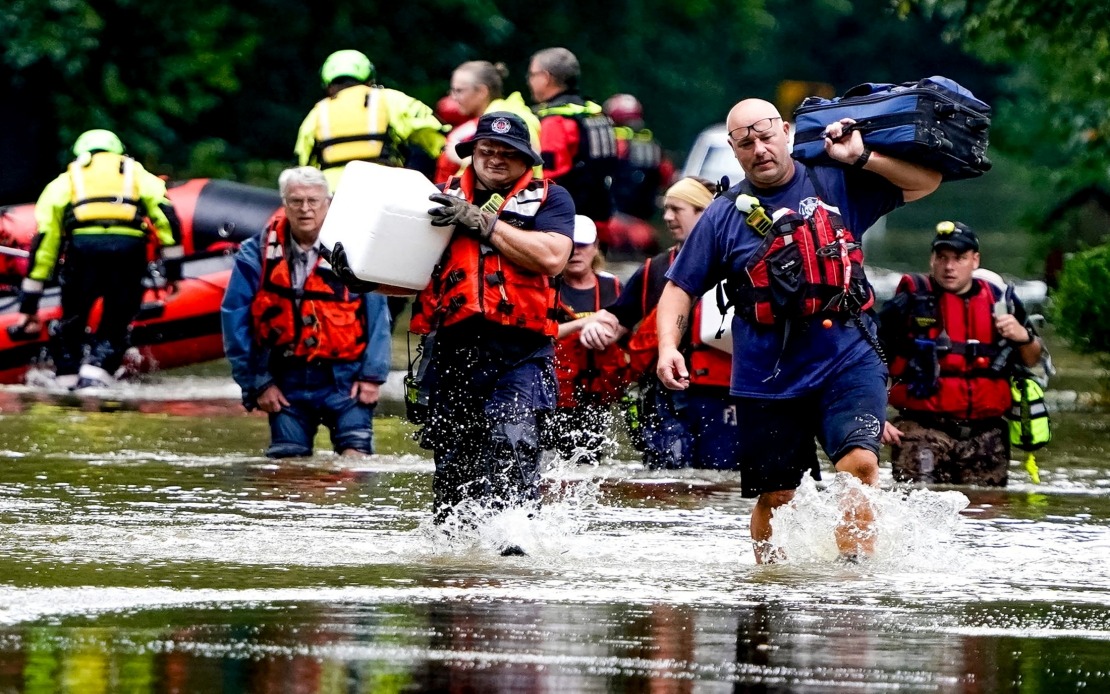
A devastating flood has ravaged Indiana following an intense storm system that inundated parts of the American state with exceptional rainfall, leaving at least six people dead and triggering one of the most significant natural disasters in the region's modern history. The deluge, which saw some areas receive more than 11 inches of rain over just two days, transformed communities along key waterways into disaster zones, with rescue operations unfolding across multiple counties as residents scrambled to reach higher ground.
The brunt of the flooding concentrated along the White River, which snaked through Hamilton County before spreading into the suburban regions north of Indianapolis. In the process, emergency responders orchestrated an intensive rescue campaign that pulled more than 90 people from the rising waters, along with 45 pets. The scale of the operation underscored the speed and ferocity with which floodwaters advanced through residential areas, leaving families with minimal warning to evacuate.
In the Ravenwood neighbourhood of Indianapolis, the full extent of the flooding became visually stark as vehicles sat completely submerged beneath murky water and floodwaters lapped at the entrances to homes. Residents who had remained in the area resorted to improvised water transport, paddling kayaks and rowing small boats through what had become temporary waterways cutting through their streets. Images and accounts from these neighbourhoods painted a picture of neighbourhoods transformed overnight into temporary lakes.
The White River's rise reached catastrophic levels, climbing above 24 feet in both Anderson and Noblesville—a surge that obliterated records dating back to 1913, more than a century earlier. This surpassing of century-old benchmarks illustrated the unprecedented nature of the current flooding event and signalled that communities were experiencing weather patterns potentially intensified by changing climatic conditions. Indianapolis Mayor Joe Hogsett responded by issuing a local emergency declaration and urging all residents in proximity to the river to evacuate immediately, recognising the gravity of the situation unfolding in real time.
Governor Mike Braun, responding to the crisis, established contact with President Donald Trump to expedite federal disaster relief measures. Braun announced that an accelerated Federal Emergency Management Agency declaration was being processed, a procedural step that would unlock federal resources and funding for recovery operations. In public statements, Braun expressed grief over the mounting death toll, stating his heart remained with the families who had lost loved ones and acknowledging the transformed lives of residents whose communities had been upended by the storms.
The fatalities were scattered across multiple counties, reflecting the wide geographic footprint of the disaster. One death occurred in Delaware County, where a 58-year-old woman perished after attempting to drive through floodwaters—a tragic reminder of the dangers posed by swollen waterways that obscured road conditions and vehicle depth. The Indiana Department of Homeland Security confirmed additional fatalities in Jennings, White, Porter, and La Porte counties, each representing individual tragedies within a broader catastrophe.
Jacob Spence, the director of Marion County Emergency Management, characterised the flooding as a generational event unlikely to recur within living memory. Spence's assessment that the situation represented "one of those once-in-a-lifetime type floods" and an "unprecedented event" with new records being established conveyed the historical significance of the disaster. Such language indicated that emergency management professionals were confronting conditions that exceeded the thresholds of their preparedness planning and historical precedent.
Flash flood warnings persisted across central Indiana in the immediate aftermath, with meteorological forecasts indicating additional storm systems moving into the region. Todd Wilson, the director of Indianapolis' public works department, cautioned residents that water levels continued to rise and urged continued vigilance and adherence to evacuation warnings. The threat of additional rainfall compounded the already dire situation, as saturated ground and swollen waterways left little capacity to absorb further precipitation.
The severe weather system responsible for Indiana's catastrophe proved far from localised, as tornadoes, torrential rainfall, and flash flooding extended across the broader Midwest region. Communities stretching from the Chicago metropolitan area eastward to western Pennsylvania reported storm damage, suggesting that the atmospheric conditions generating Indiana's historic floods represented a larger weather pattern affecting multiple states across the region. This geographic spread underscored the significance of the weather system and raised questions about its origins and whether such extreme events were becoming more frequent.
For Malaysian and Southeast Asian observers, the Indiana flooding serves as a sobering reminder of how extreme weather events are reshaping risk profiles across the globe. The historical rainfall totals and record-breaking water levels illustrate how climate change may be intensifying precipitation events and exceeding the design parameters of infrastructure built around historical norms. As a nation with its own history of devastating monsoon flooding, Malaysia can recognise parallels in the emergency response systems being mobilised in Indiana and the challenges communities face when weather patterns overwhelm protective measures.

