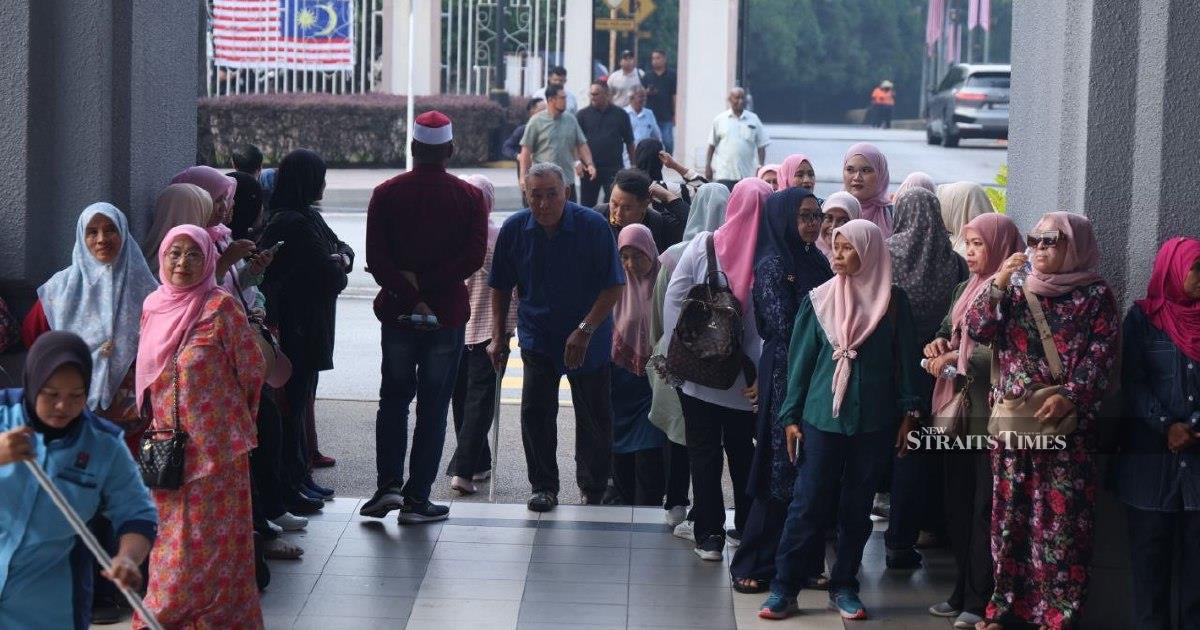
The Kuala Lumpur Court Complex transformed into a hive of activity as media contingents assembled in anticipation of former Prime Minister Datuk Seri Ismail Sabri Yaakob's arrival to face formal charges. The gathering of over 30 media practitioners signals the significant public and political interest surrounding the case, reflecting the high-profile nature of proceedings involving a former head of government.
The presence of such a substantial media contingent underscores the intensified scrutiny facing Malaysia's political establishment. When former prime ministers navigate the judicial system, the proceedings invariably attract widespread coverage, as these cases often have broader implications for governance, accountability, and public trust in institutions. The convergence of journalists at the court complex demonstrates that Malaysian media outlets and news organisations regard the matter as substantial enough to warrant dedicated on-site coverage rather than relying on secondary reports.
Security arrangements at the court complex would have been fortified in preparation for Ismail Sabri's appearance, standard protocol when high-ranking political figures face legal proceedings. The anticipated nature of his arrival allowed authorities to coordinate logistics, manage crowd flow, and ensure both the integrity of judicial processes and the safety of all parties involved. Such preparations reflect Malaysia's experience in managing high-stakes legal proceedings involving prominent public figures.
The formal charging of a former prime minister represents a significant moment in Malaysia's governance narrative. It demonstrates that no individual, regardless of prior political position or tenure in office, remains above judicial scrutiny. These moments carry weight beyond the immediate parties involved, as they signal to the broader public and international observers the functioning and independence of Malaysia's legal system.
For Malaysian citizens and regional observers, proceedings involving former leaders carry implications extending beyond individual accountability. They reflect the maturity of democratic institutions, the separation of powers between executive and judiciary, and the government's commitment to impartial justice. The public staging of such proceedings, with transparent court processes and media access, reinforces institutional legitimacy and public confidence in the rule of law.
The anticipation surrounding Ismail Sabri's court appearance also reflects the political complexity of contemporary Malaysia. His tenure as Prime Minister from 2021 to 2022 was marked by significant governance challenges and coalition management issues. The period preceding and following his administration witnessed considerable political turbulence, and developments within the legal system touching on his conduct inevitably draw examination of that chapter in recent Malaysian politics.
Media engagement in such proceedings serves multiple functions within democratic society. Beyond simple reporting of legal facts, extensive coverage enables informed public discourse about governmental accountability, institutional performance, and broader questions of administrative integrity. The presence of numerous journalists indicates that Malaysian news organisations recognise this educational and transparency function as central to their responsibilities.
The court complex itself, as Malaysia's primary venue for significant legal proceedings, has witnessed numerous high-profile cases over decades. This particular gathering adds to its continuing role as a focal point for national legal and political developments. The physical space where judicial proceedings occur carries symbolic weight, representing the accessibility and operation of justice mechanisms available to all citizens.
Southeast Asian observers monitoring Malaysia's legal proceedings find significance in how the country manages accountability for its political leadership. The region contains various political systems with different approaches to executive accountability and judicial independence. Malaysia's approach—characterised by formal legal proceedings, transparent court processes, and substantial media coverage—reflects particular institutional choices and constitutional frameworks that distinguish it within the regional context.
The formal charging process itself represents a distinct stage within Malaysia's criminal justice system. Moving from investigation to formal charges indicates that prosecutorial authorities have concluded sufficient evidence exists to proceed with legal action. This transition, marked by court appearance and formal proceedings, carries specific legal significance for the accused and shapes subsequent judicial processes.
For legal observers and constitutional scholars, such cases provide valuable insight into how Malaysian courts handle politically sensitive matters. Judges navigating such proceedings must balance multiple considerations: the rights of the accused, the interests of justice, public perception, and institutional credibility. The decisions and approaches taken in such cases contribute to evolving jurisprudence and judicial practice within Malaysia's legal system.
The gathering of media practitioners at the court complex ultimately reflects how major democratic societies manage transitions from political power to legal accountability. While the specifics of Ismail Sabri's case remain for judicial determination, the public nature of proceedings and transparent engagement with media organisations demonstrate Malaysia's institutional commitment to visible, accessible justice mechanisms. These moments, while politically significant, ultimately serve the foundational democratic principle that governmental accountability operates through established legal channels rather than alternative mechanisms.

