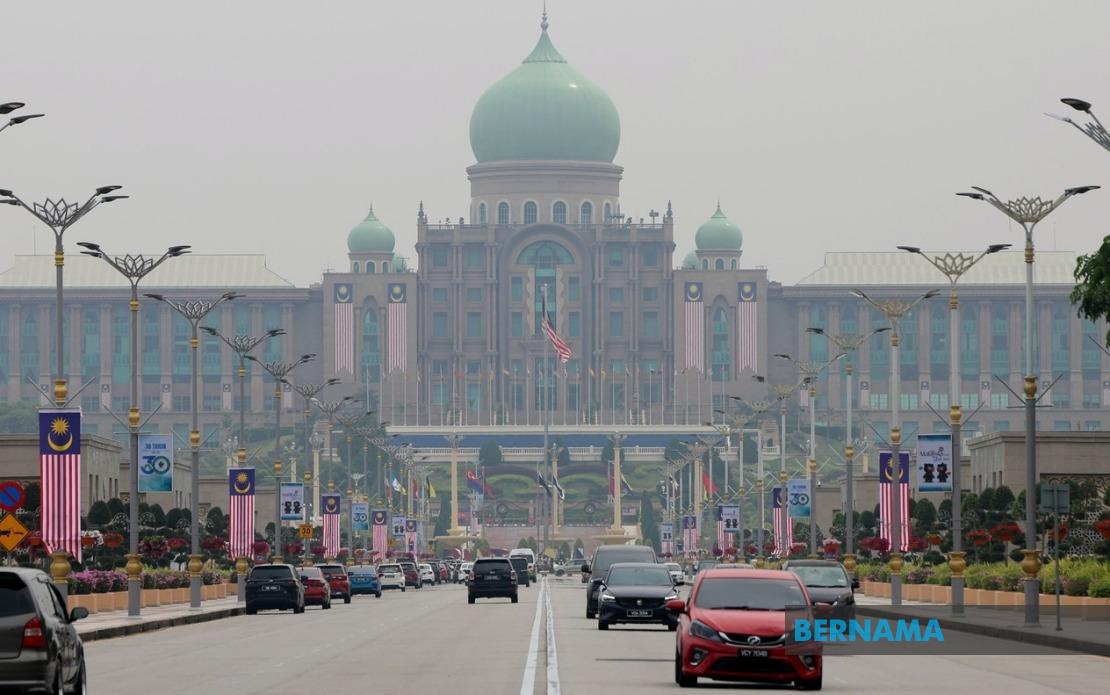
Prime Minister Datuk Seri Anwar Ibrahim will place the escalating haze situation at the forefront of discussions with Sultan Hassanal Bolkiah during his upcoming two-day working visit to Brunei, according to Malaysia's High Commissioner to the sultanate. The environmental crisis, which has blanketed portions of the region in recent weeks, is poised to become a focal point of the 27th Malaysia-Brunei Annual Leaders' Consultation (ALC-27), underscoring how transboundary air pollution has risen to the highest levels of bilateral engagement between the neighbouring nations.
Datuk Mohd Aini Atan, the High Commissioner, signalled during a press briefing in Bandar Seri Begawan that the haze represents one of several pressing concerns warranting immediate attention from both capitals. The inclusion of Sarawak Premier Tan Sri Abang Johari Tun Openg and Sabah Chief Minister Datuk Seri Hajiji Noor in the delegation underscores the severity of the situation for Malaysia's eastern states, with Sarawak bearing the brunt of deteriorating air quality across multiple population centres.
Current conditions paint a stark picture of environmental distress across the Bornean state. Data from Malaysia's Air Pollutant Index Management System (APIMS) reveals that Serian has descended into "very unhealthy" territory with a reading of 204 as of 5 pm on August 20, representing a dangerous threshold for vulnerable populations including children, the elderly, and those with respiratory conditions. This singular reading encapsulates the broader crisis engulfing the region, where atmospheric contamination has triggered public health warnings and economic disruptions.
The contamination extends far beyond Serian's epicentre, affecting a constellation of Sarawakian municipalities. Kuching, the state capital and commercial hub, registered 195 on the API scale, placing it in the "unhealthy" category that warrants advisories for sensitive groups to curtail outdoor activities. Samarahan followed closely at 182, whilst Sri Aman, Sarikei, and Sibu recorded readings of 179, 158, and 152 respectively—all classified as unhealthy, indicating that air quality has degraded to levels requiring public precautions and potential health interventions across the state.
The Malaysia-Brunei Annual Leaders' Consultation mechanism represents the apex of bilateral relations between the two monarchies, serving as the supreme institutional channel through which both governments navigate shared challenges and opportunities. By elevating the haze discussion to this forum, Malaysian leadership demonstrates recognition that transboundary environmental degradation demands high-level diplomatic attention and coordinated response strategies. The sultanate, whilst geographically smaller, shares the same atmospheric ecosystem and faces spillover effects from the same sources of pollution.
Sarawak's disproportionate impact reflects the state's geographic proximity to major peat-producing regions and agricultural areas where land-clearing activities typically intensify during drier seasons. The recurring nature of this phenomenon—where monsoon patterns and human activity intersect—has made haze management a permanent fixture of bilateral and multilateral environmental diplomacy in Southeast Asia. For Malaysia's eastern states, the issue transcends mere inconvenience, affecting productivity, tourism revenue, and population health metrics across communities.
The timing of Anwar's visit carries particular significance given the intensity of current readings and the broader context of Malaysia's environmental commitments under international frameworks. The government's positioning of this issue at the summit level signals intent to pursue coordinated measures, whether through enhanced information-sharing on pollution sources, joint monitoring initiatives, or pressure on transnational entities engaged in land-use practices that generate atmospheric contaminants. Brunei's participation in these discussions potentially opens avenues for collective advocacy within regional forums like ASEAN.
For Malaysian citizens across Sarawak and Sabah, the elevation of this issue in high-level diplomacy carries tangible implications. Effective bilateral cooperation could accelerate implementation of mitigation strategies, from stricter enforcement of environmental regulations to technological investments in air quality management. The presence of both state premiers in the delegated team ensures that on-ground realities and local concerns feed directly into national-level negotiations, bridging the gap between diplomatic discourse and grassroots impact.
The haze phenomenon exemplifies how environmental challenges in the region operate indifferent to political boundaries, necessitating cooperation mechanisms that transcend traditional bilateral frameworks. Malaysia's strategy of bringing this matter to the ALC-27 reflects a matured understanding that transnational environmental threats demand engagement at the highest levels of government. As the conversation unfolds in Bandar Seri Begawan, the millions affected by poor air quality across Sarawak will be watching for commitments that translate diplomatic attention into measurable improvements in atmospheric conditions.

