%22%2F%3E%3C%2Fpattern%3E%3C%2Fdefs%3E%3Crect%20width%3D%22100%25%22%20height%3D%22100%25%22%20fill%3D%22url(%23ph3tej3g)%22%2F%3E%3Crect%20width%3D%22100%25%22%20height%3D%22100%25%22%20fill%3D%22url(%23ph3tej3p)%22%2F%3E%3Ctext%20x%3D%2250%25%22%20y%3D%2250%25%22%20text-anchor%3D%22middle%22%20dominant-baseline%3D%22central%22%20fill%3D%22rgba(255%2C255%2C255%2C0.95)%22%20font-family%3D%22Georgia%2C%20'Times%20New%20Roman'%2C%20serif%22%20font-weight%3D%22700%22%20font-size%3D%22226%22%20letter-spacing%3D%22-0.02em%22%3EHAWANA%3C%2Ftext%3E%3C%2Fsvg%3E)
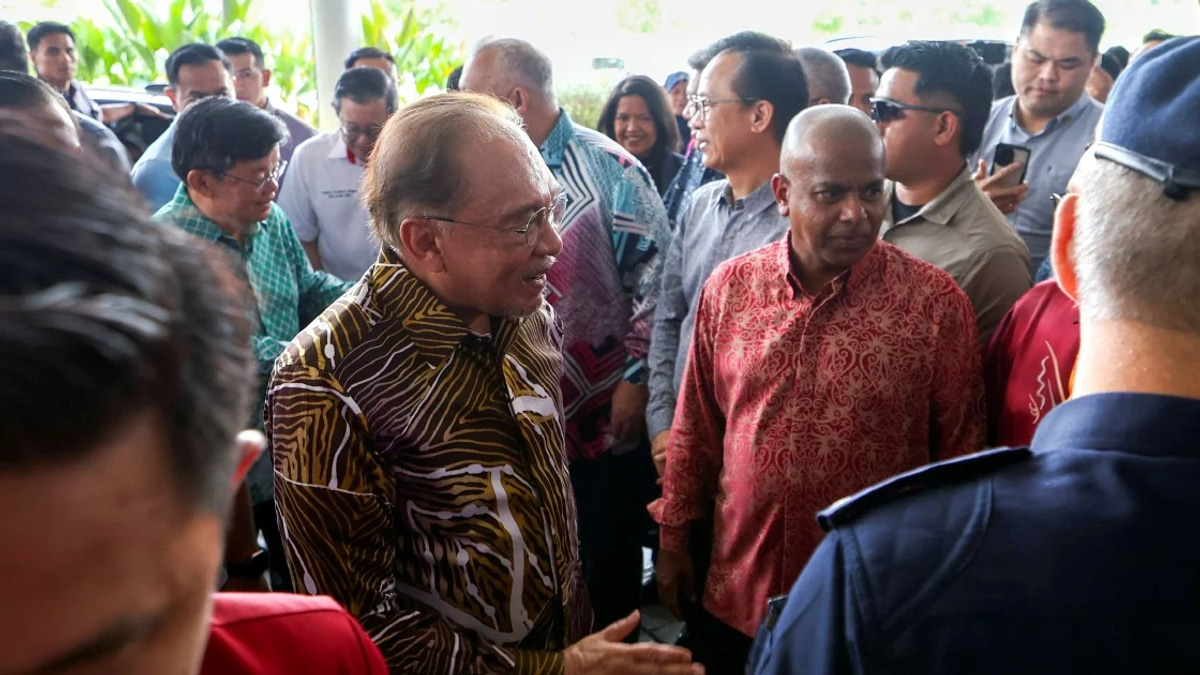
Prime Minister Datuk Seri Anwar Ibrahim officiated the HAWANA 2026 Summit in Penang this week, underscoring the government's commitment to recognising the journalism profession at a pivotal moment for media industries across Southeast Asia. The gathering, themed "Media Integrity Strengthens Credibility," attracted roughly 1,000 media practitioners including journalists and content creators from Malaysia and several ASEAN nations, reflecting the regional significance of discussions around journalism's evolving role in society.
Radio Televisyen Malaysia director-general Ashwad Ismail framed HAWANA as more than ceremonial recognition, positioning it instead as an essential mechanism through which the media fraternity conducts collective self-assessment. He emphasised that the annual platform allows professionals to identify successes, acknowledge shortcomings, and contextualise their work within the current operating environment. This reflective function becomes increasingly critical as newsrooms grapple with structural pressures ranging from audience fragmentation to resource constraints that characterise modern journalism globally.
The timing of the summit carries particular resonance given the technological and institutional transformations reshaping how news is gathered, verified, and distributed. Ashwad highlighted artificial intelligence and emerging technological disruptions as focal points for industry discussion, suggesting that HAWANA serves as a forum where practitioners, content creators, and news organisations can collaboratively anticipate challenges rather than merely react to them. For Malaysian journalists working amid rapid digitalisation, access to such structured dialogue about industry futures remains comparatively rare, making the summit's role as a deliberative space especially valuable.
Siti Nor Aina Omar, a lecturer at Han Chiang University College of Communication and former industry professional, articulated the pedagogical and cultural significance of events like HAWANA. She positioned such gatherings as instruments of professional recognition that honour the accumulated contributions of journalism practitioners while simultaneously affirming journalism's standing as a valued profession deserving of acknowledgment and respect. Her dual perspective—straddling academia and newsroom experience—illuminates how HAWANA functions across multiple registers: as professional recognition, as industry convening, and as cultural validation of journalistic work.
An experienced journalist with Sinar Harian in Kedah, Siti Zubaidah Zakaria, brought a practitioner's voice to discussions about HAWANA's ongoing relevance. Her seventeen years in journalism position her to articulate frontline concerns, particularly regarding material conditions that enable quality reporting. She advocated for HAWANA to remain a vehicle through which the profession's sacrifices receive formal acknowledgment, while simultaneously pressing for improvements in journalist welfare and access to reporting equipment that underpins accuracy and truthfulness. This dual advocacy—celebrating contributions while demanding better working conditions—reflects tensions within the industry that summits like HAWANA must address substantively.
The breadth of official attendance at the Butterworth event underscores institutional commitment to the summit's mission. Penang Chief Minister Chow Kon Yeow, Communications Minister Datuk Fahmi Fadzil, Communications Ministry secretary-general Datuk Abdul Halim Hamzah, and their counterparts from across government hierarchy demonstrated recognition that media health constitutes a governance concern extending beyond any single ministry. The presence of Timor-Leste's Secretary of State for Social Communication, Expedito Loro Dias Ximenes, further signals that challenges facing journalism practitioners resonate across the Southeast Asian region, making cross-border engagement and knowledge-sharing increasingly relevant.
For Malaysian readers and media professionals, HAWANA's institutional anchoring within government structures—organised by the Communications Ministry with Bernama as implementing agency—establishes the summit as a state-recognised annual event rather than a marginal professional gathering. This positioning carries implications for how the profession's concerns gain hearing within policymaking circles and how industry perspectives shape regulatory and support frameworks. The summit's place in Malaysia's official calendar lends weight to calls for journalism welfare improvements and equipment access that practitioners like Siti Zubaidah raise.
The emphasis on media integrity as the 2026 theme signals attention to credibility challenges affecting news organisations globally, but particularly acute in contexts where audience trust in institutions remains contested. By placing integrity at the summit's conceptual centre, organisers frame professional recognition not merely as ceremonial praise but as connected to the substantive work of maintaining journalism's foundational commitment to truthful reporting. This thematic focus suggests that HAWANA functions as venue where the profession collectively reaffirms its core values amid pressures toward sensationalism, misinformation, and commercial distortion.
The regional representation at the summit, with journalists from multiple ASEAN countries participating, creates opportunity for comparative learning about how different national contexts address shared challenges. Malaysian practitioners gain exposure to peers navigating similar terrain in Indonesia, Thailand, the Philippines, and neighbouring states, potentially fostering regional networks that enhance journalism quality through cross-border collaboration. Such networks become increasingly valuable as media ownership consolidates and journalists seek professional communities beyond their immediate newsroom environments.
Moving forward, the sustainability of HAWANA's relevance hinges on the extent to which the summit translates discussion into concrete outcomes benefiting the profession. While symbolic recognition matters for professional morale and institutional standing, practitioners like Siti Zubaidah implicitly call for HAWANA to drive material improvements in working conditions, equipment access, and remuneration structures that enable quality journalism. The gap between summits—where aspirations for industry advancement are articulated—and the intervening months—where journalists navigate resource scarcity and competitive pressures—remains substantial. Whether HAWANA can catalyse follow-through mechanisms connecting summit discussions to policy changes and industry improvements will determine whether the platform evolves beyond annual ritual toward substantive professional development.