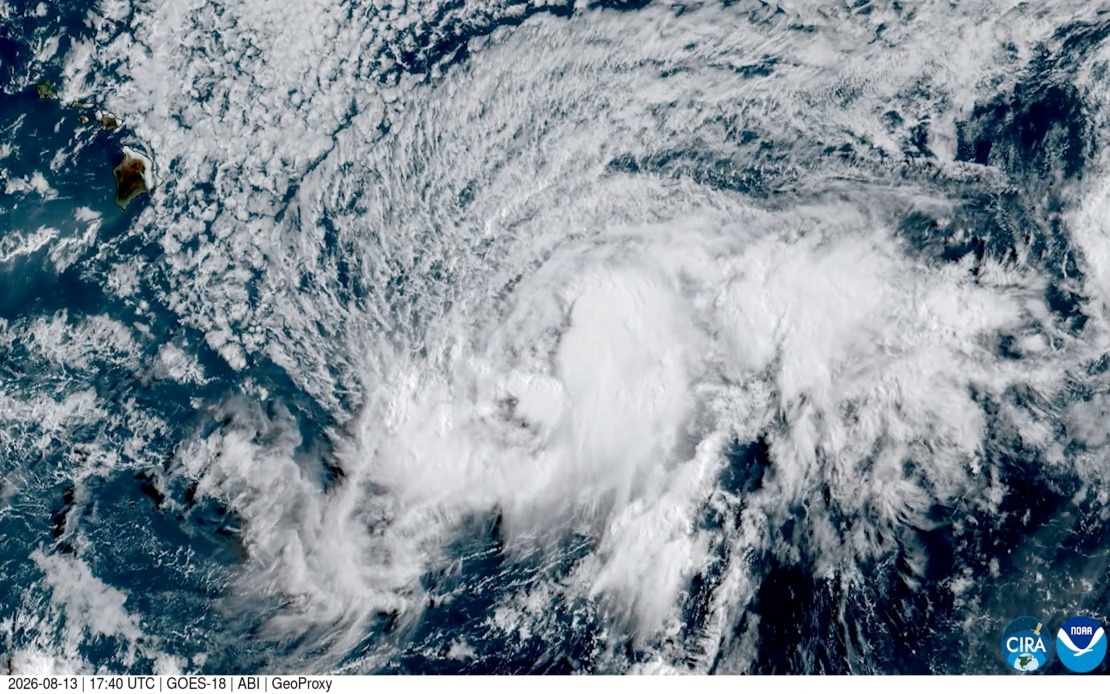
The Hawaiian Islands face an exceptionally rare meteorological threat this weekend as Tropical Storm Lala continues its northwestward trajectory toward the Big Island. Weather forecasters are increasingly confident that the system will graduate to hurricane status before making potential landfall, creating a scenario of considerable concern for residents and emergency management authorities across the region. The National Hurricane Centre projects that Lala should reach hurricane strength by Saturday as it approaches the Big Island, setting the stage for conditions not witnessed in the modern era and barely documented in the historical record.
The historical significance of this impending event cannot be overstated. Should Lala make landfall on the Big Island, it would represent only the second confirmed hurricane strike on the island in recorded history. The most recent comparable occurrence dates back to 1871, when a Category 3 hurricane struck the northeast portion of the island during a period when meteorological documentation relied primarily on newspaper accounts and observational records rather than satellite imagery. This remarkable 153-year gap underscores how infrequently the Big Island experiences direct hurricane impacts, making current preparations all the more consequential.
Metorologists emphasize that the threat carries particular urgency given the dual nature of hazards associated with tropical cyclones in Hawaii. Vanessa Almanza, a meteorologist with the National Weather Service in Honolulu, stressed that the system presents multiple pathways for damage and destruction. The heavy precipitation expected to accompany a hurricane-strength Lala poses significant risk of destructive flooding, particularly in areas with challenging topography and limited drainage infrastructure. Simultaneously, the powerful winds characteristic of hurricanes create dangerous conditions for wildfire ignition and rapid spread, a concern that resonates deeply given Hawaii's recent experience with devastating fire events that have claimed lives and displaced communities.
The latest forecast trajectory has shifted slightly, with predictions now indicating the system will pass very close to the southern tip of the Big Island rather than making a more direct northeastern approach. This positioning, while potentially offering some marginal benefit, remains sufficiently threatening to warrant serious preparedness measures across multiple islands. The geographic specificity of tropical storm and hurricane warnings reflects the varying levels of threat exposure, with the Big Island under a hurricane warning while Maui County—encompassing the islands of Maui, Molokai, Lanai, and Kahoolawe—remains under a tropical storm warning.
For Malaysian and Southeast Asian readers, this event illustrates the distinctive meteorological challenges that island communities in the Pacific basin face and the vulnerability inherent in geographic isolation during extreme weather events. While Southeast Asia experiences tropical cyclones regularly, the Hawaiian Islands occupy a different risk profile. The warm ocean waters surrounding the islands provide ideal conditions for tropical system intensification, yet the islands' distance from continental landmasses means that hurricane strikes remain statistically uncommon even within a multi-generational timeframe. This rarity paradoxically creates challenges for preparedness, as institutional memory and generational knowledge of hurricane response remain limited.
The implications for emergency response and community resilience extend beyond immediate weather impacts. The prospect of a rare hurricane strike tests the adequacy of evacuation protocols, shelter capacity, and supply chain resilience in an island context where self-sufficiency cannot be assumed. Power infrastructure vulnerability during sustained high winds raises questions about medical facilities, refrigeration, and communication systems. The interplay between hurricane-force winds and flood-inducing rainfall creates compound hazards that exceed the singular challenges of either phenomenon in isolation.
Forecasters continue to refine predictions as additional data becomes available, yet the general trajectory and likely intensity of Tropical Storm Lala appear increasingly certain. The window for final preparations grows narrow, with Saturday's potential landfall approaching with inexorable certainty. Residents across the Hawaiian Islands are monitoring official guidance from the National Hurricane Centre and local meteorological authorities, making decisions about whether to remain in place, evacuate, or pursue alternative shelter arrangements.
This rare convergence of meteorological conditions and geographic vulnerability serves as a reminder of nature's capacity to create exceptional circumstances regardless of statistical probability. Communities accustomed to relative hurricane protection now face conditions requiring urgent but deliberate action. The unfolding scenario will likely generate valuable lessons regarding tropical cyclone preparedness and island community resilience that extend well beyond Hawaii itself, offering insights relevant to vulnerable populations throughout the Pacific and beyond.

