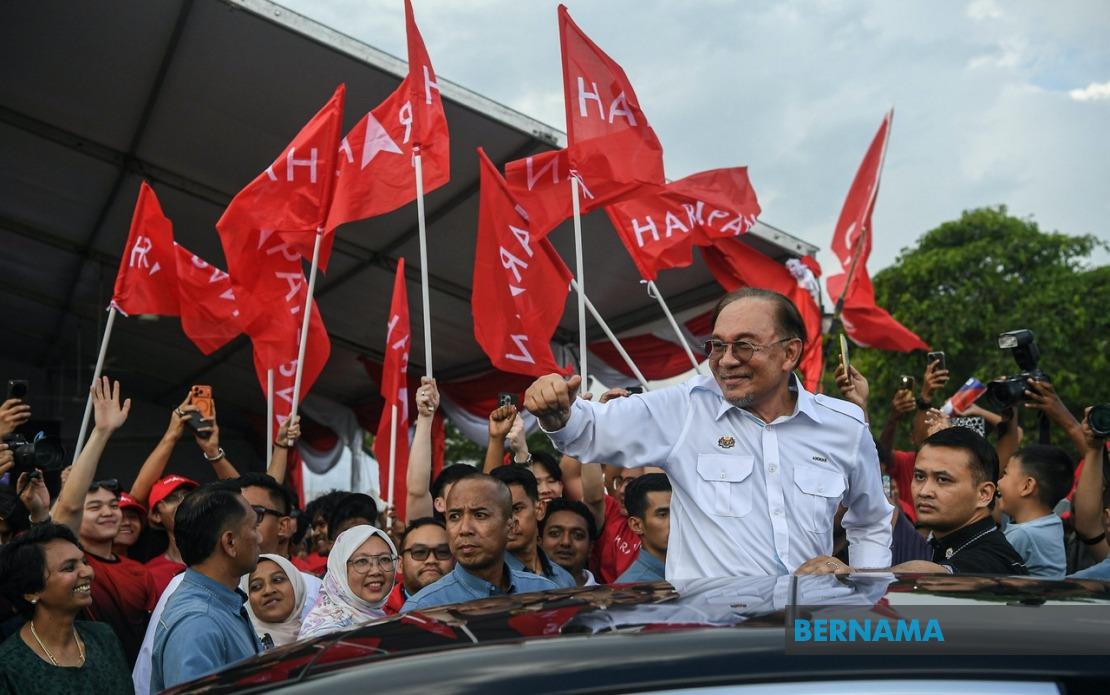
As Johor prepares for its 16th state election, a fundamental tension has emerged between the glittering world of viral TikTok content and the enduring human need for a handshake. Despite online campaigning capturing headlines and resources, a fresh survey reveals that voters across multiple age groups—particularly those over 60—remain deeply invested in the traditional art of face-to-face political engagement. This divergence reflects broader questions about how elections actually function in Southeast Asia's increasingly digital landscape, and what it means when traditional and modern campaign tactics coexist rather than compete.
The 2.7 million voters eligible to participate in the 16th Johor State Election are navigating an unprecedented media environment. Political parties deploy sophisticated social media strategies across Facebook, TikTok and WhatsApp, crafting carefully curated messages designed for rapid sharing and emotional engagement. Yet interviews with voters across constituencies including Perling, Sedeli, Kempas and Bukit Permai suggest that the old methods retain surprising potency. For many, a candidate's physical presence serves as a crucial authenticity signal—a way to move beyond algorithmic filters and assess whether someone genuinely deserves their vote. This psychological dimension of in-person campaigning cannot be replicated by even the most professionally produced campaign video.
A. Chandra, a 70-year-old retired teacher from Perling, articulated what many seniors expressed during conversations: the unmistakable energy of a live campaign event simply cannot be captured through screens. He emphasises that attending rallies allows voters to observe candidates' deportment, gauge their sincerity through body language, and experience the collective mood of fellow citizens united in political participation. The atmosphere itself becomes evidence—a crowded venue suggests momentum, while a sparse gathering tells its own story. For voters who have witnessed decades of electoral cycles, these atmospheric cues matter enormously in forming final judgments.
Yet the relationship between age and campaign preference proves more nuanced than simple generational divides. Maimunah Ismail, 73, from Sedeli, demonstrates how many older voters have become pragmatic multimedia consumers. She attends campaign events whenever possible, valuing the direct communication and the chance to assess candidates' characters in real time. Simultaneously, she scrolls through social media while doing household tasks, maintaining awareness of broader campaign narratives. This hybrid approach—combining traditional and digital inputs—reflects how voters actually make decisions, rather than adhering to stark categorical preferences.
Mobility and time constraints reshape campaign preferences in ways that bridge age groups. M. Sivathramani, a 73-year-old retired civil servant with physical limitations, credits digital platforms with democratising access to political information. For people unable to navigate crowded venues or travel long distances, TikTok and Facebook become essential equalizers, enabling informed participation without physical strain. Similarly, Lee Lian Chen, a 58-year-old grocery shop owner, relies on social media to preliminarily assess candidates' manifestos before visiting campaign sites in person. These practical considerations transcend age, affecting anyone with competing demands on their time and energy.
The quality of digital campaign messaging itself significantly influences effectiveness among older audiences. Fairuz Saif, a 59-year-old Kempas voter, challenges the stereotype that senior citizens lack digital literacy, but insists that political parties often fail to optimize their online content for broad comprehension. Campaign material employing jargon, rapid editing or compressed arguments alienates even digitally-savvy older voters. When campaigns use simple language and concise messaging, older audiences engage more readily. However, Saif notes that face-to-face interaction still maintains an edge because candidates can directly answer questions, clarifying confusion in real-time and building voter confidence through dialogue rather than monologue.
Academic analysis provides crucial perspective on this campaign ecosystem. Dr Nazreena Mohammed Yasin from Universiti Tun Hussein Onn Malaysia's Department of Social Sciences characterizes contemporary electioneering not as a competition between physical and digital approaches, but as a complementary ecosystem. Social media functions as the primary news source for many voters, yet traditional campaign events retain sentimental and psychological significance. Voters experience elections differently based on their generational background, geographic location, work commitments and health status—not because of fundamental differences in political consciousness, but because practical realities shape which channels reach them most effectively.
The broader insight emerging from Johor's electoral landscape applies across Southeast Asia's democracies, where nations grapple with similar technological transitions. Younger voters accessing information primarily through smartphones find social media indispensable, yet older voters' preference for in-person verification reflects legitimate epistemological concerns about misinformation and authenticity online. Neither group dismisses the other's preferred channels entirely; instead, voters construct personalized information diets combining multiple sources. A pensioner might trust a candidate she has met in person, while supplementing that judgment with Facebook verification of stated policies. A working professional might encounter campaign news through TikTok but still attend a rally to confirm impressions formed online.
Saadon Mohamad, a 72-year-old settler, captures why atmosphere matters irrespective of age. He acknowledges that political information has become abundant and accessible online, yet argues persuasively that availability differs fundamentally from the visceral experience of participating in campaign events. The excitement, the crowd energy, the chance to cheer or question candidates directly—these elements cannot be digitized. They represent democratic participation as embodied experience, not merely information consumption. For voters across generations, this distinction resonates deeply.
The 56 representatives that 2.7 million Johor voters will elect on Saturday will be chosen by electors employing this hybrid methodology. Some will base decisions primarily on in-person impressions supplemented by social media fact-checking. Others will rely predominantly on digital research before making final determinations at polling stations. Many will synthesize both approaches, recognizing that campaign quality has multiple dimensions. Political strategists who recognize this reality—investing in both ground operations and digital presence rather than treating them as competing priorities—likely position themselves most effectively.
Looking forward, the Johor election offers regional lessons about electoral communication in an age of digital disruption. Rather than assuming that social media would simply replace traditional campaigning, voters have revealed more sophisticated preferences. They value efficiency gains from digital platforms while maintaining attachment to democratic rituals rooted in face-to-face accountability. For election observers across Malaysia and Southeast Asia, this balanced approach suggests that technological change need not eliminate foundational democratic practices, provided political parties and candidates commit to engaging voters through multiple channels simultaneously.

