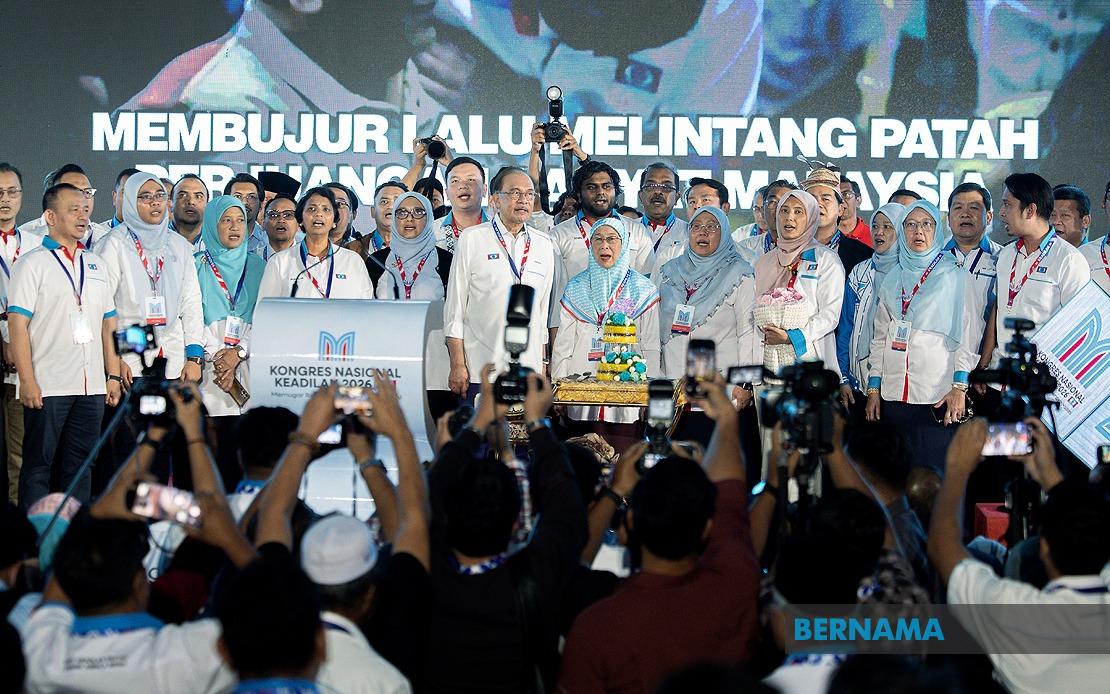
Prime Minister Datuk Seri Anwar Ibrahim has announced that the government will pursue legislative amendments to the Tabung Haji Act 1995 (Act 535) as a cornerstone of its institutional reform programme, signalling renewed commitment to fortifying public confidence in Malaysia's premier Islamic financial institution. Speaking in his capacity as both premier and Finance Minister, Anwar underscored that the proposed changes represent a deliberate effort to address longstanding governance deficiencies within Tabung Haji, an institution that manages pilgrimage savings for millions of Muslim Malaysians.
The announcement arrives amid broader MADANI Government initiatives aimed at systematically dismantling structural vulnerabilities across the public sector. Anwar framed institutional reform as inseparable from effective governance, arguing that organisations serving the public must undergo rigorous internal examination and corrective measures. This philosophical stance reflects the administration's positioning as a reformist government willing to confront entrenched institutional problems rather than perpetuate them through administrative continuity.
In the same policy statement, Anwar called for the complete repeal of the Universities and University Colleges Act 1971 (AUKU) without substituting it with replacement legislation that would maintain existing curbs on student activism and political expression. This two-pronged reform agenda—strengthening oversight of a financial institution while liberalising restrictions on academic freedom—illustrates the MADANI Government's attempt to navigate between competing reform objectives: protecting vulnerable constituencies' material interests while simultaneously expanding democratic participation.
The timing of Anwar's announcement coincided with the conclusion of the Parti Keadilan Rakyat (PKR) National Congress, the party's triennial gathering where Anwar holds the presidency. Leveraging this party platform, he reframed institutional governance as integral to PKR's ideological mission, connecting technical regulatory improvements to the party's foundational commitment to justice and reform. This rhetorical linkage serves both internal party consolidation and external stakeholder reassurance.
Anwar explicitly rejected the notion that government benefits should accrue exclusively to ruling coalition supporters or states governed by allied political parties. Instead, he articulated a principle of universal welfare distribution, arguing that citizens living under opposition-controlled state administrations retain equal entitlement to federal government programmes and services. This stance represents a deliberate departure from zero-sum patronage models that have historically characterised Malaysian political practice, though the practical implementation of such universalist principles remains subject to budgetary and administrative constraints.
For Malaysian investors and Muslim savers, the proposed Tabung Haji legislation amendments carry significant implications. Tabung Haji has encountered repeated governance challenges over recent years, including investment losses and administrative controversies that eroded depositor confidence. Legislative revision provides an opportunity to modernise oversight mechanisms, enhance transparency requirements, and strengthen internal control frameworks. Enhanced regulatory architecture could restore confidence among the institution's 9.3 million account holders, many of whom rely on Tabung Haji for systematic savings accumulation prior to pilgrimage journeys.
The AUKU repeal proposal addresses persistent tensions between campus-based student organisations and institutional authorities. Student activism, historically a pathway for political mobilisation in Malaysia, has been constrained by legislation enacted during earlier authoritarian phases. Removing these restrictions responds to long-standing calls from civil society advocates and university administrators who argue that contemporary governance frameworks can accommodate student political participation without compromising institutional stability or academic integrity.
Anwar's governance narrative emphasises that institutional power must serve collective interests rather than facilitate individual enrichment or factional advantage. This formulation targets historical patterns wherein access to state institutions has been weaponised for patronage distribution or personal gain. By contrast, Anwar positions reformed institutions as vehicles for advancing human dignity and social justice—ambitions that resonate with MADANI's electoral positioning as a morally grounded government distinct from its predecessors.
The reform programme's credibility hinges substantially on parliamentary implementation. The MADANI coalition commands sufficient legislative numbers to amend both pieces of legislation, yet political sceptics note that institutional reform faces persistent obstacles including entrenched bureaucratic interests, competing spending priorities, and the substantial technical expertise required for drafting robust regulatory frameworks. Previous Malaysian governments have announced ambitious reform agendas that encountered implementation delays or dilution during the legislative process.
Regionally, Malaysia's institutional reform trajectory attracts attention from other Southeast Asian democracies grappling with parallel governance challenges. Strengthening oversight of Islamic financial institutions reflects broader regional trends toward enhanced regulatory scrutiny of religious organisations and faith-based financial intermediaries. Similarly, liberalising campus speech restrictions aligns with international advocacy supporting academic freedom and democratic expression within educational environments, positioning Malaysia within global conversations about university governance standards.
For the MADANI coalition, maintaining coherence around reform priorities remains strategically vital given the alliance's diverse constituent parties and competing organisational interests. Anwar's emphasis on principled governance and non-negotiable reform standards attempts to cement coalition identity around shared normative commitments rather than purely transactional political arrangements. Whether such appeals can sustain coalition cohesion through inevitable administrative tensions and policy disagreements remains an open question as the government navigates its reform agenda.
The amendments represent modest but symbolically significant steps within Malaysia's broader institutional trajectory. Rather than constituting revolutionary overhaul, these measures signal incremental modernisation addressing specific institutional vulnerabilities. Success will depend on careful legislative drafting, sustained political commitment through implementation phases, and demonstrable improvements in public confidence within reformed institutions. For Malaysian citizens, particularly Muslim savers and university students, the government's follow-through on these announced commitments will constitute a meaningful test of MADANI's reformist credentials.

