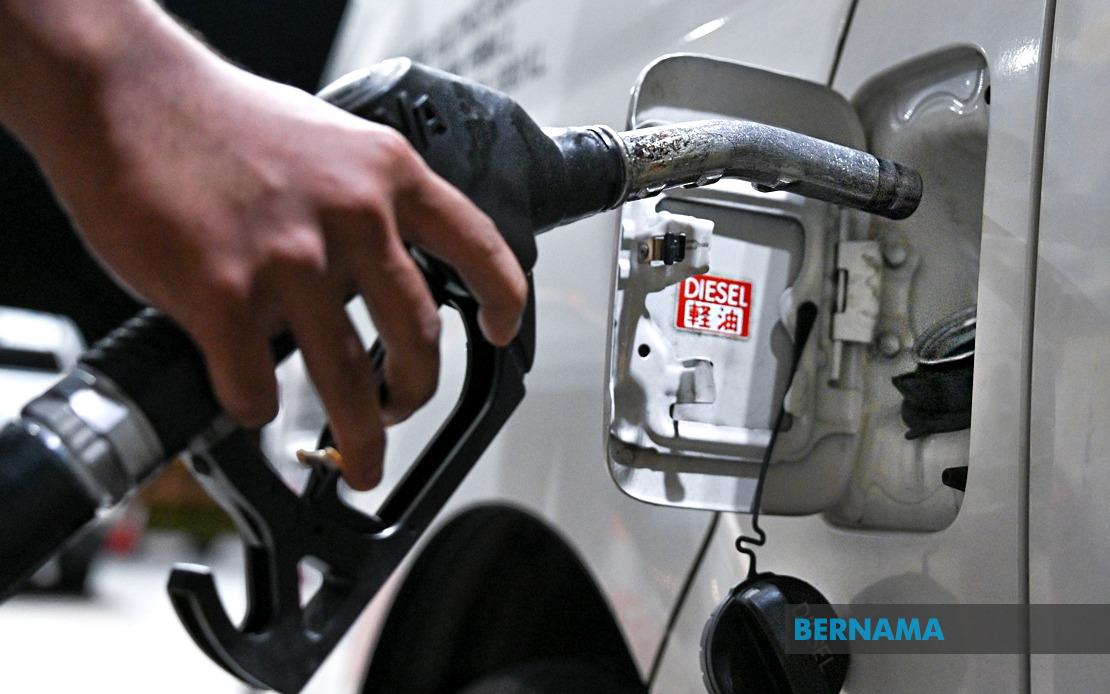
The government has moved to ease the financial burden on Malaysian workers and small-scale operators by announcing a reduction in subsidised diesel pricing to RM2.10 per litre, effective from July 2026. Prime Minister Datuk Seri Anwar Ibrahim unveiled the decision on June 21, signalling a significant shift in the nation's fuel subsidy approach that aims to channel assistance more efficiently to those who depend most heavily on diesel for their livelihoods. The new pricing structure will operate under a verification mechanism similar to the existing BUDI MADANI RON95 fuel subsidy programme, requiring users to present their MyKad for eligibility confirmation at petrol stations nationwide.
This fuel price adjustment addresses longstanding disparities in diesel costs across the country. Currently, Sabah and Sarawak benefit from a subsidised rate of RM2.15 per litre, while Peninsular Malaysia has no fuel subsidy protection and faces unsubsidised prices of RM4.37 per litre—a gap that has created competitive disadvantages for operators in the peninsula. The new framework promises to standardise access to subsidised diesel across all states, including Sabah, Sarawak, and Labuan, fundamentally reshaping how fuel support reaches different regions of Malaysia. This harmonisation eliminates a two-tier system that has long troubled transport businesses and agricultural operators competing across state lines.
Small business operators have expressed cautious optimism about the measure. Night market traders like Mohd Faizal Ahmad, aged 43 from Shah Alam, recognise that the five-sen reduction combined with the subsidy's targeting through MyKad verification would translate into meaningful savings over the course of a month or year. For individuals operating at the margins of Malaysia's informal economy—hawkers, market stall owners, and independent vendors—fuel remains one of the largest controllable expenses. The relief comes at a time when many small-scale businesses continue to recover from pandemic-related disruptions and navigate rising operational costs in other areas.
Construction and logistics professionals stand to benefit significantly from the new pricing structure. Small-scale contractors who operate vehicles for maintenance work and material delivery, like Tan Chee Keong from Johor Bahru, depend on predictable fuel costs to quote competitively on projects and maintain profit margins. The reduction provides some insulation against volatile global petroleum markets, allowing these operators to plan capital expenditure and personnel costs with greater certainty. The conditional nature of the subsidy—restricted to Malaysian citizens verified through identity documentation—also addresses long-standing concerns about subsidy leakage to non-citizens and fuel smuggling across borders, issues that have plagued previous fuel support programmes.
Agricultural sector participants similarly anticipate operational efficiency gains from lower diesel prices. Vegetable farm operators like R. Mageswaran from Sungai Siput, Perak, who rely on daily vehicle use to transport produce to markets and food establishments, view the reduction as a direct pathway to lower operating costs without requiring business model changes. Since farming operates on typically narrow margins and competes against imported produce, fuel cost reductions can meaningfully affect the competitiveness of locally-grown vegetables. The move also recognises that rural and agricultural Malaysia has historically borne disproportionate transport costs due to geographic distribution of farms and markets.
The implementation mechanism represents a refinement of Malaysia's subsidy architecture. Rather than universal price caps that benefit all consumers regardless of need, the MyKad verification approach targets support to Malaysian citizens while maintaining transparency and reducing opportunities for abuse. Second Finance Minister Datuk Seri Amir Hamzah Azizan was expected to provide comprehensive implementation details, addressing technical questions about verification processes at petrol stations, eligibility criteria for specific business categories, and enforcement procedures. The Ministry of Finance has emphasised that the reform will enable nationwide consistency, removing administrative complexity that arises when different pricing regimes operate across regions.
Regional considerations underpin this policy shift. Sabah and Sarawak, which currently maintain lower diesel prices through existing subsidy structures, will see their pricing aligned with the peninsular framework beginning July 2026. This transition requires careful coordination with state governments and petroleum distributors to ensure seamless implementation without supply disruptions. The eastern Malaysian states have traditionally received different treatment in fuel subsidy allocation, partly reflecting their geographic isolation and the higher transport costs of serving remote communities. Standardising the subsidy while maintaining the RM2.10 price point represents a political commitment to treating all Malaysians equitably in fuel support.
The timing of this announcement reflects broader fiscal pressures and subsidy reform priorities. Malaysia has grappled with substantial budgetary commitments to fuel subsidies, which distort market signals and consume resources that might otherwise fund development or social services. By introducing the MyKad verification requirement, the government signals intent to move away from untargeted universal subsidies toward means-tested or user-specific assistance. This approach aligns with international best practice in subsidy reform, which emphasises directing public resources to those with greatest need rather than providing blanket support.
Business community responses indicate general acceptance of the policy direction. The restriction of the subsidy to verified Malaysian citizens, while potentially complicating petrol station operations, addresses widespread perception that diesel subsidies have been diverted to commercial smuggling operations or foreign workers. Professional operators and business owners recognise that well-designed targeting can reduce fiscal costs while ensuring genuine beneficiaries receive support. However, the success of implementation will depend heavily on petrol station infrastructure, staff training, and verification technology functioning smoothly without creating bottlenecks or frustration.
The July 2026 effective date provides a reasonable implementation window for government agencies, petroleum distributors, and petrol station networks to prepare systems and train personnel. This lead time allows the Ministry of Finance and relevant agencies to communicate details to stakeholders, conduct pilot testing, and refine procedures based on feedback. It also enables businesses to factor the expected price reduction into financial planning for the second half of 2026, providing some certainty for capital budgeting and contract negotiations. The staggered implementation approach represents a departure from previous fuel price adjustments that sometimes took effect with minimal notice.
Looking forward, this subsidy reform may establish a template for other targeted government assistance programmes. As Malaysia continues to modernise its fiscal framework, moving from universal subsidies toward verified, recipient-specific support becomes increasingly relevant across multiple policy areas. The diesel subsidy model demonstrates how technology—specifically the MyKad system—can enable more sophisticated policy implementation. The success or challenges encountered during diesel subsidy verification will likely inform discussions around refinements to RON95 petrol subsidies and potentially other support mechanisms targeting specific income groups or business categories.
The announcement reflects acknowledgment within government that blanket fuel subsidies, while politically popular, create economic inefficiencies and fiscal pressures that ultimately constrain public spending on education, healthcare, and infrastructure. By coupling price reductions with targeting mechanisms, policymakers aim to maintain support for genuine users while improving subsidy programme sustainability. The measure represents a careful balance between providing relief to Malaysian workers and small operators—whose real incomes have faced pressure from inflation—while addressing fiscal concerns that shape long-term economic stability and government's capacity to invest in future growth.


%22%2F%3E%3C%2Fpattern%3E%3C%2Fdefs%3E%3Crect%20width%3D%22100%25%22%20height%3D%22100%25%22%20fill%3D%22url(%23ph2zjqhg)%22%2F%3E%3Crect%20width%3D%22100%25%22%20height%3D%22100%25%22%20fill%3D%22url(%23ph2zjqhp)%22%2F%3E%3Ctext%20x%3D%2250%25%22%20y%3D%2250%25%22%20text-anchor%3D%22middle%22%20dominant-baseline%3D%22central%22%20fill%3D%22rgba(255%2C255%2C255%2C0.95)%22%20font-family%3D%22Georgia%2C%20'Times%20New%20Roman'%2C%20serif%22%20font-weight%3D%22700%22%20font-size%3D%22320%22%20letter-spacing%3D%22-0.02em%22%3EMUDA%3C%2Ftext%3E%3C%2Fsvg%3E)