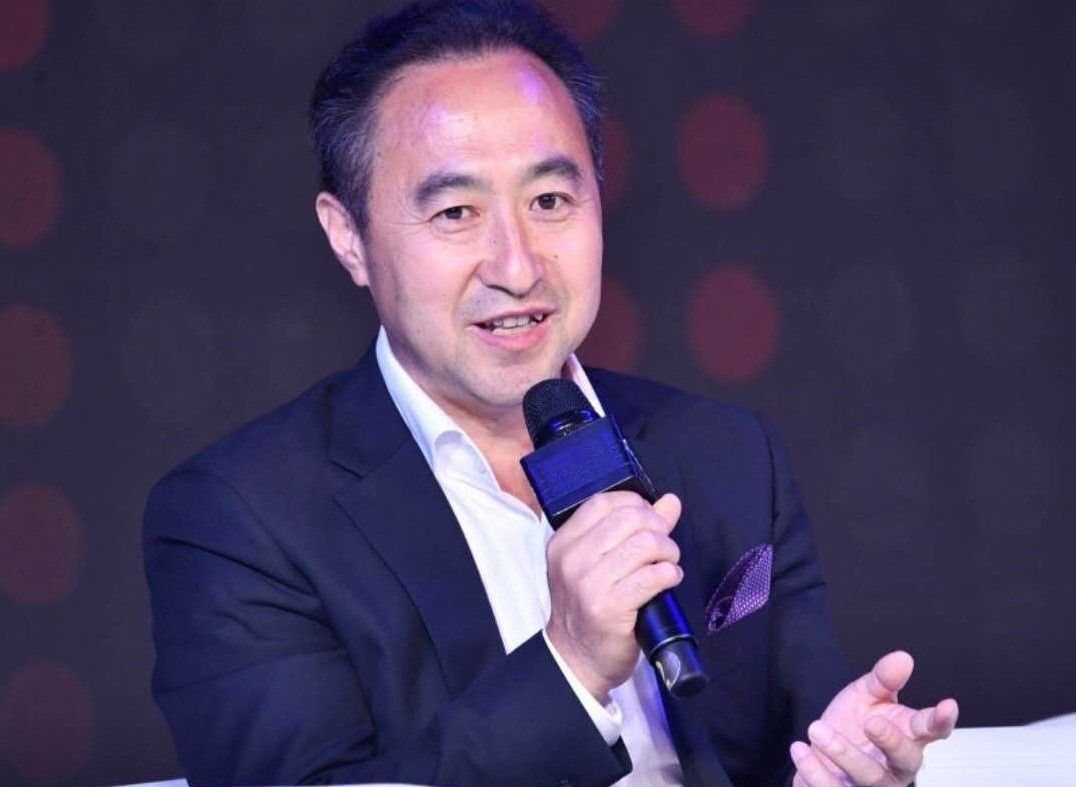
From a modest teaching career to commanding a US$10.4 billion fortune, CJ Wang has become one of Asia's most influential yet surprisingly obscure billionaires, wielding significant power across two continents through his sprawling appliance empire. The Chinese entrepreneur's unlikely path from the classroom to the boardroom began with a childhood chore that would ultimately reshape the kitchen appliance industry worldwide.
Wang's journey traces back to Yantai, a coastal city in Shandong province where he was born in 1969, surrounded by the daily rituals of traditional Chinese breakfast culture. The grinding of soybeans into milk was not a commercial curiosity but a household necessity, and as a boy Wang regularly assisted his uncle in the backbreaking work of turning large stone mills by hand. This formative experience embedded itself in his understanding of Chinese culinary traditions and sparked an awareness of the inefficiency that plagued domestic food preparation. His education at Beijing Jiaotong University in electrical engineering provided the technical foundation he would later leverage, though initially it seemed his future lay elsewhere.
Following his parents into the teaching profession appeared to be Wang's destined path after graduation. However, this comfortable trajectory masked deeper professional ambitions that increasingly conflicted with the predictability of academic life. In an unusual disclosure to Time magazine during his first major international interview, Wang revealed the internal tension that characterised his early career—the pull between familial expectation and personal aspiration. The decision to abandon his teaching post in 1994 represented not merely a career change but a deliberate rejection of inherited expectations in favour of entrepreneurial self-determination.
Wang's first invention was born from a conviction that persisted across generations: soy milk and youtiao, the traditional fried dough sticks, would remain essential to Chinese breakfast culture regardless of modernisation pressures. Rather than waiting for perfection, he developed the world's first electric soy milk maker, a machine whose crude prototype possessed genuine utility despite its numerous flaws. That same year marked the founding of Joyoung, a brand that would eventually dominate China's kitchen appliance market through affordability and reliability. The company's success was neither instantaneous nor inevitable—by 2004, however, Joyoung had sold more than one million soy milk makers, demonstrating that Wang's gamble on tradition-meets-innovation resonated powerfully with consumers.
Over two decades, Joyoung evolved from a single-product specialist into a diversified manufacturer offering blenders, rice cookers, and numerous other appliances that reflected Chinese household needs. The Shenzhen listing provided capital and credibility, yet the company remained largely unknown to Western consumers. This recognition of geographical limitations shaped Wang's strategic thinking in the late 2010s, when he began surveying overseas opportunities not through organic expansion but through acquisition of established players. The purchase of SharkNinja represented a calculated decision to acquire brand recognition and market position rather than construct them from the ground up.
SharkNinja's appeal transcended its existing vacuum and blender portfolios—Wang identified the company's strong foundational products, growth potential, and especially its leadership structure as worthy of significant investment. His decision to retain CEO Mark Barrocas following the 2017 majority stake acquisition by his private equity firm demonstrated sophisticated understanding of management continuity. Yet Wang's analysis also revealed substantial weaknesses: the product range remained narrow, marketing relied excessively on outdated television infomercials, social media presence was minimal, and manufacturing concentration among a small number of Chinese suppliers restricted operational flexibility and innovation capacity.
The integration of Joyoung's operational expertise into SharkNinja's structure began systematically addressing each identified deficiency. Wang championed expansion of the product portfolio, implementation of robust supply chain improvements, and modernisation of sales methodologies that would eventually centre on viral social media campaigns. His insistence on developing stronger internal research and development capabilities shifted SharkNinja from a licensing-dependent model towards genuine innovation capacity. When JS Global Lifestyle Co., Wang's holding company, was listed on the Hong Kong exchange in 2019, it provided the financial infrastructure for aggressive expansion.
The subsequent transformation of SharkNinja into a multibillion-dollar enterprise reflected the synergy between Wang's strategic direction and Barrocas' operational execution. The company deliberately engineered products with maximum social media virality potential, particularly targeting TikTok's influential demographic. The dual-brand structure—Shark specialising in vacuums and beauty products whilst Ninja concentrated on kitchen appliances—allowed targeted market positioning. In 2023, SharkNinja completed its separation from JS Global through a direct New York Stock Exchange listing, achieving full independence whilst maintaining Wang's 35 per cent shareholding and establishing him as a global figure in the kitchen appliance sector.
Wang's compensation structure reflects his dominance across multiple jurisdictions. As Hong Kong's second-highest-paid director in 2024, he received total remuneration exceeding HK$520 million, complementing his 52 per cent stake in JS Global Lifestyle. The Bloomberg Billionaires Index valued his aggregate fortune at US$10.4 billion as of August 2026, consolidating his position among Asia's most significant wealth creators. Yet his public presence remains remarkably limited compared to other billionaires, a discretion that extends to his personal interests in golf and Macallan whisky.
Wang's recent decision to grant international media his first significant interview carries considerable strategic weight beyond personal narrative disclosure. Amid escalating US-China trade tensions and heightened scrutiny of Chinese investment in American enterprises, Wang sought to proactively shape his public record and preempt speculation regarding his background and business intentions. This calculated transparency reflects recognition that geopolitical dynamics increasingly constrain the operational freedom of Chinese business leaders operating in Western markets. By personalising his story—emphasising humble origins, engineering expertise, and entrepreneurial risk-taking rather than state-directed ambitions—Wang attempted to inoculate his business empire against nationalist concerns and regulatory hostility that could undermine SharkNinja's continued expansion.
For Malaysian and Southeast Asian observers, Wang's trajectory illuminates broader patterns within Chinese business internationalisation. His model—identifying underperforming Western assets, integrating superior manufacturing and supply chain practices, leveraging social media for market penetration—represents an increasingly common strategy as Chinese entrepreneurs accumulate capital and seek global diversification. The SharkNinja case study suggests that technological transfer and operational excellence can overcome cultural and market barriers, provided the acquiring entity respects existing management and brand identities. Wang's success also underscores how consumer staples—kitchen appliances serving universal household needs—provide more resilient foundations for international expansion than technology-dependent sectors vulnerable to geopolitical disruption. For the region's entrepreneurs and investors, the implication is clear: the next generation of global business empires may emerge not from Silicon Valley or Wall Street, but from unlikely combinations of traditional craftsmanship transformed through technological innovation.

