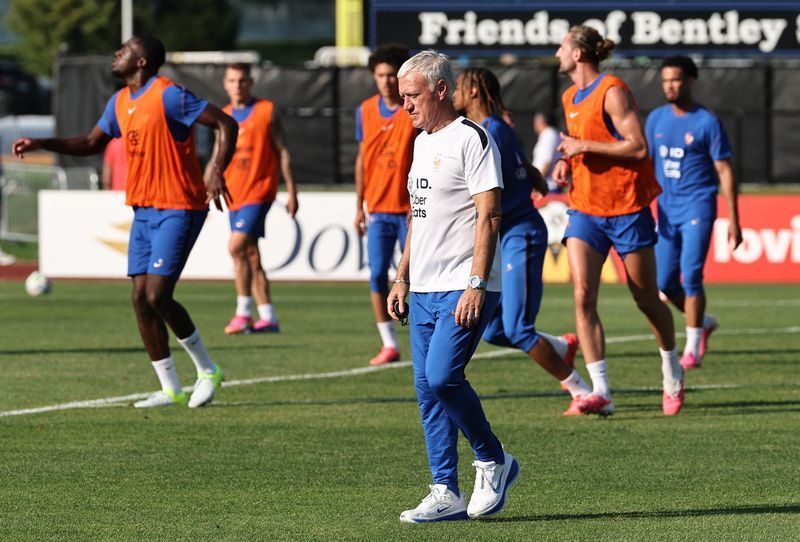
France's passage through the World Cup group stage has been defined by an embarrassment of attacking riches, yet coach Didier Deschamps remains focused on a nagging weakness that could prove exploitable when the tournament enters its knockout phase. The French finished atop Group I without dropping a single point, dismantling Senegal, Iraq and Norway with a combined tally of 10 goals, but their vulnerability along the left flank has caught the attention of a tactically astute manager determined to tighten his side before Tuesday's Round of 32 meeting with Sweden.
The attacking prowess on display throughout the group stage has been genuinely exceptional by tournament standards. Kylian Mbappe has served as France's creative heartbeat and principal goal threat, while Ousmane Dembele announced himself as a World Cup force with a hat-trick against Norway that confirmed his devastating potential on the international stage. Michael Olise, deployed on the right wing, has orchestrated play with intelligent movement and creative incisiveness, collectively forming what many observers regard as the competition's most formidable attacking constellation. This depth of offensive talent has allowed France to dominate possession and dictate terms against every opponent encountered thus far.
Yet the mirror image on the opposite flank presents a less convincing picture. Theo Hernandez, the AC Milan full-back tasked with anchoring the left side defensively while contributing in attack, has not demonstrated the commanding assurance expected at this level of competition. His occasional lapses in concentration have created openings for determined opponents, prompting Deschamps to consider alternative arrangements. Lucas Digne is anticipated to reclaim his position for the Swedish encounter, introducing both additional defensive solidity and a more reliable capacity to deliver crosses with purpose and accuracy from wide positions.
Bradley Barcola is expected to shift into the attack from the left wing position, replacing Desire Doue in a tactical recalibration that prioritises direct running and explosive pace in transition moments. Deschamps evidently believes that more natural width on this flank will create better balance across the formation and provide sharper penetration against defensive structures designed to funnel attacks toward the centre. The adjustment represents a fine-tuning rather than a fundamental reimagining, preserving the overall architectural coherence of the French system while addressing a specific vulnerability.
Sweden emerge as opponents of substance if somewhat limited in their artistic ambitions. The Scandinavian nation progressed from Group F as runners-up, a finish achieved through a commanding opening performance against Tunisia—completed with a 5-1 demolition—followed by capitulation to the Dutch by an identical scoreline and a draw with Japan. This inconsistency suggests a team capable of competing in bursts but lacking the sustained intensity required to maintain consistency across ninety minutes. Their approach will likely emphasise defensive discipline and set-piece threat rather than elaborate attacking patterns, positioning them as awkward customers rather than creative adversaries.
Alexander Isak, Viktor Gyokeres and Anthony Elanga provide Sweden with sufficient individual quality to trouble most defences, but the gap between their collective firepower and that possessed by France remains cavernous. The defensive vulnerabilities occasionally exposed during France's group-stage campaign—most notably when Norway's substitute contingent briefly threatened in Friday's final group encounter—underscore the danger posed by rapid transitions. Sweden will seek to exploit precisely these counterattacking opportunities if France's advancing midfielders and attacking players venture too far upfield during their siege of the Swedish goal.
The return of William Saliba to central defence provides essential ballast to France's backline, restoring the organisational quality and aerial dominance that had appeared occasionally uncertain during the group stage. Saliba's presence will help offset the defensive liabilities elsewhere, though Deschamps clearly recognises that the left side requires comprehensive attention across all positions. The central defensive partnership now offers the kind of stability necessary when defending against teams willing to absorb pressure and wait for opportunities on the break.
France's knockout-stage pedigree provides substantial encouragement for supporters harbouring concerns about complacency or tactical surprise. The team's formidable record in elimination matches at recent World Cups—barring the extraordinary circumstances of the 2022 final loss to Argentina—demonstrates a capacity to elevate performance when tournaments narrow to their decisive phases. The intensity required in knockout competition typically suits France's strengths, though it simultaneously exposes the very defensive vulnerabilities Deschamps seeks to rectify.
Former England forward Gary Lineker, speaking to French sports publication L'Equipe, articulated the essential imbalance between the competing sides with characteristically blunt assessment. While acknowledging Sweden's possession of recognisable attacking talent, Lineker emphasised the chasm separating their offensive capabilities from France's embarrassment of alternatives—a bench featuring Barcola, Doue, Rayan Cherki, Jean-Philippe Mateta and Marcus Thuram that would constitute a starting formation for most competing nations. This attacking depth remains France's ultimate insurance policy against defensive lapses or tactical disruption, a resource no rival can realistically match across ninety minutes.
Should France navigate the Swedish challenge successfully, a Round of 16 confrontation awaits against either Germany or Paraguay, presenting a fixture of vastly different magnitude and significance depending on which opponent emerges from that contest. Victory consolidates France's position as tournament favourites, while progressing with the attacking blueprint largely intact would vindicate Deschamps' calculated approach to the group stage and his deliberate choices regarding personnel deployment.

