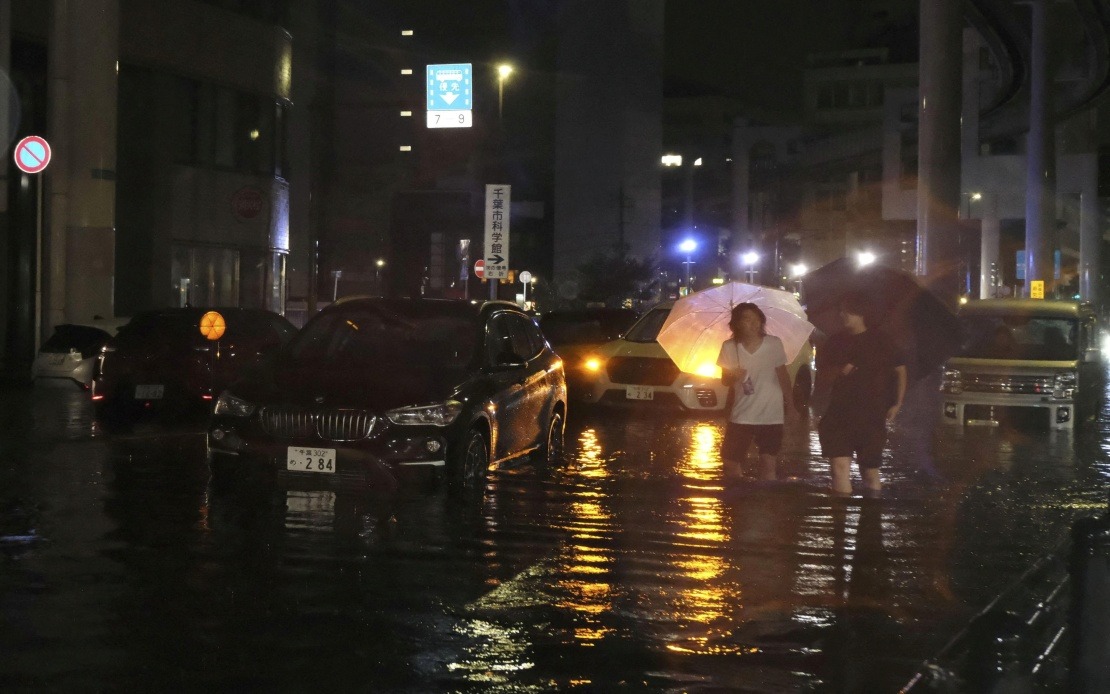
Four people lost their lives and another remained unresponsive Thursday as relentless downpours overwhelmed eastern Japan's Chiba Prefecture, situated adjacent to Tokyo. The Japan Meteorological Agency deployed its highest alert level—Level 5—across more than one-third of municipalities in the prefecture, signalling an unprecedented weather emergency. The deluge persisted through early Friday morning before authorities began downgrading warnings, though forecasters cautioned that dangerous conditions would linger throughout the region for at least another day.
The atmospheric collision that produced such destructive rainfall stemmed from warm, moisture-laden air masses advancing into eastern Japan and meeting cold air aloft, creating extraordinarily unstable conditions ripe for extreme precipitation events. This meteorological setup—increasingly common in Southeast and East Asia due to shifting climate patterns—transformed the prefecture into a disaster zone within hours. The Japan Meteorological Agency simultaneously issued Level 5 landslide warnings for several municipalities including Chiba city and adjacent Ichihara, reflecting authorities' assessment that saturated ground posed equally grave dangers as flooding waters.
The scale of displacement proved staggering. At the peak of the emergency, evacuation orders reached more than 400,000 residents across Chiba and neighboring Ibaraki prefectures. By Friday morning, roughly 126,000 people remained under mandatory evacuation, unable to return to damaged homes or flooded neighbourhoods. Over 200 emergency shelters activated across four prefectures—Chiba, Ibaraki, Saitama, and Gunma—straining coordination and supply logistics in what amounted to one of Japan's more significant recent weather disasters.
Cities bore the brunt of infrastructure damage. In Chiba city and Ichikawa, authorities issued urgent public advisories urging residents to implement immediate protective measures, from moving to higher floors to securing critical documents. The city of Chiba experienced a particularly alarming phenomenon when water surged from underground drainage systems, inundating streets and forcing residents to wade through knee-high floodwaters to reach their homes. Around 1,800 commuters found themselves stranded and sought refuge in the prefectural government building, which officials hastily opened to accommodate those unable to proceed home or find alternative shelter.
The intensity of precipitation shattered local weather records. In Chiba's Chuo Ward, hourly rainfall reached 115 millimetres Thursday evening—equivalent to the entire monthly August average for a typical year compressed into a single hour. Such readings underscore how far beyond normal variability these weather systems have drifted, a pattern increasingly documented across East Asia as global temperature anomalies intensify regional weather extremes. The concentrated nature of such downpours means drainage systems designed for gradual seasonal moisture prove catastrophically inadequate.
Infrastructure systems strained under the load. Tokyo Electric Power Company Holdings Inc.'s subsidiary reported that approximately 45,000 households lost electrical supply at the emergency's peak, compounding dangers for those trapped in darkened buildings or reliant on medical equipment. Restoring power amid flooded substations and damaged transmission lines typically demands days or weeks, particularly when weather conditions remain hazardous. Such cascading failures—power loss affecting water pumping, traffic signals, and emergency communications—demonstrate how modern urban systems depend on fragile interdependencies that extreme weather exploits.
For Malaysian and Southeast Asian readers, the Chiba situation offers instructive parallels. Both regions face intensifying monsoon patterns and increasingly erratic precipitation, phenomena that meteorologists increasingly attribute to disrupted climate systems. Malaysia's own drainage infrastructure, particularly in major cities like Kuala Lumpur and George Town, has experienced similar acute challenges during extreme downpours in recent years. The Japanese experience demonstrates how even developed nations with sophisticated warning systems, substantial resources, and advanced infrastructure require constantly upgraded systems to cope with escalating weather extremes.
Japan's response mechanisms, while comprehensive, still proved stretched by the disaster's magnitude and speed. The three-level downgrade of weather warnings from Level 5 to lower categories by Friday morning reflected improving conditions rather than elimination of risk, a distinction critical for emergency management. Authorities maintained evacuation orders for over a quarter-million residents even as initial warnings subsided, demonstrating cautious recognition that secondary dangers—landslides, infrastructure failures, contaminated water supplies—persist long after rainfall ceases.
The broader context involves changing atmospheric circulation patterns affecting the entire Western Pacific region. Meteorologists have documented how warming ocean temperatures and altered jet stream positioning increasingly funnel tropical moisture into temperate zones, producing the warm-air-meets-cold-air scenarios that spawned Chiba's catastrophe. These patterns show no signs of moderating without global emissions reductions, suggesting Japan and its Asian neighbours must permanently elevate infrastructure resilience and early-warning capabilities.
Recovery from such disasters extends far beyond the initial emergency phase. Chiba Prefecture faces weeks of rebuilding roads, restoring power, decontaminating water systems, and assessing agricultural damage across surrounding regions. The economic costs invariably exceed initial estimates as hidden damage emerges and secondary effects accumulate. For Japanese regional economies already strained by demographic decline and fiscal constraints, such weather-driven disruptions impose recurring burdens that demand increasingly sophisticated adaptation strategies and regional cooperation on climate preparedness.

