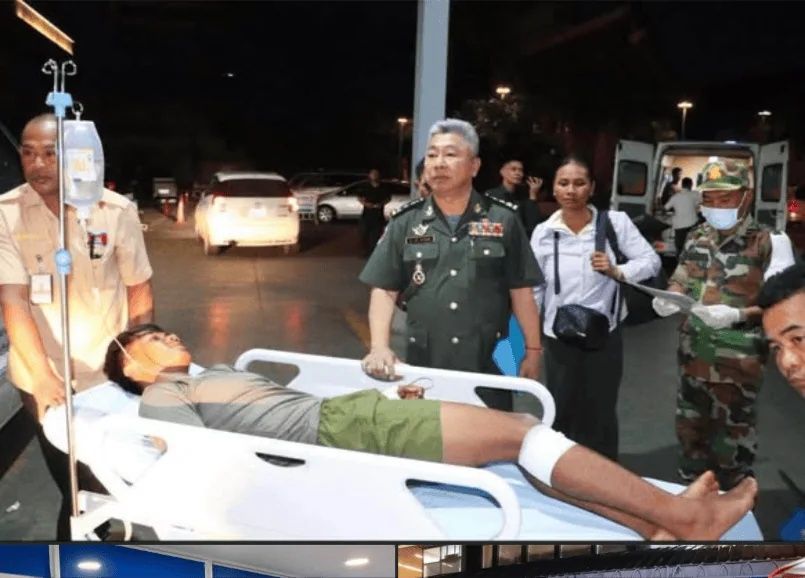
Cambodia's defence establishment confirmed Monday that an improvised explosive device detonated during a border patrol operation the previous day, leaving four military personnel wounded. The incident unfolded in the cashew-growing region straddling Chouk Kruos and Thma Don villages within Oddar Meanchey province, one of Cambodia's most strategically sensitive frontier zones adjacent to Thailand's northeastern territories. The blast occurred at 12:35 p.m. on Sunday as Cambodian forces conducted routine surveillance activities in the area.
Lieutenant General Maly Socheata, serving as undersecretary of state and official spokesperson for Cambodia's Ministry of National Defence, disclosed the incident to the international media on Monday morning. In her statement, Socheata emphasized that the injured personnel had been promptly evacuated and were receiving ongoing medical treatment from dedicated medical personnel and support staff. She did not provide specific details regarding the severity of the injuries or the current condition of the four soldiers, though her remarks suggested that the casualties were being handled through established military medical protocols.
The Oddar Meanchey province, where the explosion took place, sits along one of Southeast Asia's most complex and historically contested border zones. The Thailand-Cambodia frontier has long been marked by territorial disputes, military posturing, and periodic security incidents that occasionally draw international attention. The area where Sunday's blast occurred is characterized by dense vegetation and agricultural zones, making it a challenging terrain for military operations and creating an environment where unexploded ordnance from past conflicts remains a persistent hazard.
Thailand's military establishment moved quickly to distance itself from the incident. Thai Army spokesperson Winthai Suvaree released a statement the same day, clarifying that Royal Thai Army personnel were engaged in standard patrol activities on the Thai side of the border when they detected the explosion originating from Cambodian territory. The Thai military carefully noted that its forces had not deployed any weapons systems or thrown grenades at the time of the incident, effectively preempting potential accusations of Thai involvement.
The Royal Thai Army emphasized that a rapid assessment conducted by responsible Thai military units operating in the border region confirmed that the explosion had definitively occurred on Cambodian soil and could not be attributed to any actions taken by Thai forces. This defensive posture reflects the sensitivity surrounding border incidents, where miscommunication or misinterpretation can rapidly escalate tensions between neighboring nations. By issuing an immediate clarification statement, Bangkok sought to prevent any diplomatic friction that might arise from accusations of cross-border military action.
The incident highlights the persistent dangers faced by frontline military personnel operating in border regions throughout Southeast Asia, where unexploded mines and ordnance from decades of regional conflicts continue to pose grave risks. Cambodia's northeastern provinces, in particular, remain contaminated with remnants from the Vietnamese invasion period and subsequent civil conflicts, making explosive devices a recurring threat to soldiers conducting patrol operations. These hazards extend beyond deliberate military actions to encompass the infrastructure of conflict itself.
The cashew plantation sector in which the explosion occurred represents an important economic activity in the border region, with cross-border trade and agricultural cooperation forming part of the commercial relationship between Thailand and Cambodia. The presence of military patrols in these civilian economic zones underscores the security infrastructure overlay that characterizes the frontier, where civilian and military interests frequently intersect.
This incident represents a relatively circumscribed security event that appears to have been managed through established diplomatic and military communication channels between Phnom Penh and Bangkok. Unlike more dramatic border incidents that occasionally surface in regional media, the Sunday explosion resulted in military injuries rather than escalating into a broader confrontation. The rapid Thai military statement effectively neutralized potential for misinterpretation that could have generated diplomatic complications.
The event nonetheless serves as a reminder of the ongoing military presence and operational tempo maintained by both nations along their shared border. For Malaysia and other ASEAN members, such incidents illustrate the persistent security challenges faced by neighboring countries and the importance of bilateral communication frameworks in managing frontier tensions. The professional handling of the incident by both Cambodian and Thai military establishments suggests that established protocols for border incident management continue to function effectively in preventing wider conflict escalation.
Looking forward, the incident underscores the necessity for continued mine clearance operations and unexploded ordnance removal programs in border zones throughout Cambodia and other conflict-affected regions. International organizations and cooperative frameworks continue to support these dangerous but essential efforts. For regional observers, the incident reflects the complex security landscape that persists in mainland Southeast Asia despite decades of peace and economic development.

