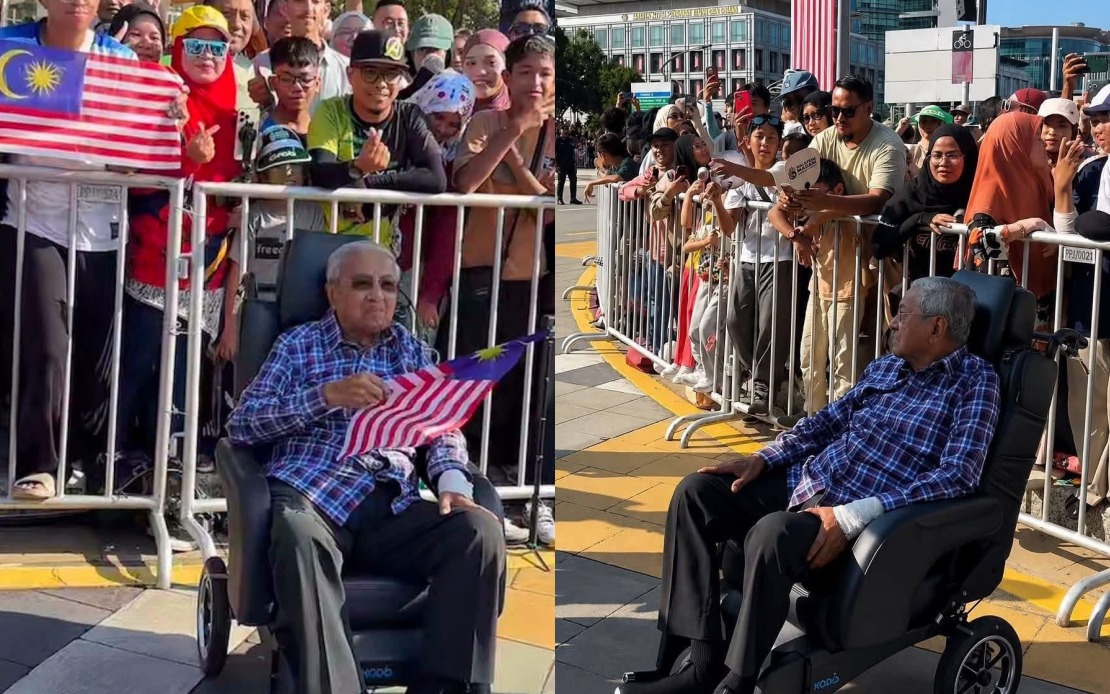
The National Day Celebration 2026 Secretariat has moved to clarify the protocol governing attendance by former prime ministers at Malaysia's flagship patriotic events, stating that no automatic invitation system exists for past leaders. The statement was issued in response to questions raised about former Prime Minister Tun Dr Mahathir Mohamad's presence at this morning's celebration held at Dataran Putrajaya, underscoring an apparent ambiguity in public understanding of how official ceremony attendance is managed at the highest level.
Datuk Abdul Halim Hamzah, who chairs the 2026 National Day and Malaysia Day Celebration Working Committee and serves as secretary-general of the Communications Ministry, outlined that the Prime Minister's Department's Protocol and International Conference Secretariat Division, known as BIUPA, maintains jurisdiction over invitation procedures for major federal government occasions. This centralized approach reflects the government's effort to standardize protocol across different events and maintain consistency in how dignitaries are accommodated.
The established practice dating from 2018 represents a departure from any presumption that former heads of government enjoy standing invitations to commemorative national events. The distinction carries significance for Malaysia's political culture, which has historically accorded considerable reverence to former leaders. By institutionalizing discretion rather than entitlement, the current framework allows administrations flexibility in determining whom to honour publicly while avoiding automatic obligations that could create diplomatic or political complications.
While the secretariat emphasized that invitations remain non-automatic, it simultaneously stressed that former prime ministers are not barred from attending National Day celebrations. Instead, those wishing to participate must submit formal applications that navigate established procedures and conform to the secretariat's management protocols. This middle-ground approach preserves both the dignity of former leaders and the current administration's prerogative to shape the guest list according to contemporary political circumstances and available resources.
In Dr Mahathir's specific case, the Prime Minister's Office received an application not for the National Day event itself but for the Overseas Rest Facility, a provision that allows former prime ministers to be absent from the country during specified periods. His application indicated travel plans from August 28 to 31, 2026, and received approval from Prime Minister Datuk Seri Anwar Ibrahim under the Remuneration of Former Prime Ministers regulations codified in the Members of Parliament (Remuneration) Act 1980. The approval mechanism demonstrates that even when former leaders are abroad, their absence is formally registered through administrative channels.
The regulatory framework underpinning these arrangements originates from decades-old legislation designed to protect the interests and dignity of retired premiers while establishing clear boundaries for government expenditure on their behalf. The Members of Parliament (Remuneration) Act 1980 constitutes the foundational statute governing entitlements, and its provisions on the Overseas Rest Facility reflect recognition that former prime ministers, like other distinguished citizens, maintain personal travel schedules and international commitments requiring official accommodation.
From a broader governance perspective, Malaysia's approach to managing former prime ministerial attendance at state functions reflects evolving expectations about institutional memory and democratic succession. Unlike some commonwealth democracies where former heads of government are automatically honoured at ceremonial occasions, Malaysia's discretionary system allows administrations to balance competing considerations: maintaining respect for former leaders' contributions while asserting the current government's autonomy in shaping its public image and managing official events.
The 2018 establishment of this non-automatic practice suggests deliberate policy choices made during that period of Malaysia's political evolution. That timing coincides with significant transitions in the country's leadership landscape, when questions about protocol, succession, and the proper recognition of former leaders likely received heightened attention. The adoption of a discretionary framework may reflect lessons learned from managing relationships between sitting and former administrations during periods of political tension or transition.
For Southeast Asian observers and Malaysian citizens, understanding these protocols illuminates how modern Malaysia navigates the tension between respecting institutional precedent and maintaining executive flexibility. The system neither relegates former prime ministers to invisibility nor accords them unconstrained access to state-sponsored occasions. Instead, it creates a structured pathway through which their participation can be formally considered and administratively accommodated when deemed appropriate.
The secretariat's public statement serves an important clarifying function, particularly in an era when social media commentary can rapidly generate misconceptions about official procedures. By explicitly detailing how invitations are handled, the government signals commitment to transparent governance while simultaneously establishing clear expectations for how former leaders should engage with state institutions and ceremonies. This transparency reduces the potential for misunderstandings or allegations of preferential treatment based on political affiliation or timing.
Moving forward, this clarified protocol likely will serve as the baseline for managing attendance by other former prime ministers at National Day celebrations and similar high-profile federal events. The precedent established through Dr Mahathir's attendance and the accompanying explanatory statement creates a template that future administrations can reference when navigating comparable situations. Should other retired leaders seek to participate in upcoming National Day commemorations, the secretariat's stated procedures will provide the framework through which their requests will be evaluated and processed.

