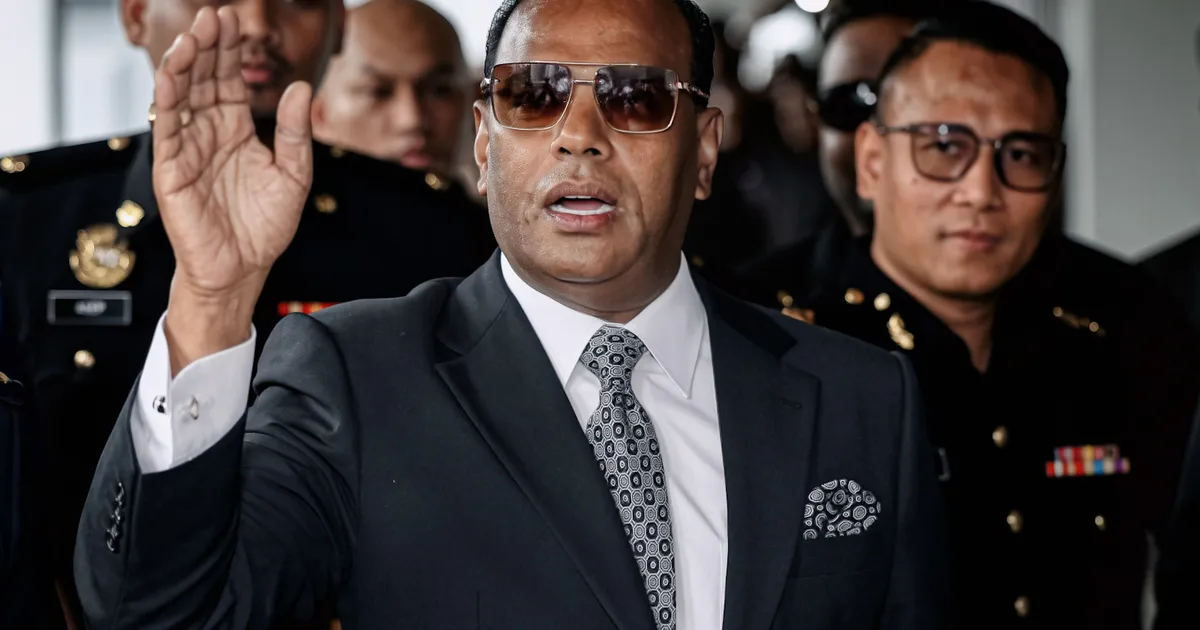
Former Human Resources Minister Saravanan has pushed back against suggestions that he attempted to orchestrate a cover-up through his communications with Prime Minister Anwar Ibrahim, insisting instead that his written approach was a straightforward plea for an impartial examination of allegations against him. The distinction matters considerably in Malaysia's current political climate, where perceptions of interference in anti-corruption proceedings carry significant weight with both the public and international observers monitoring the country's governance standards.
Saravanan's assertion that his letter constituted a legitimate request for thorough review rather than an attempt to suppress scrutiny introduces a key point of contention in what has become an increasingly complex chapter of Malaysian political drama. The former minister's defense hinges on his interpretation of administrative process—that seeking high-level intervention to ensure fairness falls within acceptable bounds, particularly when an individual believes the charges lodged against him lack substantive merit. This framing, whether ultimately persuasive or not, reflects a common tension in Malaysian politics between utilizing access to power and crossing into improper territory.
The credibility of graft allegations stands at the heart of Saravanan's position. By maintaining that the charges themselves are fundamentally flawed, he establishes a platform from which requesting PM review becomes, in his view, not an attempt at suppression but rather an appeal for justice. The Malaysian public has grown accustomed to similar arguments from various quarters, though their receptiveness depends heavily on factors including the official investigative conclusions and the broader political context surrounding such cases.
For Prime Minister Anwar Ibrahim's office, Saravanan's clarification presents both challenges and opportunities. The PM faces pressure to demonstrate that his administration handles such matters with transparency and procedural correctness, whilst also managing what could be perceived as political complications stemming from communications between a sitting premier and individuals facing official charges. How the office responds to these clarifications will signal to both domestic audiences and international stakeholders the extent to which Malaysia's current leadership prioritizes institutional independence from executive influence.
The broader implications for Malaysian governance extend beyond this single case. Each instance in which high-ranking officials communicate with the PM regarding pending prosecutions contributes incrementally to perceptions—accurate or otherwise—about the separation between executive power and the independence of the prosecution apparatus. Southeast Asian observers, particularly those in established democracies, scrutinize such interactions as indicators of institutional health. Malaysia's regional standing increasingly depends on demonstrating that even well-connected individuals must answer for allegations through established legal channels without receiving preferential treatment through proximity to power.
Saravanan's positioning also reflects the strategic communication patterns common among politically exposed persons facing serious charges in Malaysia. By immediately framing the narrative around procedural fairness rather than accepting the charges at face value, he establishes defensive grounds before fuller proceedings unfold. This approach has precedent in Malaysian political history, though success rates vary considerably based on the specific evidence and political configurations at play.
The timing of these clarifications warrants consideration as well. Coming as they do during what appears to be an active investigative phase, Saravanan's statements serve multiple functions simultaneously: they address potential media narratives unfavorable to his interests, they test public receptiveness to his framing, and they signal to legal representatives and supporters the nature of his defense strategy. Malaysian media coverage of such political controversies typically frames cases through competing narratives, making the first clear statement from a defendant particularly consequential for how the broader public understands the situation.
For the Malaysian political community more broadly, this episode underscores persistent structural questions about power, accountability, and access. Whether through formal appeals or informal communications with the PM, individuals with sufficient prominence maintain channels unavailable to ordinary citizens facing charges. The question of where legitimate advocacy ends and improper interference begins remains contested terrain in Malaysian jurisprudence and political practice. Saravanan's insistence that his letter represented the former rather than the latter thus becomes a test case for how these boundaries are understood and enforced.
The anti-corruption apparatus itself faces implicit scrutiny through this exchange. If prosecutors proceed with charges despite such communications, they demonstrate institutional resilience against executive pressure. Conversely, any perception that high-level appeals influence charging decisions would represent a significant setback for Malaysia's internationally-monitored efforts to strengthen anti-graft frameworks. Both outcomes carry consequences for public confidence in whether Malaysia's formal anti-corruption institutions function with genuine independence or remain vulnerable to informal political influence.
Moving forward, observers should monitor not merely the investigative conclusions but also the procedural transparency with which authorities handle this matter. Saravanan's clarifications, whatever their ultimate persuasiveness, have placed his letter and the surrounding circumstances in the public domain. This transparency, ironically, may itself serve as a check against the very cover-up mechanisms he denies pursuing. The Malaysian public and international community will assess this case partially through the lens of procedural correctness—whether all parties operated within accepted norms regardless of ultimate guilt or innocence determinations.
The former minister's continued insistence on the weakness of charges against him represents a deliberate strategy to shift focus from the mere fact of his correspondence with the PM to the substantive merit of the allegations themselves. This rhetorical move attempts to reframe public debate around whether charges should exist at all, rather than around whether his letter represented improper influence. Success with this strategy depends significantly on subsequent revelations about investigative findings and courtroom proceedings.

