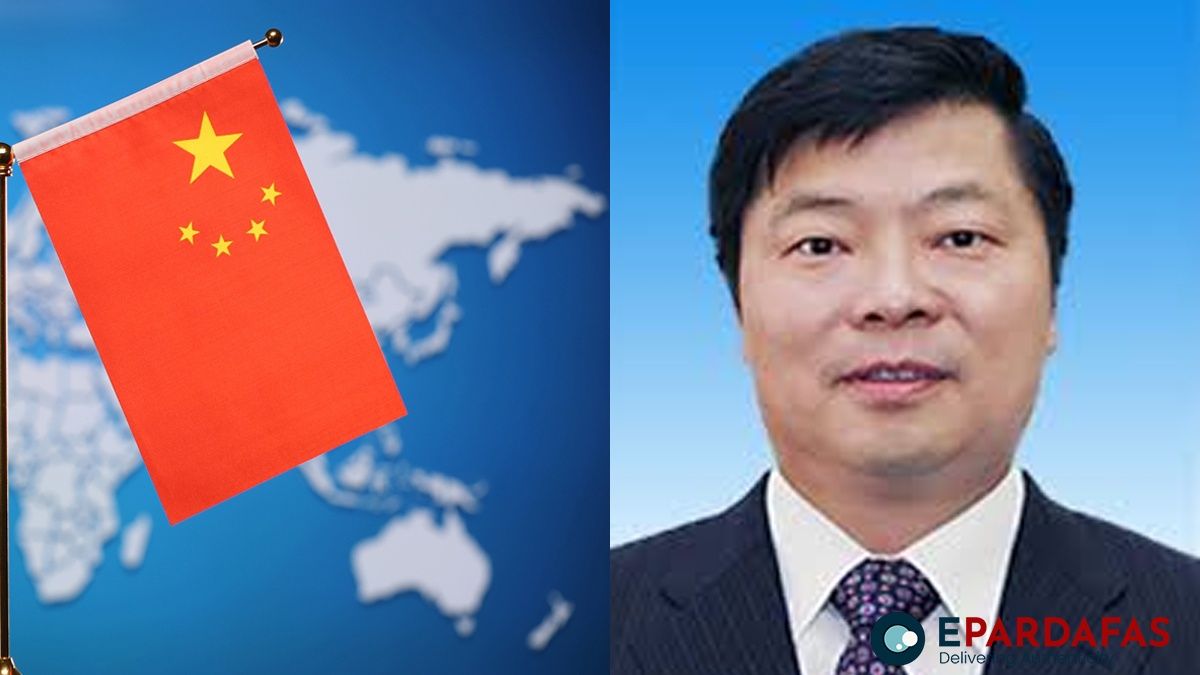
China's top anti-corruption watchdog has initiated a formal investigation into Ouyang Weimin, the former president of the state-owned China Development Bank, the Central Commission for Discipline Inspection announced on Sunday. The agency, working in conjunction with the National Commission of Supervision, disclosed that Ouyang is facing scrutiny over suspected serious violations of Communist Party discipline and legal requirements, though authorities provided no additional particulars regarding the allegations at the time of the announcement.
Ouyang's career trajectory reflects the pathway typical of China's senior financial officials. He enrolled in the Chinese Communist Party in 1986 and spent the formative decades of his professional life at the People's Bank of China, where he developed expertise in central banking and monetary policy operations. This foundation in China's premier financial institution positioned him for advancement into higher-profile state roles within the country's financial architecture.
Before assuming the helm at the China Development Bank, Ouyang served as vice-governor of Guangdong Province, one of China's most economically productive regions situated strategically near Hong Kong. This provincial-level experience would have given him substantial exposure to regional economic development priorities and the complex interplay between Beijing's macroeconomic directives and local implementation challenges across one of the country's most significant economic zones.
The China Development Bank, established in 1994, occupies a critical position within China's state financial system as a development finance institution wholly owned and operated by the government. Unlike commercial banks focused on profit maximisation, the institution functions as a strategic tool for advancing state economic objectives, channelling capital into priority sectors and economically disadvantaged regions that might otherwise struggle to attract private investment. The bank operates under direct oversight from China's State Council, granting it both substantial autonomy and considerable influence over capital allocation decisions across the Chinese economy.
Ouyang's appointment as president and deputy party secretary in 2019 represented a significant elevation in his career, placing him at the apex of one of China's most consequential financial institutions during a period of heightened economic competition between Beijing and Washington. His tenure would have encompassed the critical period during which the bank's lending decisions and strategic priorities reflected broader Chinese government objectives regarding economic stimulus, industrial restructuring, and Belt and Road Initiative financing. He departed the presidency in 2023, stepping down before the investigation that is now underway.
The investigation into Ouyang unfolds within the broader context of President Xi Jinping's sustained anti-corruption campaign, which since his ascension to power has targeted thousands of officials spanning both civilian and military hierarchies. This multi-year push against what authorities characterise as malfeasance and breaches of party discipline has fundamentally reshaped China's political landscape, eliminating significant figures from both the government and the military establishment. The campaign's stated objective is restoring integrity to state institutions and eliminating barriers to effective governance.
Observers and analysts have increasingly noted that beyond its stated anti-corruption aims, the campaign has simultaneously functioned as a mechanism for consolidating political power and eliminating potential rivals and critics of Xi's leadership. High-profile investigations into senior officials, military leaders, and financial figures have frequently coincided with policy shifts or political transitions that advantaged Xi's faction within the party hierarchy. The opaque nature of investigations conducted by the discipline commission and supervision authorities means that the precise factual basis for allegations against individuals under scrutiny often remains obscured from public view.
For Southeast Asian and Malaysian observers, developments within China's financial hierarchy carry significance given the regional implications of Chinese capital flows and development finance. Chinese state institutions, particularly entities like the China Development Bank, have served as substantial sources of financing for infrastructure projects across Southeast Asia. Understanding shifts in leadership and governance priorities within these institutions provides insight into potential changes in Beijing's approach to regional development financing and investment strategies that directly affect countries in the region seeking Chinese financial partnerships.
The investigation's timing and the minimal disclosure surrounding its specifics reflect standard procedure within China's anti-corruption apparatus, which typically preserves confidentiality regarding investigations until conclusions are reached. Whether Ouyang's case will follow trajectories similar to other high-profile financial officials previously investigated—resulting in formal charges, trials, and custodial sentences—remains uncertain. The absence of transparent proceedings means the international financial community and regional partners of China remain working with incomplete information regarding governance shifts within key Chinese institutions.

