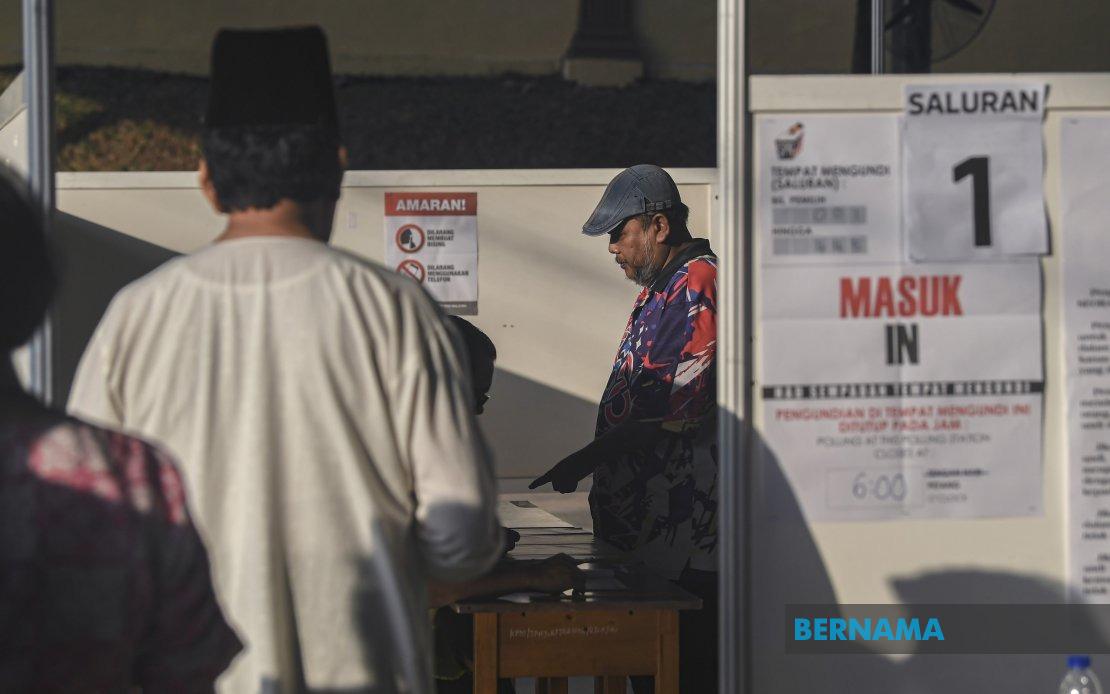
Federal government officials joined millions of Johor residents at the ballot box on July 11 for the 16th Johor State Election, with ministers and deputy ministers from various portfolios fulfilling their civic duties across different constituencies in the state. The early participation by these high-ranking officials highlighted the significance of the electoral exercise and demonstrated their commitment to the democratic process as registered voters. Their presence at polling stations throughout Johor underscored the nationwide importance of the state election, which would determine the composition of the state government for the next term.
Datuk Seri Azalina Othman Said, the Minister in the Prime Minister's Department overseeing Law and Institutional Reform, was among the first federal leaders to cast her ballot, voting at 8.15 am at Sekolah Kebangsaan Bandar Penawar in Pengerang. Her early appearance at the polling station set the tone for the day's proceedings and demonstrated leadership engagement with the electoral process from the outset. The timing of her vote reflected the organised approach officials took in fulfilling their voting obligations while managing their regular ministerial responsibilities.
Defence Minister Datuk Seri Mohamed Khaled Nordin exercised his voting rights at 8.30 am at Sekolah Kebangsaan Rinting 1 in Masai, casting his ballot shortly after the polling stations opened nationwide. His participation reflected the broad representation of the federal cabinet in the electoral process, with defence and security portfolios taking time to engage with the democratic mechanisms that underpin the nation's governance. The presence of such senior security officials at the polls reinforced the government's commitment to transparent and inclusive democratic participation.
The Plantation and Commodities Minister Datuk Seri Dr Noraini Ahmad voted at 8.50 am at Sekolah Menengah Kebangsaan Dato' Onn in Batu Pahat, joining her cabinet colleagues in performing her duty as a registered voter in the state. Her participation added to the ministerial presence across different regions of Johor, highlighting how federal officials were distributed throughout the state's constituencies. This geographical spread of voting federal leaders sent a message about the government's engagement across all areas of Johor rather than concentration in any single electoral zone.
In the Works Ministry, Deputy Minister Datuk Seri Dr Ahmad Maslan cast his ballot at 8.40 am at Sekolah Kebangsaan Seri Bahagia in Benut, continuing the pattern of early morning voting by federal appointees. The deputy ministers' participation alongside full ministers demonstrated that the commitment to electoral engagement extended across different levels of the federal administrative hierarchy. Their attendance acknowledged that state elections, while distinct from federal politics, carried implications for national governance and represented opportunities for the broader Malaysian political leadership to demonstrate democratic values.
Deputy Communications Minister Teo Nie Ching voted at 9.30 am at Sekolah Jenis Kebangsaan Cina (SJKC) Kulai Besar, arriving at the polling centre and completing her voting within ten minutes. Her participation across the diverse landscape of Malaysian education institutions reflected the inclusive nature of the electoral process, which operates across vernacular, national, and other types of schools serving different communities. The choice of polling centres by various officials highlighted how the electoral infrastructure penetrates deeply into Johor's social and geographical fabric.
The 16th Johor State Election mobilised an enormous logistical effort, with polling stations opening simultaneously across the state at 8 am. A total of 1,076 polling centres had been established, encompassing 4,889 individual polling streams to efficiently process votes from the 2.7 million registered voters eligible to participate. This massive infrastructure represented months of preparation by electoral authorities and demonstrated the complexity of conducting state-wide democratic exercises in a state as populous and geographically diverse as Johor.
The decision by federal ministers and deputy ministers to vote in their home constituencies or preferred polling locations reflected the principle of equal political participation regardless of official rank. While these individuals held significant positions within the federal government, they exercised their voting rights in the same manner as ordinary citizens, queuing at the same polling stations and following identical procedures. This symbolic equality, even as these officials wielded considerable political influence through their ministerial portfolios, reinforced democratic principles where voting rights remained equally distributed among all eligible citizens.
For Malaysian political observers and regional analysts, the participation of federal officials in state elections carried additional significance. Johor, as Malaysia's second-largest state by population and a traditional stronghold of the Barisan Nasional coalition, exerted substantial influence over national politics. Federal ministers casting votes in Johor elections thereby engaged with electoral dynamics that could reshape the balance of power within both state and national governance structures. Their presence at polling stations acknowledged that state elections were never purely local affairs but connected to the broader Malaysian political ecosystem.
The voting process continued throughout July 11 until 6 pm, allowing citizens across different constituencies to participate at their convenience. This extended polling window accommodated working voters and those with other daytime commitments, ensuring that the franchise remained accessible to the broadest possible segment of the registered electorate. The completion of the 14-day campaign period the previous night had marked the conclusion of intense political activity, with candidates and parties having exhausted their opportunities to directly appeal to voters before the ballot box became the sole arbiter of electoral outcomes.
The conduct of the 16th Johor State Election exemplified the institutionalisation of democratic processes in Malaysia, where even the highest-ranking federal officials participated as voters rather than exercising special privileges. The turnout of ministers and deputy ministers at polling stations across multiple constituencies demonstrated their recognition of democratic legitimacy as the foundation upon which their own authority rested. For Southeast Asian political systems continuing to develop democratic institutions, such examples of elite participation in regular electoral processes reinforced the principle that governance derived from popular consent rather than bureaucratic appointment or inherited privilege.

