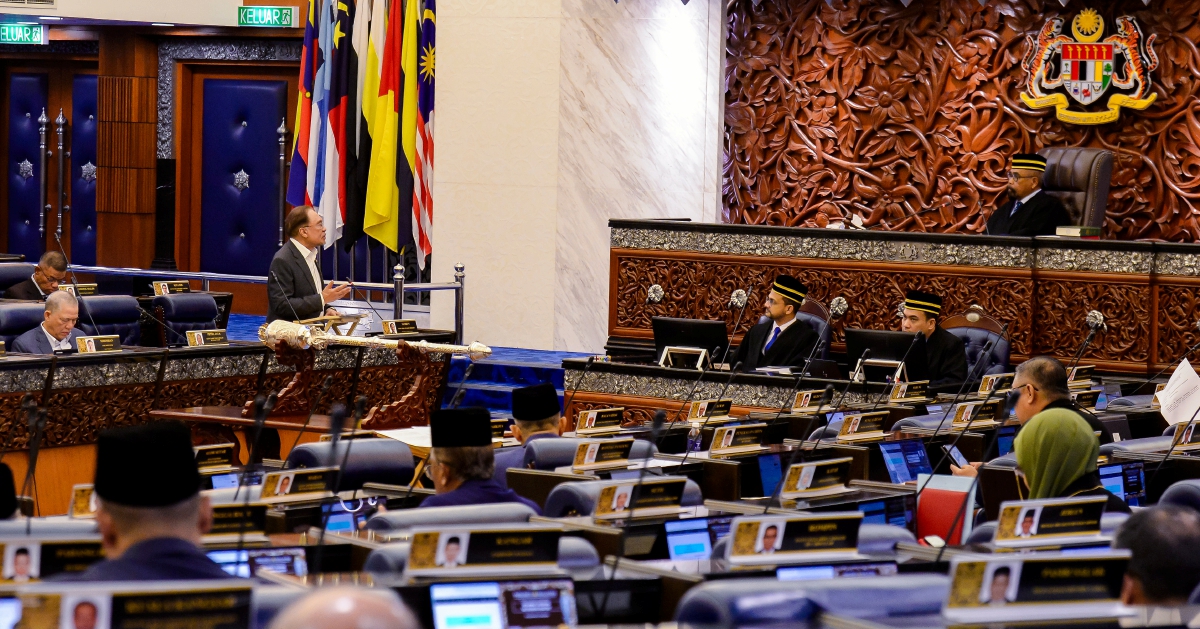
Prime Minister Datuk Seri Anwar Ibrahim has drawn a clear line on federal spending, declaring that Kuala Lumpur should not automatically assume the financial fallout from decisions made at state level. The statement underscores growing tension over how costs are distributed within Malaysia's federal structure and signals the federal government's intent to enforce stricter fiscal discipline across the country.
The Prime Minister's remarks reflect longstanding friction in Malaysia's dual governance system, where state governments possess considerable autonomy yet often look to the federal centre for financial rescue when their budgeting goes awry. This dynamic has left Putrajaya juggling competing demands from 13 state administrations, each operating with different revenue bases, spending priorities, and political management styles. By drawing this distinction now, Anwar appears to be signalling that such arrangements cannot continue indefinitely without risking national fiscal health.
Malaysia's federal-state relationship has historically been characterised by an implicit understanding that the national government would step in when state initiatives created unexpected liabilities. Whether through infrastructure projects, public sector wage commitments, or social programmes that exceed state coffers, Putrajaya has frequently absorbed these costs. However, this arrangement has become increasingly unsustainable as federal revenues face pressure from competing demands including defence, healthcare, education, and debt servicing. The current economic environment, marked by slower growth and persistent fiscal deficits at the federal level, has made such open-ended commitments untenable.
The timing of Anwar's intervention carries political weight. Malaysia's 13 states are governed by a patchwork of ruling coalitions, including opposition-controlled administrations. Some state governments have pursued policies—whether on subsidies, civil service expansion, or infrastructure development—without fully accounting for long-term costs. When these expenditures balloon, state leaders have historically petitioned the federal government for bailouts. By publicly rejecting this default posture, Anwar is attempting to establish clearer boundaries and force state administrations to live within their means.
This approach aligns with the Prime Minister's broader agenda of fiscal consolidation and government efficiency. Since taking office, Anwar has repeatedly emphasised the need to reduce federal debt, streamline public spending, and improve transparency in budget allocation. His administration has faced criticism for insufficient spending in some areas while simultaneously wrestling with a bloated civil service and debt-servicing obligations that consume a significant portion of revenue. Shifting costs back to state governments represents one mechanism for creating space within the federal budget.
However, the strategy carries complications, particularly for economically weaker states that lack diverse revenue streams. States such as Kelantan, Terengganu, and Perlis depend heavily on federal transfers and grants, making it difficult for them to fully fund developmental initiatives or even maintain existing services without Putrajaya's support. Opposition-ruled states, already facing constraints from reduced federal allocation for certain programmes, may find themselves in an even tighter position. This could exacerbate regional disparities and fuel political grievances, especially among populations in less developed states who perceive unequal treatment.
The practical implications for ordinary Malaysians could be substantial. If states cannot rely on federal subsidies, they may be forced to raise local taxes, introduce new levies, reduce public services, or curtail development projects. Citizens in these states might experience higher property taxes, increased vehicle licensing fees, or cuts to state-funded healthcare and education services. The ripple effects could extend to consumer prices, business operating costs, and quality of life measures that indirectly depend on state government spending.
Regional rivalries within Malaysia could also intensify. Wealthier states with stronger economic bases—such as Selangor, Kuala Lumpur, and Penang—can more easily adjust to reduced federal support through their own revenue-raising mechanisms. Poorer states, already disadvantaged, may find themselves falling further behind in infrastructure investment and service delivery. This disparity could fuel arguments about equity and federal responsibility, particularly if wealthier states that enjoy greater autonomy are simultaneously governed by the federal government's allies while opposition states face tighter constraints.
Anwar's statement also reflects international fiscal orthodoxy, where governments increasingly emphasise subsidiarity—the principle that decisions should be made at the most local level possible, with corresponding fiscal responsibility. This approach, popular among development economists and fiscal conservatives, theoretically incentivises more efficient and accountable government at all levels. When state governments know they cannot rely on federal bailouts, the argument goes, they will budget more carefully and prioritise spending more strategically.
Yet implementation requires careful calibration. The federal government must establish clear guidelines about which costs it will and will not assume, define the circumstances under which emergency federal support might be granted, and ensure these rules apply consistently across all states regardless of their political complexion. Ambiguity or perceived partisan application of these principles could undermine federal credibility and inflame already sensitive centre-state relations.
The statement from Putrajaya also arrives as Malaysia confronts broader economic challenges including inflation, currency volatility, and competition for regional investment. States competing for development projects and business relocation may feel constrained if they cannot offer infrastructure support or tax incentives without federal backing. This could disadvantage Malaysia relative to regional competitors that maintain more integrated federal-state financing mechanisms.
Moving forward, expect increased focus on clarifying federal-state fiscal relationships. The federal government may need to establish a formal framework governing cost-sharing, define what constitutes a legitimate federal responsibility versus a state obligation, and potentially increase transparency around how federal funds are allocated to different state programmes. Without such clarity, Anwar's declaration risks creating uncertainty that state administrations will exploit, or conversely, triggering confrontations that destabilise the federation.
Ultimately, the Prime Minister's position represents a necessary reckoning with fiscal reality, but one that demands careful execution and clear communication to succeed without deepening regional tensions or service delivery gaps.

