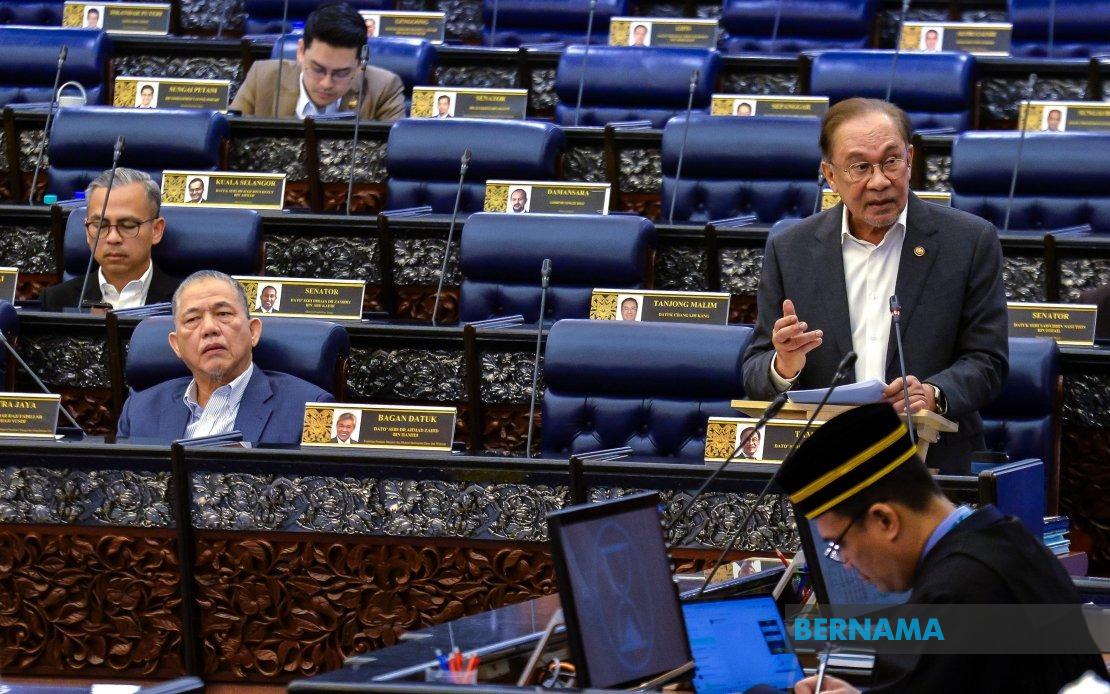
Prime Minister Datuk Seri Anwar Ibrahim has pushed back against claims of unfair distribution of federal funds to state governments, maintaining that the allocation framework prioritises addressing urgent developmental requirements across Malaysia rather than simply matching tax revenue collection. Speaking during parliamentary question time, the Prime Minister underscored that nearly every state receives substantially higher federal support than what their tax contributions would justify, a deliberate policy choice aimed at reducing regional inequality and advancing nationwide development goals.
Only Selangor and Penang, Malaysia's two wealthiest states with the strongest tax bases, generate revenues exceeding their federal allocations—a distinction that reflects their status as economic powerhouses. For all other states, the federal government tops up their revenues considerably, channelling resources toward infrastructure, social programmes, and poverty reduction initiatives. This redistributive approach represents a conscious political commitment to ensure that less economically developed regions are not left behind by the wealth concentration in the peninsula's heartland.
The clarification came during a parliamentary session where Datuk Seri Doris Sophia Brodi from GPS-Sri Aman raised concerns about the adequacy and fairness of federal disbursements to state administrations. The question reflected ongoing debate among state governments about whether they receive sufficient federal support relative to their contributions to the national tax base—a politically sensitive issue that can fuel regional grievances and inter-state tensions. By addressing the concern directly, Anwar sought to demonstrate the MADANI Government's transparency regarding fiscal distribution principles.
The Prime Minister detailed the specific priorities guiding allocation decisions, revealing that federal funds are deployed toward critical infrastructure such as flood mitigation systems, Pan Borneo highway upgrades, new road construction, water drainage improvements, poverty alleviation programmes, and educational and institutional development. These investments address tangible challenges affecting daily life for Malaysians across diverse regions, from managing climate-related disasters to improving connectivity in remote areas. The emphasis on needs-based distribution rather than revenue-proportional allocation reflects a development philosophy that recognises poorer states face higher per-capita infrastructure and social service costs.
Anwar's remarks carry particular weight given Malaysia's historical patterns of regional development imbalance. East Malaysian states like Sarawak and Sabah, despite their resource wealth, have long grappled with infrastructure gaps relative to Peninsular Malaysia. Kedah, Terengganu, and Kelantan—economically weaker states with higher poverty concentrations—require proportionally larger federal investments to improve living standards and create economic opportunities. A purely revenue-based allocation formula would perpetuate existing disparities and concentrate public investment where it is already abundant.
The Prime Minister specifically highlighted the MADANI Government's record on allocating to disadvantaged states, claiming his administration has channelled more resources to Kedah, Terengganu, and Kelantan compared to its predecessor. This comparative claim responds to potential opposition criticism while also addressing state governments that may question whether they are being fairly treated. The MADANI framework, introduced after the 2022 elections, theoretically encompasses more equitable development distribution as part of its broader reform agenda.
Federal-state relations around fiscal allocation represent a persistent pressure point in Malaysia's system of shared governance. State governments inevitably feel constrained by their revenue bases and often argue they cannot deliver public services adequately without additional federal support. Conversely, federal authorities face political pressure to demonstrate that their allocation decisions serve the national interest and follow transparent, defensible principles rather than partisan considerations. Anwar's parliamentary response attempts to articulate those principles publicly.
The needs-based approach also aligns with international development orthodoxy, where investments target areas with the greatest social requirements and lowest existing capacity. However, translating this principle into practice requires consistent measurement and monitoring of actual state needs—factors that are sometimes contested by state governments with different political affiliations from the federal government. The allocation formula itself involves multiple considerations beyond simple poverty metrics, including population size, geographic challenges, and historical development deficits.
For Malaysian readers and regional observers, the Prime Minister's defence of the allocation methodology raises questions about implementation and verification. How precisely does the federal government determine and prioritise needs across competing demands? Are allocations adjusted when circumstances change, and how transparent are the underlying calculations? These operational questions ultimately determine whether the stated principle of needs-based distribution translates into tangible fairness across the country's thirteen states and three federal territories.
The timing of this clarification, during parliamentary question time, suggests the government is responding to mounting criticism or dissatisfaction from state administrations. Some opposition-held or contested states may feel they are receiving inadequate support, a perception that can destabilise the federal-state relationship regardless of objective fairness. By articulating the allocation rationale explicitly and on the parliamentary record, Anwar establishes a public benchmark against which future decisions can be measured and compared.
Regional stability across Malaysia depends partly on states feeling they receive equitable treatment from the federal centre. Economic disparities between states contribute to migration patterns, service concentration, and political resentment. The MADANI Government's emphasis on needs-based allocation represents an attempt to reframe federal-state relations around development equity rather than political calculation, though translating that vision into consistent practice across changing administrations and shifting priorities remains an ongoing challenge for Malaysian governance.

