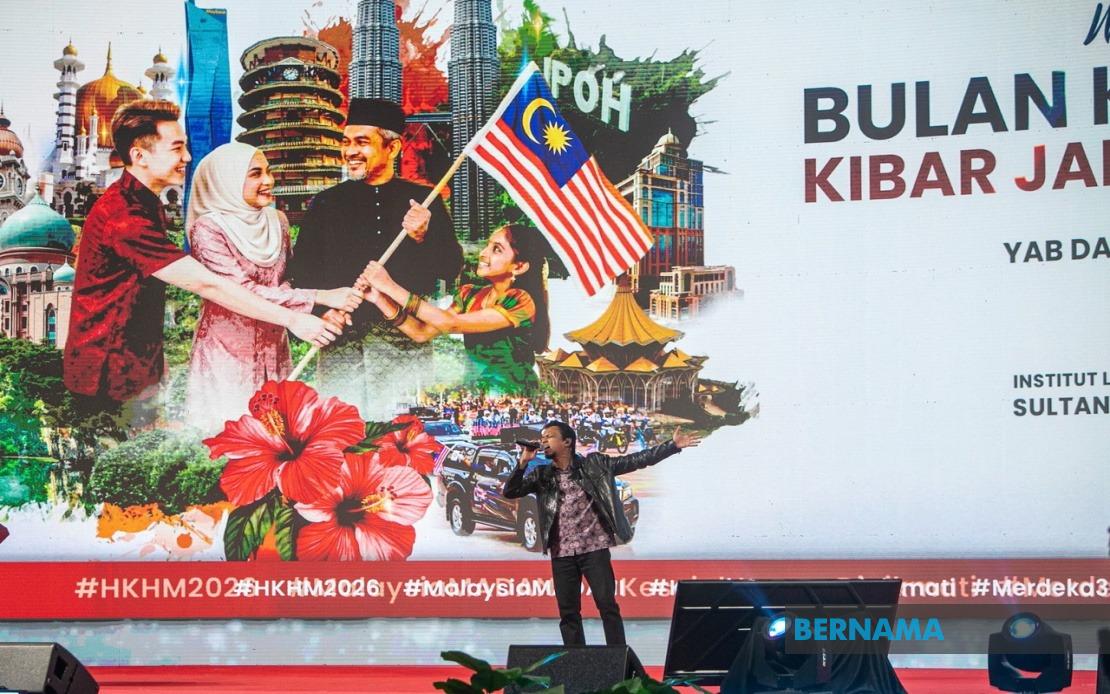
Malaysian recording artist Faizal Tahir has been named to compose and perform the official theme song for Malaysia's 2026 National Month campaign, with his composition 'Aku Berjanji' selected to serve as the soundtrack for the nation's patriotic observance this year. The track was unveiled publicly for the first time at the launch event for the National Month and Fly the Jalur Gemilang Campaign 2026 (MPBKKJG 2026), held at the Sultan Azlan Shah Ministry of Health Malaysia Training Institute.
The selection represents a deliberate choice to embed national messaging through popular music, a proven strategy for reaching broad audiences across Malaysia's diverse demographic landscape. 'Aku Berjanji' was specifically crafted to convey themes of national solidarity, collective identity, and patriotic sentiment, positioning these values within a contemporary musical framework that contemporary listeners will find accessible and emotionally resonant. The composition emphasises shared responsibility for safeguarding Malaysia's sovereignty and territorial integrity through the unifying language of melody and lyrical expression.
Faizal expressed considerable pride in receiving the honour, particularly given his extended career trajectory within Malaysia's entertainment sector. Speaking to national news agency Bernama, he reflected on nearly two decades of professional performance and composition work, characterising the appointment as validation of his sustained contributions to the cultural landscape. He articulated hope that the composition would achieve its intended purpose of fostering national cohesion and inspiring citizens to embrace their common identity through the medium of music, which transcends linguistic and communal boundaries that might otherwise fragment public sentiment.
The production timeline for 'Aku Berjanji' was relatively compressed, requiring approximately one month from conception to final delivery. The song spans two minutes and twenty-nine seconds, a duration calculated to maintain listener engagement while delivering the thematic content necessary for a national anthem function. Faizal and his production team initiated conceptual development around May, allowing several months of gestation before the final selection was announced, demonstrating deliberate planning rather than rushed execution.
Faizal's trajectory to this position of cultural prominence originated with his appearance on the talent competition programme 'One In A Million' in 2006, where he achieved runner-up status. This platform provided crucial exposure within Malaysia's competitive music industry and established his credibility as a vocalist and performer capable of connecting with mass audiences. Over subsequent years, he consolidated this initial recognition through consistent recording and performance activity, building a loyal fanbase and establishing himself as a reliable voice within Malaysian popular music.
The appointment of a commercially successful and culturally respected artist to compose the national theme reflects a broader Malaysian strategy of leveraging celebrity and popular culture to advance patriotic messaging. This approach differs from assigning the task to government bureaucrats or academic musicians, instead choosing someone whose existing platform and public persona carry influence among younger demographics who might otherwise disengage from official national campaigns. The calculated deployment of entertainment figures as vehicles for civic messages has become increasingly common across Southeast Asia, recognising that traditional top-down communication often fails to resonate effectively.
For Malaysian readers and Southeast Asian observers, this development carries implications regarding how national identity is constructed and promoted in contemporary Malaysia. The selection of a song as a unifying symbol suggests implicit acknowledgment that Malaysia's diversity requires active cultural work to maintain cohesion. The emphasis on togetherness, unity, and love for country embedded in 'Aku Berjanji' addresses longstanding concerns about social fragmentation and communal tensions that periodically surface in Malaysian public discourse.
The National Month campaign itself represents an annual opportunity for the government to reinforce national narrative and mobilise public participation in patriotic observance. The Fly the Jalur Gemilang initiative encourages public display of the national flag, transforming the nation's visual landscape into a statement of collective identity. By anchoring this campaign to a culturally relevant musical composition rather than relying solely on official announcements and regulatory messaging, the government attempts to make national sentiment feel organic and personally meaningful rather than imposed from above.
Faizal's involvement also underscores the continuing importance of Malay-language cultural production within Malaysian national identity formation. Despite Malaysia's linguistic diversity and the presence of English as a regional lingua franca, the Malay language maintains singular significance in official patriotic expression. The title 'Aku Berjanji' translates to 'I Promise,' establishing a personal relationship between individual citizens and their national obligations, framing patriotism as a voluntary personal commitment rather than external coercion.
The unveiling of the song at a Ministry of Health facility, rather than at a more traditionally ceremonial venue, suggests an attempt to embed national symbolism within the functional infrastructure of governance. This placement normalises patriotic expression within ordinary governmental spaces, reinforcing the idea that national identity permeates all aspects of institutional life. The choice also conveniently connects national identity to public health and institutional functioning, subtly suggesting that patriotism supports functional governance.
Moving forward, the success of 'Aku Berjanji' as a unifying force will likely depend on its reception among different demographic and communal segments. Whether the composition achieves authentic resonance or remains confined to official contexts and ceremonial occasions will reveal the extent to which music can bridge Malaysia's existing social divisions. The coming months will demonstrate whether Faizal's composition becomes genuinely embedded in public consciousness or functions primarily as background accompaniment to official 2026 National Month events.

