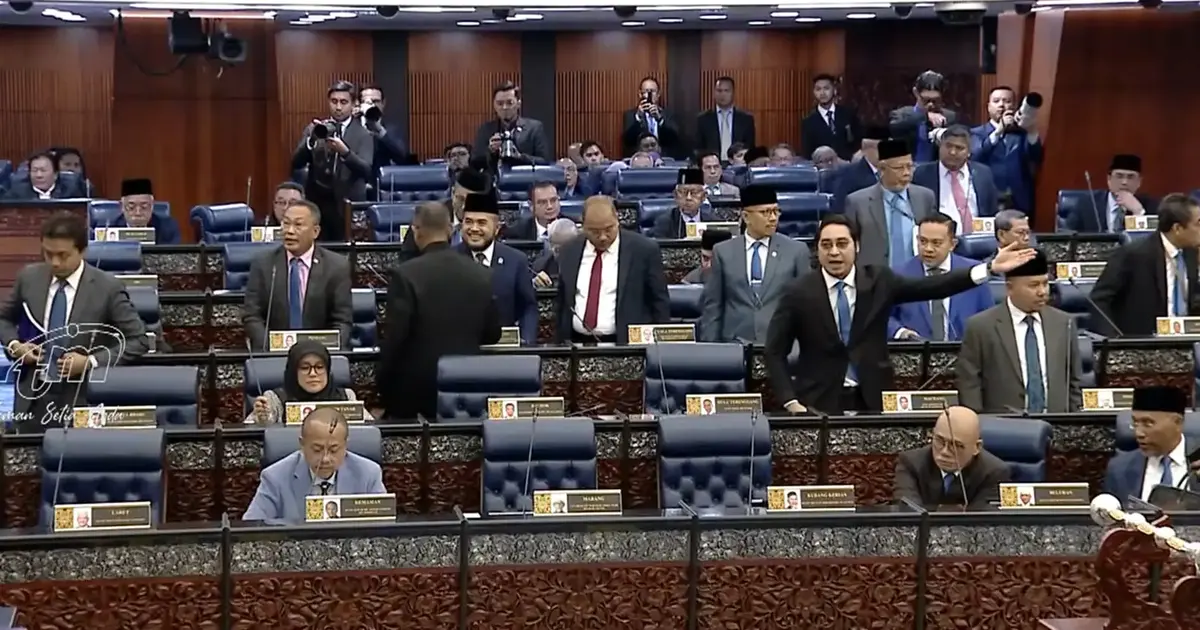
Communications Minister Fahmi Fadzil has singled out Bersatu members of parliament for praise over their decision to participate in the Tabung Haji Royal Commission of Inquiry sitting, creating a notable division within the Perikatan Nasional coalition on how opposition parties should respond to the parliamentary inquiry.
Fahmi's commendation highlights an emerging fault line within the opposition bloc, where not all member parties share identical strategies regarding engagement with government-led investigative processes. His public recognition of Bersatu's MPs demonstrates the government's willingness to acknowledge cooperation from opposition quarters, even as other Perikatan Nasional components have opted for confrontational approaches.
The Tabung Haji inquiry represents a significant moment in Malaysian politics, as it delves into the management and performance of the pilgrimage fund that serves hundreds of thousands of Muslim depositors. The Royal Commission has attracted substantial public attention given concerns about the institution's financial health and governance standards. For Bersatu representatives to maintain their presence at these proceedings signals a pragmatic approach to parliamentary accountability, regardless of partisan considerations.
The walkout by other Perikatan Nasional MPs reflects deeper ideological and strategic divisions within the opposition coalition. This bifurcation suggests that while some opposition members believe boycotting such inquiries represents a principled stance against government overreach or perceived bias, Bersatu has calculated that participating allows them to scrutinise proceedings from within and potentially influence outcomes. Such tactical disagreements often foreshadow broader shifts in coalition dynamics.
For Malaysian observers tracking the health of parliamentary institutions, this divergence carries important implications. When opposition parties selectively engage with or withdraw from investigative committees based on partisan calculations rather than substantive policy disagreements, it can undermine public confidence in these institutions. Conversely, Bersatu's participation suggests that cross-party collaboration on matters affecting the Muslim majority is achievable, even within a fractious political environment.
The Tabung Haji matter itself resonates deeply across Malaysian society, particularly among the approximately 8.7 million registered members whose savings are held with the fund. Questions about the institution's management have generated considerable concern within Muslim communities nationwide. An effective Royal Commission requires access to parliamentary perspectives, making the attendance of opposition MPs particularly valuable for establishing comprehensive public records.
Fahmi's decision to publicly acknowledge Bersatu's cooperation serves multiple purposes within the government's broader political strategy. It creates incentives for opposition parties to participate in future inquiries while simultaneously highlighting divisions within Perikatan Nasional that weaken its collective opposition voice. This approach aligns with tactics increasingly adopted by governments seeking to fragment opposition unity through selective praise and acknowledgement.
Bersatu's positioning here reflects its unique status within opposition politics in Malaysia. As a splinter party that broke away from the United Malays National Organisation, it has demonstrated greater flexibility in working across coalition boundaries compared to more ideologically rigid partners. This willingness to engage may appeal to voters who prioritise accountability and good governance over rigid opposition unity.
The broader context of Malaysian parliamentary politics shows increasing maturity in how legislators approach investigative proceedings. Unlike earlier iterations of such inquiries, contemporary Royal Commissions have attracted more sophisticated opposition engagement, with MPs using public hearings as opportunities to build parliamentary records and generate media coverage of their scrutiny rather than simply boycotting or obstructing proceedings.
For Southeast Asian observers, Malaysia's experience demonstrates how democratic institutions can function even amid deep political polarisation. The fact that opposition members choose to participate in government-initiated inquiries, despite considerable partisan pressure to boycott, suggests that institutional norms and individual calculations sometimes override pure opposition solidarity. This dynamic, while creating divisions within opposition coalitions, ultimately strengthens parliament's investigative capacity.
The Tabung Haji RCI inquiry will likely continue attracting mixed opposition participation as these proceedings develop. Fahmi's public commendation of Bersatu suggests the government intends to maintain pressure on other opposition parties to reconsider their boycott strategies. Whether this approach successfully fragments further opposition unity or whether it consolidates opposition cohesion through resentment of Bersatu's perceived cooperation remains a question for Malaysian political observers to monitor in coming months.

