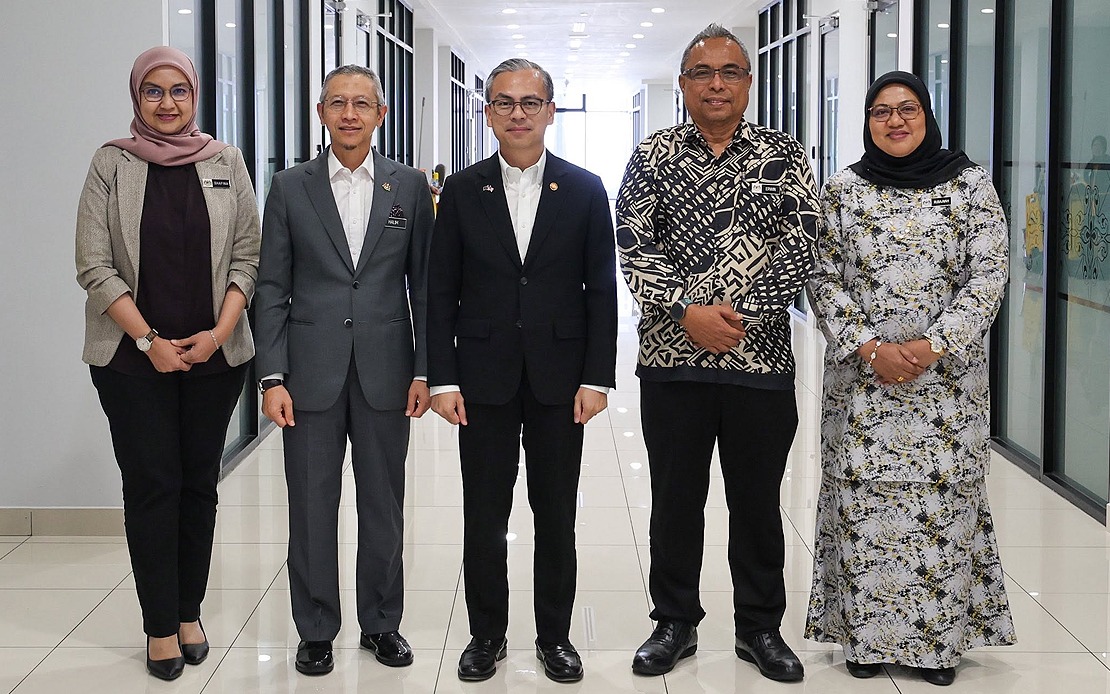
Communications Minister Datuk Fahmi Fadzil has extended his congratulations to Erwin Khairul Ahmad following his appointment as the new director-general of the Information Department (JaPen), marking a significant change in the leadership of Malaysia's primary government communications agency. The minister simultaneously welcomed Wan Saidatul Shafina Mohd Amin into her new position as deputy director-general (Digital Content), underscoring the government's emphasis on strengthening digital information delivery at a time when online communication channels have become crucial for public engagement.
In remarks reflecting on the appointments, Fahmi emphasised the importance of sustained commitment and principled stewardship at JaPen, calling on the new leadership team to serve "with dedication, wisdom and high spirit." His language points to broader expectations that the department will reinvigorate its mandate as a reliable conduit between government and citizens at a period when information credibility and accessibility have become increasingly contested in the digital landscape. The minister's specific mention of the digital content position highlights government recognition that traditional news dissemination has evolved significantly, requiring specialised expertise in managing online platforms and countering misinformation.
The formal transition of power was administered through the Public Service Department (JPA), with Tan Sri Wan Ahmad Dahlan Abdul Aziz, the director-general of Public Service, presenting letters of appointment to both appointees. This procedural formality reflects the structural importance placed on these roles within Malaysia's civil service hierarchy, as JaPen functions as a critical institutional bridge between the cabinet, individual ministries, and the broader media ecosystem. The involvement of the JPA director-general in the official announcement signals that these appointments represent significant career progression within the federal bureaucracy.
The transition includes acknowledgement of Julina Johan's tenure as the previous director-general, with Fahmi publicly recognising her "services, dedication and contributions throughout her leadership of the department." Such formal recognition of outgoing officials is standard practice in Malaysian government circles, yet it carries symbolic weight in affirming continuity of institutional values even as new leadership takes the helm. The acknowledgement suggests that institutional memory and accumulated experience from the previous administration may be leveraged by the incoming team to address ongoing challenges in public information management.
Erwin Khairul Ahmad's appointment comes at a juncture when government communication strategies face mounting scrutiny from both traditional media outlets and increasingly organised social media communities. As director-general, he will oversee JaPen's core functions including media relations, public information campaigns, and coordination of official government messaging across multiple channels. His appointment signals an opportunity to reshape how the government engages with a rapidly fragmenting media landscape where traditional newspaper and broadcast audiences have declined while digital native audiences have expanded substantially.
Wan Saidatul Shafina's specific portfolio as deputy director-general (Digital Content) reflects institutional recognition that the digital transformation of information distribution has become non-negotiable. Her role will likely involve overseeing JaPen's social media presence, managing government websites, and potentially developing strategies to ensure official information reaches audiences through platforms where they increasingly consume news. In the Malaysian context, where Facebook, TikTok, and WhatsApp penetration rates far exceed traditional news consumption, her appointment addresses a critical gap in government capacity to communicate effectively through these channels while maintaining message consistency and credibility.
The timing of these appointments occurs within a broader regional context where Southeast Asian governments are increasingly investing in digital communication infrastructure and capacity. Thailand, Indonesia, and Singapore have all substantially upgraded their government communication apparatus in recent years, reflecting a shared recognition that the ability to disseminate information rapidly and effectively through digital channels has become a core government competency. Malaysia's focus on enhancing its digital content capability suggests alignment with these regional trends and acknowledgement that international standing is partly determined by digital narrative sophistication.
For Malaysian stakeholders monitoring institutional change, these appointments carry implications extending beyond personnel reshuffling. The deliberate emphasis on digital content enhancement suggests the government recognises previous shortcomings in reaching younger, digitally native audiences and competing effectively against alternative information sources. Whether this appointment translates into meaningful operational improvements will depend on whether these new leaders receive adequate budgetary resources, staffing authority, and political support to implement strategic changes.
The dual appointments also reflect internal civil service dynamics within JaPen, where career advancement and specialisation have created distinct career tracks. The existence of a dedicated deputy director-general position for digital content suggests the organisation's structural acknowledgement that traditional administrative hierarchies require adaptation to accommodate digital-era skill sets and competencies. This organisational design choice may have ripple effects on how other Malaysian government agencies structure their information management functions.
Looking forward, the success of these appointments will be measured by whether JaPen demonstrates improved capacity to communicate government policy objectives to diverse audiences while maintaining public trust in official information sources. This challenge has become more acute as misinformation and competing narratives proliferate across digital platforms. The incoming leadership faces the difficult task of modernising institutional practices while maintaining the institutional gravitas necessary for official communications to retain credibility and influence public discourse.