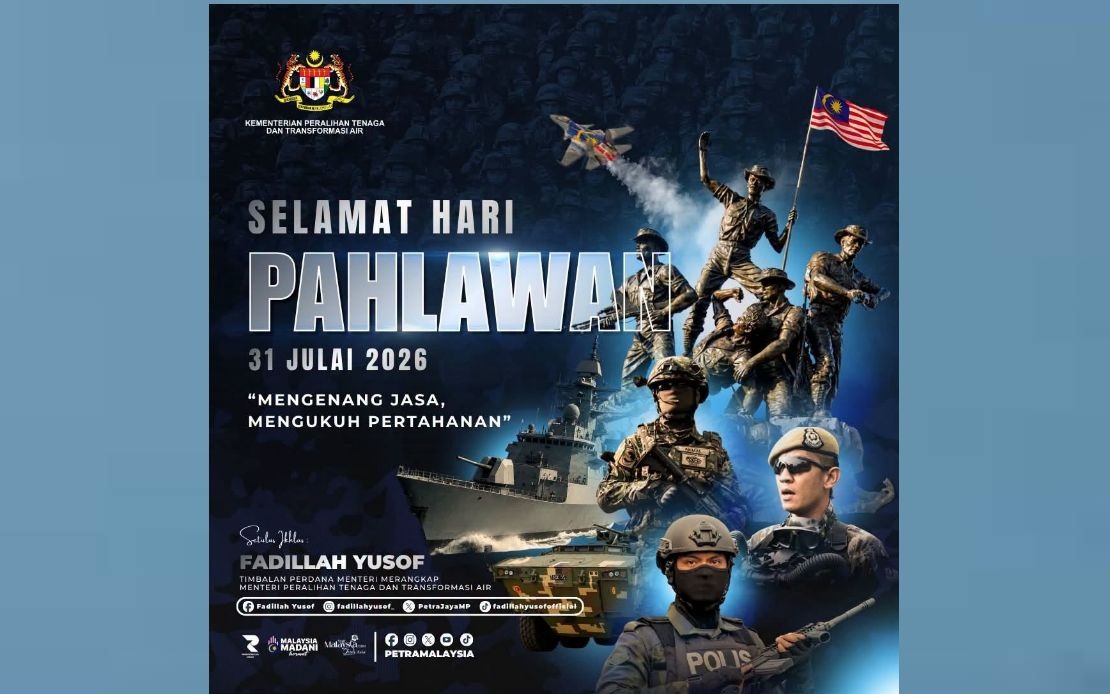
Deputy Prime Minister Datuk Seri Fadillah Yusof has issued a call for Malaysians to reflect meaningfully on the contributions of the nation's defenders, particularly as the country approaches Warriors Day 2026. Speaking through social media, Fadillah emphasised that honouring these sacrifices represents more than ceremonial tribute; it constitutes a fundamental responsibility for citizens who benefit from the stability and security that previous generations fought to establish.
This year's observance carries the theme "Mengenang Jasa, Mengukuh Pertahanan," which translates to remembering contributions and strengthening defence. The thematic approach suggests a deliberate effort to connect historical reflection with contemporary security considerations, positioning Warriors Day not merely as backward-looking commemoration but as an occasion to reinforce commitment to national protection. For Malaysian audiences, this framing carries particular weight given the region's complex security environment and ongoing challenges ranging from maritime concerns to transnational threats.
Fadillah outlined the historical arc of Malaysia's security struggles, tracing the nation's journey from colonial resistance through the communist insurgency to present-day operations. This chronological sweep serves to illustrate that national defence represents a continuous commitment rather than a resolved historical chapter. By connecting past struggles to contemporary security efforts, the Deputy Prime Minister implicitly argues that current military and security personnel stand as inheritors of a tradition of sacrifice, suggesting that their ongoing service deserves equivalent recognition and public appreciation.
The Deputy Prime Minister, who concurrently serves as Minister of Energy Transition and Water Transformation, framed the fallen and serving personnel as embodiments of core virtues. He described their sacrifice as symbolic of courage, loyalty, and patriotic devotion, characteristics he suggested should inspire the broader population. This appeals to aspirational nationalism rather than divisive patriotism, positioning the security forces as models whose personal qualities transcend partisan or sectarian boundaries and offer universal Malaysian values.
In his statement, Fadillah articulated a reciprocal relationship between the sacrifices of defenders and the prosperity that citizens currently enjoy. He contended that contemporary peace, stability, and economic wellbeing rest upon foundations laid by those who risked and lost their lives in service. This framing carries implications for public discourse around defence spending and military funding, suggesting that investment in security infrastructure represents not merely budgetary allocation but deferred payment for stability already provided by previous generations.
The Deputy Prime Minister explicitly urged citizens to emulate the demonstrated virtues of security personnel, advocating that courage, loyalty, and patriotism should characterise civilian behaviour and attitudes. This extension of warrior virtues to civilian conduct suggests an understanding that national resilience depends not solely on military and security apparatus but on broader social commitment to collective wellbeing. For Malaysian audiences, this message implicitly addresses questions about social cohesion and national unity, particularly significant given the nation's multicultural composition.
Fadillah's invocation of religious sentiment through Islamic prayers for the fallen warriors and those currently serving reflects Malaysia's religious and cultural context. The inclusion of these supplications serves multiple functions: it honours fallen personnel within the faith framework meaningful to the majority Muslim population, it demonstrates respect for religious dimensions of patriotic service, and it appeals to common spiritual ground across the nation's diverse communities. This religious language does not exclude non-Muslim citizens but rather acknowledges that meaningful commemoration should speak to the values and frameworks through which different communities understand sacrifice and service.
The Warriors Day 2026 message arrives at a moment when regional security concerns continue to shape Southeast Asian geopolitics. Malaysia, as a maritime nation with significant economic interests and strategic location, faces evolving security challenges from territorial disputes to non-traditional threats. By emphasising the importance of honouring defence personnel, Fadillah indirectly signals government commitment to maintaining robust security capabilities and public support for these institutions, a significant political position given periodic debates about defence priorities versus social spending.
The appeal to national unity and resilience carries particular resonance for Malaysian governance at present. Warriors Day observance provides an occasion to transcend partisan divisions and focus on common interest in national security and territorial integrity. By elevating these themes, Fadillah positions security and sovereignty as unifying principles that supersede political disagreements, though such appeals always carry underlying political dimensions regarding which groups claim special connection to national defence narratives.
The statement's emphasis on building "a more peaceful, prosperous, and resilient Malaysia" reflects a governance philosophy that links security to broader development objectives. This suggests understanding that national defence does not exist in isolation from economic development, social cohesion, and institutional capacity. For Malaysian citizens and policymakers, this integrated perspective implies that security investments contribute to wider national objectives and that defence considerations should inform development planning rather than compete with it.
Looking forward, Warriors Day 2026 provides an opportunity for substantive reflection on Malaysia's defence posture and civilian-military relations. Fadillah's message implicitly invites citizens to move beyond passive acknowledgment of historical sacrifice toward active engagement with questions of how current generations should honour fallen warriors, how much resources should be allocated to defence, and how security concerns should shape national priorities. This positions the Warriors Day observance as occasion for democratic deliberation about national trajectory rather than mere ceremonial exercise.
The Deputy Prime Minister's appeal ultimately rests on reciprocity: previous generations sacrificed for current citizens, and current generations should reciprocate through active patriotism, support for security personnel, and commitment to values these defenders embodied. Whether framed through religious, nationalist, or civic language, this message addresses fundamental questions about intergenerational obligation and national responsibility that extend well beyond military domains to encompass how Malaysians across communities understand their relationship to the state, to each other, and to the national project itself.

