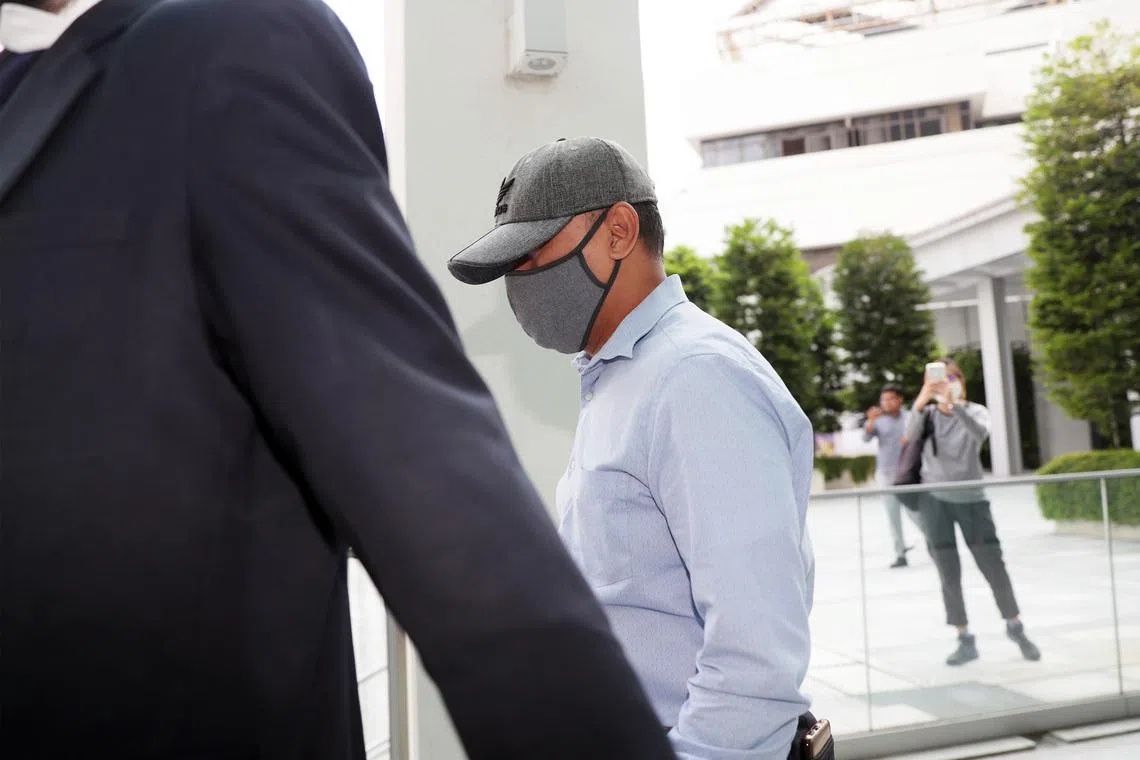
A former executive chairman of two Singapore mosques has been handed a 14-month jail sentence for orchestrating a corruption scheme that improperly awarded construction contracts worth S$223,000 to a friend's company. Abdul Rahim Mawasi, 59, held leadership positions at both Darul Aman Mosque in Jalan Eunos and Sallim Mattar Mosque in MacPherson while simultaneously serving as a senior officer with the Islamic Religious Council of Singapore (MUIS), to which he had been seconded. The conviction in April followed a full trial, marking a significant breach of trust by someone entrusted with managing religious institutions and public sector responsibilities.
The corruption scheme centred on an arrangement dating back to July 2018, when Mawasi proposed to his longtime acquaintance Mohd Mustaqim Kam—also known as Kam Hock Beng—that they establish a travel company specialising in pilgrimage trips. Kam, then 66 years old, held a director's position at construction firm Zeal-Con Engineering and accepted the proposal under an unusual structure: Mawasi would contribute no initial capital but would instead leverage his institutional access to secure construction projects for the mosque venues. The profits Zeal-Con generated from these contracts would subsequently become the paid-up capital for their joint venture travel business. This arrangement essentially transformed Mawasi's public sector position into a vehicle for private financial enrichment through a quid pro quo relationship.
The corrupt scheme played out across two separate contract awards at the two mosques. When Darul Aman Mosque began sourcing vendors for construction work in its yard area during 2018, Zeal-Con submitted competing quotes. The first quote, dated August 20, 2018, was priced at S$128,600. However, after extensive discussions between Mawasi and Kam—during which Mawasi provided crucial price indications—Zeal-Con submitted a revised quote on September 12 for S$118,000. This revised price undercut the next closest competing bid of S$125,500 from another firm. The mosque's management board awarded the contract to Zeal-Con for S$118,000 on September 26, 2018, wholly unaware that their executive chairman had actively coached the winning bidder on pricing strategy.
The pattern repeated at Sallim Mattar Mosque, where similar tactics secured additional revenue for Zeal-Con. The company initially quoted S$115,700 in September 2019 for renovation work on various parts of the facility, including the roof and reception area. By July 2019, after consultation with Mawasi, the same company provided a lowered quote of S$105,000 for identical scope. The following month, the mosque issued letters of contract award tied to that reduced amount. Deputy Public Prosecutor Bryan Wong presented evidence demonstrating that Mawasi had explicitly advised Kam to reduce the company's quote to secure the contract—a direct violation of his fiduciary duty to protect the mosque's interests through competitive tendering processes.
To obscure the corrupt arrangement and prevent detection, Mawasi employed his son as a front to hold beneficial ownership of their joint venture. In November 2019, Kam converted an existing shell company into Amal Travel and Tour (ATT), capitalising it with 100,000 shares worth S$1 each. Kam subsequently allocated 25,000 shares to Mawasi's son, effectively concealing the corrupt beneficiary's ownership stake. During prosecution proceedings, Mawasi denied involvement with ATT and the court acknowledged he held no shares in his own name. However, the evidence strongly indicated this arrangement was deliberately structured to distance Mawasi from the company and shield the corrupt scheme from regulatory scrutiny by MUIS and other oversight bodies. His failure to disclose this beneficial interest to his employer constituted an additional violation of disclosure obligations.
Mawasi's co-conspirator, Kam, received a comparatively lighter sentence of six months imprisonment in February 2025, suggesting courts recognised the active instigation and abuse of institutional position stemmed primarily from the insider actor. The disparity reflects established sentencing principles that prioritise those wielding governmental or religious authority who betray public trust. Kam's status as an external contractor seeking to profit versus Mawasi's role as a custodian of religious institution resources and public sector officer shifted culpability substantially toward the latter. Both men's convictions demonstrate that even where contracted work is satisfactorily completed—the prosecution confirmed Zeal-Con's projects were adequately executed—the corrupt process by which contracts are awarded remains a prosecutable offence warranting custodial sentences.
The case highlights vulnerabilities in how religious institutions manage vendor procurement and oversight of seconded government officials. Mosques across Singapore and Southeast Asia often lack sophisticated competitive tendering systems comparable to large corporations or government agencies, creating environments where individual officers wielding institutional authority can manipulate processes with relative impunity. MUIS, while responsible for Islamic religious administration, depends on trust-based systems where seconded officials like Mawasi are expected to exercise discretionary judgment fairly. This case illustrates how such trust can be systematically exploited through informal relationships and gradual escalation of corrupt conduct. The absence of robust segregation of duties—where those advising on vendor selection also influence contract recommendations—enabled one individual to subvert entire procurement workflows.
The implications for Southeast Asian governance extend beyond Singapore's religious sector. Public sector corruption remains a persistent challenge across the region, with similar schemes occurring in government procurement, municipal contracts, and institutional management. Officials exploiting insider knowledge to benefit associates—whether through price coaching, selective tendering, or other mechanisms—represent a widespread corruption pattern documented across Malaysia, Indonesia, Thailand, and other jurisdictions. This case provides instructive precedent regarding sentencing severity and evidence standards for prosecuting corruption involving religious or community institutions that often operate with lower public visibility than government contracts. The conviction signals that institutional position and abuse of trust elevate corruption charges beyond mere commercial fraud into serious public integrity breaches meriting substantial imprisonment.
Court proceedings also revealed Mawasi's extended tenure within MUIS since 2005 afforded him substantial credibility and operational familiarity that criminals exploited. Twenty years of institutional service should ordinarily translate into trustworthiness; instead, accumulated knowledge of procurement processes, vendor management, and decision-making structures provided sophisticated tools for systematic corruption. This paradox—where tenure and trust become corruption enablers rather than safeguards—presents ongoing challenges for institutional governance. The case occurred during 2018-2019, yet prosecution and conviction extended across years, illustrating lengthy investigation and trial timelines characteristic of complex white-collar corruption cases. Mawasi was convicted in April 2025 and sentenced in June 2025, nearly six years after initial criminal conduct, reflecting investigative complexity and judicial processes in Singapore's rigorous corruption prosecution system.
The sentencing of 14 months represents the court's assessment that Mawasi's breach of position warranted mid-range imprisonment despite defence arguments for leniency based on his lack of prior convictions and age. His lawyer, Satwant Singh Sarban Singh, sought a maximum six-month term; the court's 14-month decision indicated judicial determination that institutional corruption of this character required more substantial deterrence. Bail was set at S$30,000 pending appeal possibilities, with Mawasi scheduled to commence his sentence on July 10. For religious institutions and government agencies across Southeast Asia, this case underscores necessity for implementing competitive tendering protocols with clear audit trails, conflict-of-interest disclosure mechanisms, and segregation between procurement advisory roles and award authority. Without such structural safeguards, institutions remain vulnerable to insiders weaponising their knowledge and relationships against the organisations they ostensibly serve.

