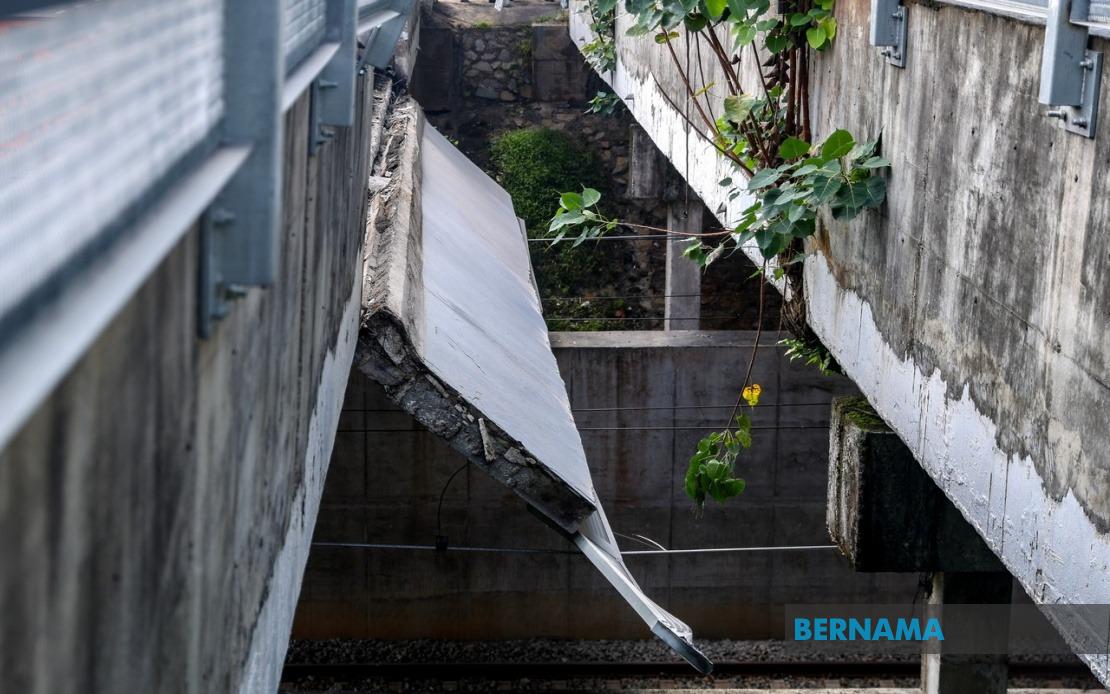
A lorry accident has forced Keretapi Tanah Melayu Berhad (KTMB) to implement contingency measures on the Electric Train Service (ETS) network in Johor following the disruption to the Kulai-Kempas Baru section. The state railway operator has deployed shuttle buses operating between JB Sentral and Kempas Baru stations to ferry affected passengers onward to Kulai Station, where they can resume their journeys by train to their final destinations. This interim arrangement seeks to minimise travel disruption during restoration efforts that remain underway at the crash site.
Three ETS services originating from JB Sentral station experienced cancellations or suspensions as a result of the incident. ETS 9442, which operates between JB Sentral and Padang Besar, ETS 9524 linking JB Sentral to KL Sentral, and ETS 9326 serving the JB Sentral to Butterworth route all faced disruptions. The impact extended across multiple regional destinations, affecting hundreds of commuters and long-distance travellers relying on these key transport corridors within peninsular Malaysia.
KTMB has made clear that passengers inconvenienced by the service suspension retain the option to abandon their journeys without penalty. The railway operator has committed to processing full refunds for those choosing not to utilise the shuttle bus replacement service, ensuring that travellers are not financially disadvantaged by circumstances beyond their control. Support staff stationed at affected terminals stand ready to provide additional assistance and guidance to displaced passengers navigating the revised travel arrangements.
The Shuttle Selatan regional service has experienced partial operational adjustments in response to the line closure. Routes connecting Pasir Gudang and Kempas Baru with JB Sentral continue running normally, maintaining connectivity for residents in these commuter areas. However, the localised Kulai-Kempas Baru-Kulai shuttle service has been entirely suspended, as that segment of track remains inaccessible pending restoration completion. This targeted suspension concentrates replacement transport on the critical JB Sentral interchange, which serves as the principal hub for regional rail connectivity in southern Johor.
The root cause of the disruption stems from structural damage to the rail infrastructure inflicted during the lorry accident. A concrete parapet structure dislodged from the vehicle has come into contact with the overhead line (OHL) system serving both railway tracks, compromising the electrical supply necessary for train operations. This type of infrastructure damage underscores the vulnerability of rail networks to external incidents and highlights the critical safety protocols that must be observed around railway corridors, particularly where commercial vehicles operate in proximity to rail lines.
Restoration efforts have been hampered by equipment availability constraints. Transmare-Chemie (M) Sdn Bhd, the logistics company operating the lorry involved in the incident, initially reported at 3 am that the 120-tonne crane necessary for removing the fallen concrete structure had not yet been secured. Once the required lifting equipment becomes available, KTMB anticipated that removal operations would commence around 10 am on the day of the disruption, though the timeline remained subject to equipment procurement delays and operational logistics.
KTMB has emphasised that reopening the Kulai-Kempas Baru line cannot proceed until a comprehensive series of safety protocols are satisfied. Beyond the physical removal of debris and damaged structures, the railway operator must conduct thorough technical inspections of both the track bed and the overhead line electrical system to identify any secondary damage. Professional safety certification confirming that both infrastructure components meet operational standards must be obtained before passenger trains resume movement through the affected section. This deliberate, safety-first approach reflects international best practices governing railway incident response, though it inevitably extends the duration of service disruptions.
The coordination between KTMB and external parties involved in the incident demonstrates the interconnected nature of modern transport infrastructure management. The railway operator has committed to maintaining active liaison with the lorry company, contractor organisations, and regulatory authorities to optimise the pace of restoration activities. However, this collaborative approach remains contingent on the timely availability of specialist equipment and the cooperation of third parties whose roles extend beyond KTMB's direct operational control.
This incident represents the second disruption to the same rail section within consecutive days. The previous day had witnessed delays to both Shuttle Selatan and ETS services when another lorry carrying flammable liquids skidded in proximity to the rail line, triggering a power supply failure to the overhead system. The recurrence of vehicle-related incidents affecting this particular section suggests underlying hazards associated with the proximity of road and rail infrastructure in that locality. Transport safety analysts and infrastructure planners may need to evaluate whether additional protective measures, such as reinforced barriers or revised commercial vehicle routing, could mitigate the frequency of such incidents in future.
For Malaysian commuters and regional travellers, the disruption underscores the importance of transport redundancy and contingency planning in maintaining regional connectivity. While shuttle bus services provide a functional alternative, the convenience premium of direct rail travel—particularly for long-distance journeys to destinations such as Padang Besar, KL Sentral, and Butterworth—cannot be entirely replicated by road-based replacement services. The incident also highlights the broader vulnerability of Malaysia's rail infrastructure to external shocks, a consideration relevant to ongoing discussions regarding transport modernisation and resilience planning across Southeast Asia.

