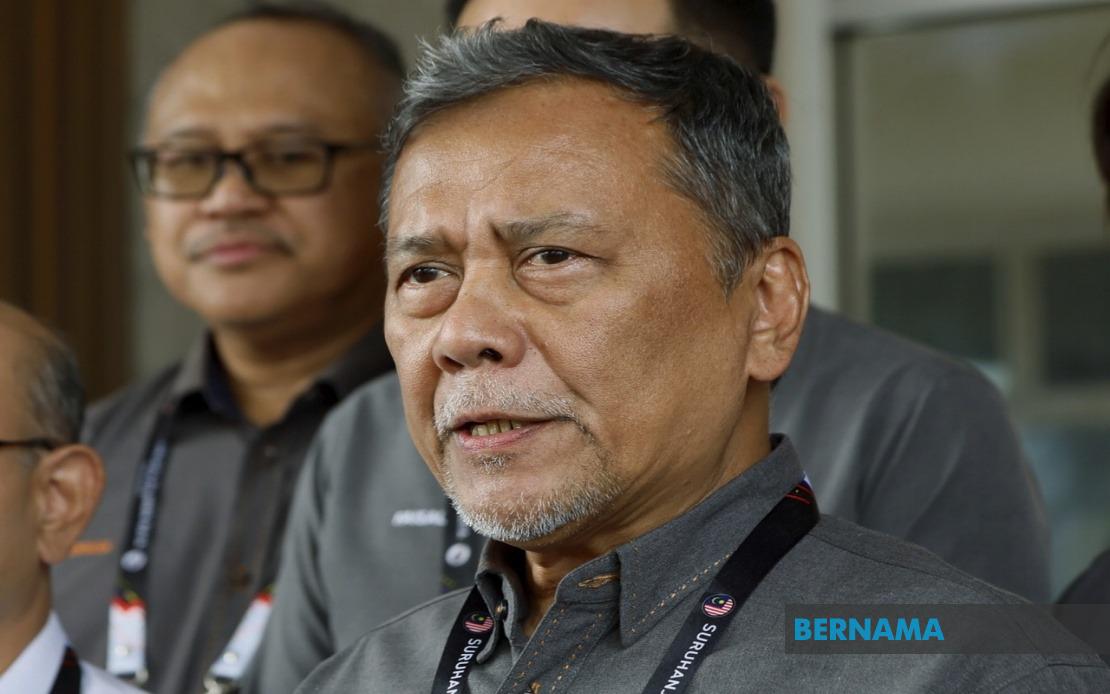
The Election Commission has documented a substantial volume of alleged violations during the campaign for Johor's 16th state election, with 588 formal complaints registered as voting preparations entered their final stages. Election Commission chairman Datuk Seri Ramlan Harun disclosed the figures during a monitoring visit to early voting centres in Kluang, underscoring the electoral body's active oversight of campaign conduct ahead of Saturday's polling day.
Of the 588 complaints received, a significant proportion warranted escalation to law enforcement authorities. The commission has directed 44 cases to police for investigation, reflecting the seriousness with which electoral violations are being treated. Additionally, three separate matters have been referred to the Malaysian Anti-Corruption Commission, signalling that some alleged breaches may involve financial impropriety or abuse of public office—concerns that traditionally fall under MACC's purview.
Datuk Seri Ramlan's statement came during a ceremonial inspection of early voting procedures, where he was accompanied by Army Chief General Tan Sri Azhan Md Othman. The presence of senior military leadership underscored the significance assigned to ensuring election integrity, a matter of heightened sensitivity in Malaysian politics given previous electoral disputes and public concern over campaign fairness.
The early voting phase itself proceeded smoothly across designated centres, including facilities at Kluang District Police Headquarters and Kem Mahkota. This preliminary round of voting accommodated 20,607 electors drawn from the armed forces and law enforcement communities, constituencies traditionally granted early access to polling due to operational demands. Among these, 8,544 voters comprised Malaysian Armed Forces personnel and their spouses, whilst 12,063 represented police officers and their families, reflecting the sizeable security apparatus engagement in Johor's electoral process.
The complaint volume merits contextualisation within the broader Johor campaign landscape. The 16th state election features competitive contests across 56 constituencies, with 172 candidates vying for representation—a candidate-to-seat ratio suggesting vigorous political competition. This density of candidacies, combined with multiple political parties and independent contenders, typically generates heightened campaign activity and proportionally greater scope for regulatory violations. Such violations range from breaches of campaign finance regulations and illegal campaign material distribution to unauthorised public assembly and social media infractions.
Election offences in Malaysian state elections encompass diverse categories, from technical breaches of the Election Offences Act 1954 to more serious allegations involving vote-buying, intimidation, or misuse of government resources. The fact that the commission deemed three cases sufficiently grave to warrant MACC attention suggests investigators identified potential corruption elements, though specific allegations remain undisclosed pending investigation completion.
For Malaysian readers following electoral developments, the complaint figure carries implications extending beyond Johor itself. State election conduct reflects on the Election Commission's overall management capability and the political system's adherence to democratic standards. Johor's scale as a peninsular state with significant economic importance and long-standing political competitiveness makes its election management a bellwether for electoral administration quality nationally. The systematic documentation and escalation of complaints demonstrates procedural rigour, though public confidence ultimately depends on investigation thoroughness and transparent outcomes.
The timing of these disclosures—during the final campaign week before polling—allows voters to register the commission's enforcement activity while campaign dynamics remain fluid. This transparency serves both legitimacy and deterrent functions, signalling to candidates and supporters that regulatory oversight remains active throughout the electoral period.
Regionally, Malaysia's election management approaches comparative scrutiny within Southeast Asia. The visible administrative response to campaign violations, coupled with multi-agency engagement involving police and anti-corruption authorities, reflects governance frameworks that extend beyond singular electoral bodies. However, the eventual translation of complaints into prosecutions and convictions will ultimately determine whether the documented violations translate into meaningful accountability or represent merely administrative record-keeping.
Voters in the 56 Johor constituencies will cast ballots under conditions ostensibly monitored for compliance with electoral law. The 588 documented complaints and accompanying investigations represent institutional mechanisms designed to protect ballot integrity, though electoral fairness ultimately depends on multiple reinforcing factors including voter education, transparent vote counting, and impartial adjudication of disputed results.
With polling scheduled for Saturday, the early voting phase has already processed over 20,000 ballots from security personnel, establishing the procedural foundation for the broader voting exercise. The Election Commission's continued oversight during main polling day, combined with ongoing investigation of alleged violations, represents the operational framework within which Johor's electoral mandate will be determined. The extent to which these investigations yield prosecutions and whether penalties prove proportionate to violations alleged will shape public perception of election integrity in Malaysia's evolving democratic landscape.

