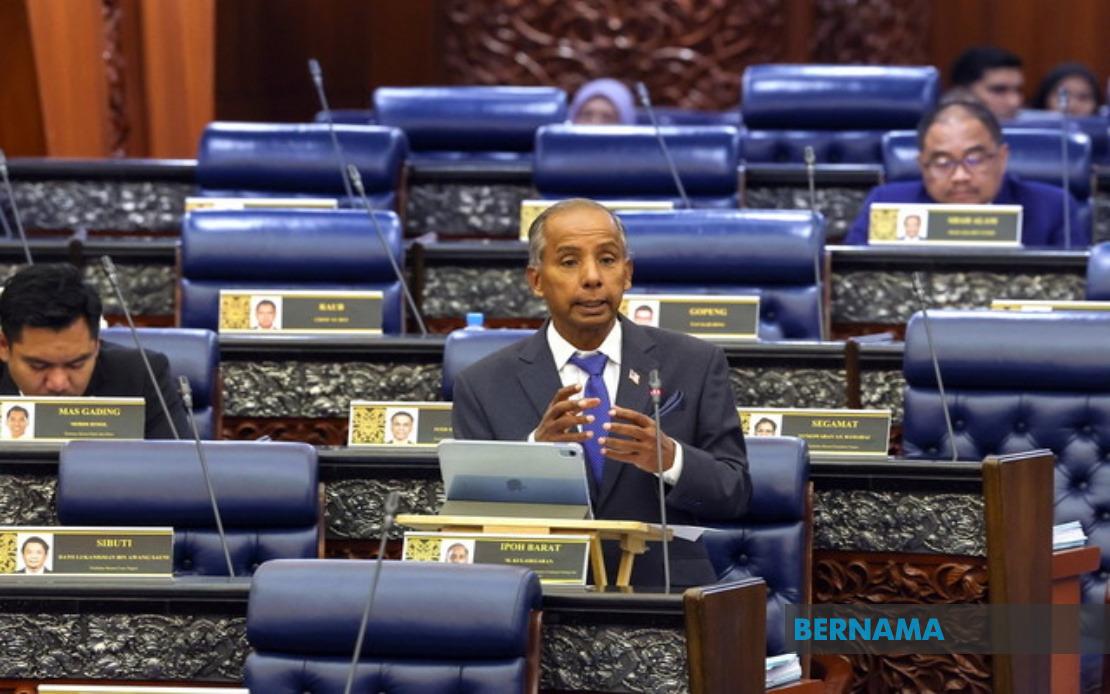
The Election Commission has embarked on a comprehensive examination of introducing postal voting options for citizens across Peninsular Malaysia, Sabah and Sarawak, marking a potential shift in how Malaysians participate in electoral processes. M. Kulasegaran, Deputy Minister in the Prime Minister's Department overseeing Law and Institutional Reform, confirmed the investigative work during parliamentary proceedings, indicating that authorities are taking seriously the modernisation of voting mechanisms to accommodate broader segments of the electorate.
The scope of this inquiry extends well beyond a simple technical feasibility assessment. Kulasegaran stressed that meaningful consultation with all relevant stakeholders, particularly the country's political parties spanning the political spectrum, must precede any binding determination on whether to proceed with the initiative. This consultative approach acknowledges that electoral reforms carry significant implications for how campaigns operate and how various parties might need to adapt their strategies to contest elections under new voting arrangements.
Temporary expectations for the completion of this investigation point to sometime in 2025, suggesting the EC recognises the complexity involved in designing a reliable postal voting system capable of functioning efficiently across the nation's diverse geography and population distribution. The extended timeline also allows room for conducting pilot programmes or gathering international best practices from Commonwealth nations with established postal voting traditions, such as Australia or Canada, which might offer valuable lessons for Malaysian implementation.
Beyond postal voting, parliamentary discourse also touched on the relationship between elected government and the election machinery itself. The government signalled receptiveness to reconsidering whether the Election Commission should operate as an independent body answerable to Parliament rather than sitting administratively within the Prime Minister's Department. Kulasegaran indicated this suggestion merits serious consideration, with the matter destined for discussion among relevant governmental bodies to reach a determination in due course.
The independence question carries substantial weight for Malaysia's democratic institutions. Placing electoral oversight directly under parliamentary authority rather than executive departmental control could theoretically enhance public confidence in the impartiality of electoral administration and strengthen institutional checks against potential political manipulation. Such restructuring would represent a notable evolution in how Malaysia approaches the governance of its democratic processes, though implementation would require legislative amendments and careful institutional redesign.
Simultaneously, concerns about enforcement of existing polling day regulations surfaced in the parliamentary chamber. Specifically, the enforcement of prohibitions against mobile phone usage within polling stations has reportedly remained inconsistent, prompting questions about whether authorities should strengthen mechanisms for compliance. However, the Election Commission maintains that its current supervisory systems are adequate for managing this issue and sees no necessity to introduce amendments to existing procedures or establish mobile phone usage as a distinct electoral offence within the Election Offences Act 1954.
For Malaysian voters and political observers, the postal voting study represents a pragmatic acknowledgement that physical attendance at polling stations, while the traditional cornerstone of electoral participation, may not suit every citizen's circumstances. Workers deployed far from home, elderly persons with mobility constraints, individuals overseas on temporary assignment, and voters managing health conditions that complicate travel could potentially access the democratic franchise more conveniently through postal mechanisms. The inclusivity benefits could meaningfully expand effective participation rates across demographic groups.
Implementing domestic postal voting across a nation spanning three major geographical zones—Peninsular Malaysia plus the East Malaysian territories of Sabah and Sarawak—presents formidable logistical challenges distinct from the simpler technical considerations. Establishing secure postal collection and verification procedures, preventing fraud or intimidation in the home voting environment, training election workers across dispersed regions, and managing ballot delivery timelines across maritime routes all demand careful planning and substantial resource allocation.
The regional dimension carries particular significance for East Malaysia. Sabah and Sarawak represent geographically expansive territories where conventional polling station attendance can require extraordinary travel commitments from remote communities. Enhanced voting accessibility through postal mechanisms might particularly benefit these populations, potentially improving participation rates in elections where voter turnout has occasionally lagged behind peninsular averages due to infrastructural and logistical constraints.
From a regional Southeast Asian perspective, Malaysia's examination of postal voting reform reflects broader trends toward modernising electoral systems within the region's established democracies. Thailand and Indonesia have both grappled with similar questions about expanding voting access, while Singapore maintains different approaches suited to its particular context. Malaysia's deliberative pace, prioritising stakeholder engagement and thorough institutional planning before implementation, contrasts with more rapid reforms adopted elsewhere, potentially yielding more durable outcomes.
The parliamentary inquiry also underscores how contemporary electoral discourse now encompasses not merely who participates and how votes are counted, but fundamentally how election governance institutions relate to other branches of government and whether their structural positioning adequately reflects democratic principles. As Malaysia continues maturing its democratic institutions, questions about electoral independence and accessibility will likely intensify as digital technology and changing social patterns reshape citizen expectations about participation modalities.

